
Categories
Motorbike Accident

Navigating Potholes on Motorbikes

The serene landscapes and winding roads make it an ideal destination for motorbike enthusiasts. However, behind this charming exterior lies a concealed danger that presents a significant peril to riders – potholes. These treacherous craters in the road not only challenge the stability of four-wheeled vehicles but also turn the journey into a perilous adventure for motorcyclists.

The UK is facing a mounting issue with approximately 2 million potholes, indicating a deteriorating condition of the country’s infrastructure.

A March study analysing government statistics and conducted by a price-comparison site unveiled that the Blackburn with Darwen council area had 76% of its roads in need of repair, with Bristol close behind at 78.5%.

However, this pothole problem isn’t confined to specific regions; it’s a nationwide predicament that is progressively worsening. According to the RAC’s report in June, pothole-related breakdowns have reached a five-year peak. The number of callouts for breakdowns due to poor road surfaces surged by 40% year on year, reaching 8,170 in the UK between April and June. The head of roads policy at RAC, Nicholas Lyes, attributed this surge to last winter’s series of well-below-average temperatures combined with heavy rainfall. These weather conditions allowed water to seep into cracks, freeze, and expand, causing roads to rapidly deteriorate as vehicles passed over them.

In this article, we delve into the impact of potholes on motorbike riders and explore potential solutions to address this growing concern.

The Perilous Encounter:

Riding a motorbike provides a sense of freedom and thrill, but the joyous experience quickly turns into a nerve-wracking ordeal when confronted with potholes. The smaller size and two-wheel structure of motorbikes make them more vulnerable to pothole-related accidents compared to cars. A motorcyclist’s weight is evenly distributed, and they have limited protection, leaving them exposed to the harsh realities of a pothole-riddled road.

Impact on Rider Safety:

The dangers posed by potholes to motorcyclists are multi-fold. Firstly, hitting a pothole at high speed can lead to a loss of control, resulting in the rider veering off course or, even worse, crashing into other vehicles. Secondly, the jolt experienced when a motorbike encounters a pothole can lead to serious injuries, from sprains and fractures to more severe consequences like head trauma. Moreover, potholes filled with rainwater may appear shallow, causing riders to misjudge their depth and leading to accidents.

Economic Implications:

Beyond the immediate safety concerns, potholes also take a toll on the riders’ wallets. The impact of these road hazards on motorbikes can cause damage to the suspension, tires, and rims, necessitating costly repairs or replacements. The financial burden is a double blow to riders, especially those who rely on their motorbikes for daily commuting or leisure activities.

The Nationwide Predicament:

Potholes are not an isolated issue confined to specific regions; they are a nationwide problem affecting both rural and urban roads. Weather conditions, such as heavy rainfall and temperature fluctuations, exacerbate the formation and expansion of potholes. With each passing year, the number of potholes seems to multiply, putting the safety of motorcyclists at greater risk.

Efforts and Solutions:

In an effort to combat this issue, the government committed to investing £5 billion in road and highway maintenance from 2020 to 2025. Additionally, annual funding is allocated for pothole repairs outside London. Chancellor Jeremy Hunt, in the spring budget, augmented this budget by an extra £200 million per year to combat the “curse of potholes,” raising it to a total of £700 million. Moreover, local authorities receive funding through various schemes to support road maintenance.

However, Mark Morrell, while holding this year’s Annual Local Authority Road Maintenance (Alarm) survey from the Asphalt Industry Alliance (AIA), contends that the current efforts are insufficient. The survey paints an alarming picture, revealing that local authorities received only around two-thirds of the required funding to prevent further deterioration of roads. To address the existing backlog of carriageway repairs, an estimated amount of more than £14 billion is needed.

Our NJS Law Motorbike Accident Claims Specialists are sympathetic, understanding, and can help you get the outcome you deserve.

If you would like to discuss an issue, please get in touch to arrange a free no obligation consultation. We’re available by email or phone.

CONTACT US

Get in touch using the form below or via the following methods:

Ask NJS Law

For fast, friendly affordable legal advice. Contact a member of our team today.

FAQ

For any questions we may be able to answer, discover our FAQ section.

Categories
Cycling Accident

Cracked Streets and Collisions: Navigating Life in Pothole-Stricken Britain – Pothole Claims

The UK is facing a growing pothole crisis, with an estimated 2 million potholes no affecting roads nationwide. This reflects the declining condition of the country’s road infrastructure and poses a serious risk to all road users – particularly cyclists.

How Widespread Is The Pothole Problem

Recent research highlights the scale of the issue.

A March study analysing government data found that:

  • Blackburn with Darwen had 76% of roads in need of repair
  • Bristol followed closely, with 78.5% of roads requiring attention

However, this is not a regional issue. Poor road surfaces are now a nationwide problem, and conditions continue to worsen year on year.

Pothole-Related Breakdowns at a Five-Year High

According to a June RAC report, pothole-related vehicle breakdowns have reached a five-year peak.

Between April and June alone:

  • Callouts caused by poor-road surfaces increased by 40% year-on-year
  • 8,170 breakdowns were recorded across the UK

Nicholas Lyes, Head of Roads Policy at the RAC, attributed this rise to last winter’s below average temperatures and heavy rainfall. Water entered cracks in the road, froze, expanded, and rapidly weakened the surface as traffic passed over it.

Why Do Potholes Form So Frequently

Potholes develop due to a combination of factors, including:

  • Freeze-thaw cycles
  • Heavy traffic and repeated water
  • Water damage
  • Ageing road surfaces
  • Poor construction or maintenance

Given Britain’s climate and traffic levels, the growing prevalence of potholes is sadly unsurprising.

Government Funding and the Maintenance Shortfall

The government pledged £5 billion for road and highway maintenance between 2020 and 2025. Additional annual funding is provided for pothole repairs outside London.

In the Spring Budget, Chancellor Jeremy Hunt announced an extra £200 million per year, increasing the total pothole repair fund to £700 million annually. Local authorities also receive funding through several maintenance schemes.

However, many experts argue this is still not enough.

£14 Billion Needed to Fix Britain's Roads

The Annual Local Authority Road Maintenance (ALARM) Survey, published by the Asphalt Industry Alliance (AIA), paints a concerning picture.

According to Mark Morrell of the AIA:

  • Local authorities receive only two-thirds of the funding needed to stop roads from deteriorating further
  • Clearing the existing backlog of carriageway repairs would require more than £14 billion

This funding gap means potholes continue to form faster than they can be repaired.

Why Potholes Are Especially Dangerous for Cyclists

Potholes present a serious hazard to cyclists, often causing riders to lose control and fall into live traffic.

The danger increases in wet weather. Rain fills potholes with water, making them difficult to spot and easy to mistake for shallow puddles.

Real Cases Highlight the Risk

In one real case, a cyclist believed he had ridden through a puddle but instead hit a deep pothole. The impact broke his bike frame and caused injury. He later made a successful claim against a local authority.

In a more tragic incident, a retired music teacher lost his life after his bike became trapped in a 23cm deep pothole in Wyre, Lancashire.

While fatalities are rare, even one is too many.

Accountability and the Need for Change

Our goal is not only to help injured cyclists secure compensation, but also highlight the urgent need for better road maintenance and safer infrastructure.

Responsibility lies with both central and local government to address what many describe as the woefully inadequate state of the UK’s roads and to protect vulnerable road users.

Speak to Our Cycling Accident Claims Specialists

The NJS Law Cycling Accident Claims team is sympathetic, understanding, and experienced in helping cyclists injured due to poor road conditions.

If you would like to discuss a pothole related cycling accident, we offer a freeno obligation consultation.

Contact us by phone or email today

We are here to help you achieve the outcome you deserve.

CONTACT US

Get in touch using the form below or via the following methods:

Ask NJS Law

For fast, friendly affordable legal advice. Contact a member of our team today.

FAQ

For any questions we may be able to answer, discover our FAQ section.

Categories
Road Traffic Accident

Personal Injury as a Passenger – How to Make a Claim

Few of us think about the trust we place in the driver of a vehicle we are travelling in. Whether it’s a taxi, bus, airport transfer, or a friend behind the wheel, we usually assume we’ll arrive safely. Unfortunately, statistics show that road traffic accidents (RTAs) are common, and passengers are often the victims.

Latest 2021 statistics show:

  • 25,892 people were seriously injured, and
  • 1,558 lost their lives in RTAs.
  • Most of these accidents involved motor vehicles, with 34 incidents involving buses and coaches.

If you suffer moderate to severe injuries as a passenger, you may be able to make a personal injury claim. This guide explains what you need to know. And, our Personal Injury Solicitors are always available to discuss your case directly.

How Do Road Traffic Accidents Happen?

RTAs can occur in seconds. Research shows that 38% of accidents happen because the driver failed to look properly. Other common causes include:

  • Failing to judge vehicle speed
  • Careless, reckless, or hurried driving
  • Poor turns or manoeuvres
  • Loss of control
  • Pedestrians not looking properly
  • Slippery road conditions
  • Driving too fast for the conditions
  • Excessive speed
  • Sudden braking

The Impact of Speed on Passenger Injuries

Even small increases in vehicle speed can significantly raise the risk of serious injury. Head-on, side, front, and rear impacts can all result in severe trauma to passengers, especially when they have no warning that a collision is imminent.

If you’re unsure whether you have a claim, visit our page on road traffic accident claims.

What Types of Injuries Do Car Accidents Cause?

Passenger injuries generally fall into two categories.

Impact Injuries

These occur when the force of a collision throws the body into parts of the vehicle. Even a 30 mph crash with a stationary object can cause:

  • Closed head injuries
  • Whiplash
  • Internal injuries or bleeding
  • Broken ribs and organ damage

Learn more about common injuries on our serious injury claims page.

Penetrating Injuries

These occur when an object pierces or cuts the body, often due to:

  • Shattered glass
  • Detached vehicle parts
  • Crushing or folding of the vehicle cabin

These may result in deep wounds, fractures, facial injuries, and in severe cases, amputations.

What Should I Do If I'm a Passenger Injured in a Car Accident?

If you suffer serious injuries, seek immediate medical assistance. After that, you or a family member should contact a Personal Injury Solicitor as soon as possible.

The Rehabilitation Code

Your solicitor may use the Rehabilitation Code, which encourages collaboration between both sides to ensure early access to treatment, physiotherapy, mental health support, and other essential rehabilitation services. 

Will I Have to Go to Court?

Most RTA passenger injury claims are settled without going to court. Liability is usually determined using:

  • Police reports
  • Medical evidence
  • Accident circumstances

Disputes often arise over the value of compensation, not fault. In such cases, your solicitor may arrange an expert medical report to assess long-term needs. You can read more on our compensation and damages page.

Conclusion

Being injured as a passenger can have life-changing effects – but legal support can help you secure the compensation needed for treatment, recovery, and future support.

Our specialist Personal Injury Solicitors have decades of experience representing injured passengers. We provide compassionate, expert guidance every step of the way.

CONTACT US

Get in touch using the form below or via the following methods:

Ask NJS Law

For fast, friendly affordable legal advice. Contact a member of our team today.

FAQ

For any questions we may be able to answer, discover our FAQ section.

Categories
Accident at Work

Claim For Work Accident: The Ultimate Guide

Most of us take for granted that we will return home safely from work at the end of the day. Unfortunately, this is not always the case. According to Health and Safety Executive (HSE) figures for 2021/22, over 565,000 workers sustained an injury at work, and tragically, 135 workers lost their lives due to workplace accidents.

If you have been injured at work, claiming compensation is often essential. It can help cover lost earnings, household bills, and the cost of private medical treatment or rehabilitation to support your recovery. In this comprehensive guide, we explain how to make a workplace personal injury claim, what steps to take after an accident, and how an experienced Personal Injury Solicitor can significantly improve your chances of success.

Why Claim Compensation for a Workplace Injury?

A workplace injury can have serious physical, emotional, and financial consequences. Compensation can help to:

  • Replace lost income if you are unable to work
  • Fund private medical treatment or rehabilitation
  • Cover ongoing care and support costs
  • Provide financial security for you and your family

An experienced Workplace Injury Solicitor can assess your case, gather evidence, and pursue a claim against your employer where health and safety failures have occurred.

What Are the Most Common Types of Workplace Injuries?

Workplace injuries range from minor accidents to life-changing and catastrophic injuries. Below are some of the most common types of injuries at work.

Slips, Trips, and Falls at Work

Wet floors, uneven surfaces, poor lighting, and cluttered walkways can cause injuries such as sprains, fractures, back injuries, and head injuries.

Overexertion and Manual Handling Injuries

Often caused by repetitive movements or lifting heavy objects, particularly in manual labour roles. These injuries commonly include muscle strains, ligament damage, and hernias.

Injuries Caused by Falling Objects

Common in warehouses, construction sites, and agricultural settings. Without proper risk assessments, falling objects can cause concussions, crushed limbs, or severe brain injuries.

Machinery and Equipment Accidents

Operating heavy machinery can result in entanglement injuries, crush injuries, deep lacerations, or amputations where proper safeguards are not in place.

Being Hit by Moving Vehicles at Work

Forklifts, delivery vehicles, or site traffic can cause serious injuries, including broken bones, whiplash, and traumatic brain injuries.

Repetitive Strain Injury (RSI)

Frequently affects office workers and factory employees who perform repetitive movements over long periods, particularly keyboard and assembly-line work.

Burns and Scalds in the Workplace

Exposure to flames, hot surfaces, chemicals, or electricity can cause severe burns, long-term pain, scarring, and permanent disfigurement.

Noise-Induced Hearing Loss

Prolonged exposure to loud noise in industries such as construction, manufacturing, aviation, and agriculture can lead to permanent hearing damage.

What Should I Do After an Accident at Work?

Taking the correct steps following a workplace accident can greatly improve your chances of a successful compensation claim.

Seek Medical Attention Immediately

Your health is the priority. Medical treatment not only protects your wellbeing but also creates an official medical record linking to your injuries to the accident.

Report the Accident to Your Employer

Employers with ten or more employees must record workplace accidents and keep records for at least three years. Ensure the incident is properly logged and request a copy.

Gather Evidence of the Accident

If possible:

  • Take photographs of the accident scene and any hazards
  • Obtain witness contact details and statements
  • Write down exactly what happened while it is still fresh in your memory

Keep Records of Financial Losses

Maintain evidence of:

  • Medical and rehabilitation expenses
  • Travel costs for treatment
  • Lost earnings and reduced future income
  • Home or vehicle adaptations

These records will help your Solicitor accurately calculate your compensation.

Why Instruct a Workplace Injury Solicitor?

Choosing the right Personal Injury Solicitor can significantly impact your claim. An experienced Solicitor will:

  • Investigate employer negligence
  • Obtain medical and expert evidence
  • Handle negotiations with insurers
  • Represent you in court if necessary

Thy will also advise you on time limits. Under the Limitation act 1980, most workplace injury claims must be made within three years of the accident date. However, exceptions may apply, particularly where symptoms develop later.

Even if you believe you may be out of time, a Solicitor may be able to argue that the Court should exercise discretion and allow your claim to proceed.

How Are Legal Fees Paid in a Workplace Injury Claim?

Most workplace injury claims are funded through a No Win, No Fee agreement. This means:

  • You do not pay legal fees if your claim is unsuccessful
  • Fees are only payable if your claim succeeds
  • You may be responsible for certain disbursements, which will be explained clearly in advance.

Can My Employer Dismiss Me for Making a Claim?

No. It is unlawful for an employer to dismiss you for making a legitimate personal injury claim. If this occurs, you may also have a claim for unfair dismissal through the Employment Tribunal.

Employers are legally required to hold Employer’s Liability Insurance (minimum £5 million). This insurance covers compensation claims, meaning you are not putting your employer’s business or personal finances at risk.

Workplace Injury Claims - Final Thoughts

Making a claim for a workplace injury can feel overwhelming, especially when you are trying to recover physically and emotionally. However, with the support of an experienced Personal Injury Solicitor, you can focus on your health while your legal team handles the process for you.

Our team has decades of combined experience in workplace and personal injury claims.

NJS Law Personal Injury Specialists are compassionate, approachable, and committed to achieving the best possible outcome for you.

Free, No Obligation Consultation

If you have been injured at work and would like advice, please contact us today to arrange a free, no obligation consultation. We are available by phone or email and are here to help.

CONTACT US

Get in touch using the form below or via the following methods:

Ask NJS Law

For fast, friendly affordable legal advice. Contact a member of our team today.

FAQ

For any questions we may be able to answer, discover our FAQ section.

Categories
Personal Injury

A Comprehensive Guide to Personal Injury Claims

Accidents can happen at any time. Unfortunately, they can also cause injuries that significantly affect your health, work, and quality of life. When someone else’s negligence causes an injury, you may have the right to seek compensation through a personal injury claim.

In this article, we explain what personal injury claims are, the most common types of claims, how the legal process works, and what you should consider before taking action.

Gather Evidence Early

A personal injury claim is a legal process that allows an injured person to recover compensation when another party’s negligence has caused harm. These claims aim to support recovery by covering the physical, emotional, and financial impact of an injury.

Compensation may include:

  • Pain and suffering
  • Medical treatment and rehabilitation
  • Loss of earnings
  • Ongoing care and support

Ultimately, the goal is to help you move forward with your life following an accident.

Common Types of Personal Injury Claims

Personal injury claims can arise from many different situations. Below are some of the most common examples.

Road Traffic Accident Claims

Road traffic accident claims involve injuries caused by the negligence of another road user. You may be able to claim compensation if you were injured as a:

  • Driver
  • Passenger
  • Pedestrian
  • Cyclist or motorcyclist

These claims often relate to car accidents, motorcycle accidents, and pedestrian collisions.

Workplace Accident Claims

Employers have a legal duty to provide a safe working environment. If you suffer an injury at work due to unsafe conditions, poor training, or faulty equipment, you may be entitled to make a workplace accident claim against your employer.

Public and Occupiers’ Liability Claims

Public and occupiers’ liability claims arise when someone is injured in a public place or on private property. Common locations include:

  • Shops and shopping centres
  • Parks and public spaces
  • Pavements and car parks

In these cases, property owners or occupiers may be liable if they failed to maintain safe conditions.

Serious Injury Claims

Serious injury claims, sometimes referred to as catastrophic injury claims, involve injuries that have a long-term or life-changing impact. These injuries can affect not only the injured person but also their family.

Examples include:

  • Brain injuries
  • Spinal cord injuries
  • Amputations
  • Serious burns
  • Severe medical injuries
  • Fatal accidents

Because of their complexity, these claims usually require specialist legal advice.

The Personal Injury Claims Process

1. Speak to a Personal Injury Solicitor

To begin a personal injury claim, it is advisable to consult a specialist solicitor. They can assess your case and explain the claims process clearly.

2. Gather Evidence

Your solicitor will help collect evidence to support your claim. This may include medical records, accident reports, witness statements, and financial documents.

3. Letter of Claim

Once the evidence is in place, your solicitor will send a formal letter of claim to the responsible party. This letter sets out how the accident occurred and the losses you have suffered.

4. Negotiations and Settlement

The defendant’s insurer will respond to the claim. In many cases, negotiations lead to a fair settlement without the need for court proceedings.

5. Court Proceedings (If Needed)

If a settlement cannot be reached, your solicitor may issue court proceedings. Throughout this process, they will represent your interests and guide you at every stage.

Important Things to Consider

Time Limits

In most personal injury cases, you have three years from the date of the accident to make a claim. However, exceptions apply, particularly for children and protected parties.

No Win, No Fee

Many personal injury claims are funded through no win, no fee agreements, also known as Conditional Fee Agreements (CFAs). This means you usually do not pay legal fees if your claim is unsuccessful, although some disbursements may still apply.

Compensation

Compensation depends on several factors, including the severity of your injuries and the financial losses you have suffered. Awards may cover medical costs, loss of income, rehabilitation expenses, and pain and suffering.

Final Thoughts

Personal injury claims provide a legal route to compensation when injuries occur because of someone else’s negligence. By understanding the claims process and seeking specialist legal advice, you can protect your rights and pursue the compensation you deserve.

Our team has decades of combined experience handling personal injury claims. The NJS Law Personal Injury Specialists are sympathetic, supportive, and committed to achieving the best possible outcome for you.

If you would like to discuss your situation, please get in touch to arrange a free, no-obligation consultation. We are available by phone or email.

CONTACT US

Get in touch using the form below or via the following methods:

Ask NJS Law

For fast, friendly affordable legal advice. Contact a member of our team today.

FAQ

For any questions we may be able to answer, discover our FAQ section.

Categories
Damp & Mould Disrepair

Takeaways from New Report into Damp and Mould in Social Housing

On 28th June 2023, the Regulator of Social Housing (RSH) published a report on damp and mould in social housing. The report followed the tragic death of two-year-old Awaab Ishak in Rochdale, where prolonged exposure to damp and mould in his home was found to have contributed to his death.

The RSH report highlights the scale of the problem in the sector, how social housing providers are responding, and what improvements are needed to protect tenants.

Focus of the RSH Report

Following the Coroner’s report, the RSH asked all large registered social housing providers to submit evidence about damp and mould in their properties and how they are tackling it. Key findings from 386 responses include:

  • Most providers are aware of damp and mould and are taking steps to address it, but more could be done
  • A majority of tenants live in homes free from damp and mould, but where present, it can negatively affect health and wellbeing
  • Some landlords submitted poor-quality responses, raising concerns about their commitment to tackling the issue

The RSH estimates that:

  • Less than 0.2% of social homes have the most serious damp and mould problems
  • 1-2% have serious problems
  • 3-4% have notable damp and mould

Eight local authority landlords provided particularly poor responses, lacking up-to-date stock data, clear processes for addressing damp, and the ability to identify affected homes. These landlords are now engaging with the RSH.

Since the Coroner’s report, the RSH has received:

  • 12 self-referrals from landlords for potential breaches of the Home Standard
  • 38 referrals from other sources

The Home Standard sets expectations for social housing providers to deliver safe, high-quality homes and effective repair services.

Why Some Social Housing Providers Struggle

The social housing sector faces multiple challenges, including:

  • Insufficient staff
  • Budget cuts
  • Rising costs

However, the Better Social Housing Review (2022) highlighted that providers need to improve data use and performance management. Many tenants still face delays in repairs because:

  • Housing officers are over-stretched
  • Tenants are sometimes unfairly blamed for damp caused by everyday activities like drying clothes indoors
  • Providers do not always proactively collect or act on housing condition data

The review urged housing associations to ask difficult questions about the quality of homes and services provided, to ensure real progress.

Recommendations to Improve Damp and Mould Management

Key recommendations from the Better Social Housing Review include:

  1. Re-evaluate housing associations’ core purpose: providing safe, decent homes.
  2. Conduct a full audit of social housing stock
  3. Engage tenants, frontline staff, and contractors to review maintenance processes
  4. Recruit and retain housing officers to reduce “patch sizes”
  5. Empower tenants to lead investigations and reviews
  6. Increase engagement through community hubs
  7. Conduct annual progress reviews of the review’s recommendations

Alongside these recommendations, the sector is awaiting the Social Housing (Regulation) Bill 2022-23, which will strengthen regulatory powers and enforcement.

Protecting Your Rights as a Tenant

If you live in a social housing property affected by damp or mould, it is vital to contact a Housing Disrepair Solicitor immediately. They can assess your situation and take steps to compel your landlord to make your home safe and habitable.

How NJS Law Can Help with Damp and Mould Repairs

NJS Law is one of the few housing disrepair solicitors in England and Wales with a dedicated legal team experienced in social housing cases. We can help you:

  • Instruct a surveyor to assess your property and provide evidence
  • Legally ensure your housing association or council completes all necessary repairs
  • Claim compensation for the time your property has been in disrepair

We work on a No Win No Fee basis, assisting tenants nationwide to secure repairs and compensation. With decades of experience, our team is sympatheticunderstandingand supportive, guiding you every step of the way.

Contact NJS Law today to discuss your claim for damp and mould repairs.

Ask NJS Law

For fast, friendly affordable legal advice. Contact a member of our team today.

FAQ

For any questions we may be able to answer, discover our FAQ section.

Categories
Cosmetic Negligence

Collecting Relevant Evidence Is The Foundation Of A Strong Cosmetic Negligence Claim

Cosmetic surgical procedures, both invasive and non-invasive, are popular among people of all ages. They can boost confidence and improve overall well-being.

However, even in expert hands, cosmetic procedures can go wrong. Unfortunately, there are practitioners in the market who may lack the proper qualifications or experience. It’s essential to verify a practitioner’s credentials, insurance, and professional background before undergoing any procedure.

If a cosmetic procedure has gone wrong, gathering  strong evidence is key to building a successful cosmetic negligence claim. Here’s how to collect the evidence you need.

Step 1 - Document Everything

From the moment you suspect something has gone wrong with your cosmetic procedure, start recording every detail.

  • Keep a written record of all communication with the practitioner, including emails, text messages, and phone calls.
  • Note the dates, times, and details of conversations.

These records can serve as crucial evidence to support your claim.

Step 2 - Preserve Medical Records

Medical records are vital in any cosmetic negligence case.

  • They document the treatment you received, any complications, and whether standard procedures were followed.
  • Request copies of all medical reports, test results, and treatment plans from your clinic or hospital.

Step 3 - Take Photographs

Photographs are powerful evidence in cosmetic negligence claims.

  • Take clear, detailed photos of your appearance before the procedure
  • Take follow-up photos showing any complications, injuries, or unsatisfactory outcomes.
  • Include timestamps whenever possible to create a timeline of your recovery or complications.

Step 4 - Keep Financial Records

Tracking expenses helps demonstrate the impact of the negligence.

  • Keep receipts for medical bills, corrective procedures, prescription medications, and any related costs.
  • Document lost earnings or other financial losses resulting from your injuries.

These records help quantify the harm caused and strengthen your compensation claim.

Why Collecting Evidence Matters

Collecting detailed evidence forms the backbone of any strong cosmetic negligence claim.

It:

  • Shows the extent of harm caused
  • Links the practitioner’s negligence to your injuries
  • Supports a persuasive case for compensation

By following these steps and seeking professional advice, you increase your chances of obtaining justice and financial compensation.

How NJS Law Can Help

If a mistake was made during your cosmetic surgery treatment, our team can help.

  • We have decades of combined experience handling Cosmetic Negligence Claims.
  • Our specialists are sympathetic, understanding, and committed to achieving the best possible outcome for you.
  • We typically work on a No Win No Fee basis and will explain what this means when you speak to us.

Contact Us for a Free Consultation

Call us today on 01625 667263 or email to arrange a freeno obligation consultation with our experienced cosmetic negligence team.

We are here to guide you through every step of your claim and help you secure the justice and compensation you deserve.

Ask NJS Law

For fast, friendly affordable legal advice. Contact a member of our team today.

FAQ

For any questions we may be able to answer, discover our FAQ section.

Categories
Birth Injury

The NHS Spends Double The Amount On Maternity Pay-Outs Compared To The Actual Cost Of Providing Care

New analysis shows that compensation paid to families harmed by NHS maternity services now costs more than double what the NHS spends on maternity care each year. The figures highlight the growing financial and human cost of clinical negligence in maternity services across England.

According to the latest annual report from NHS Resolution – the body responsible for handling litigation on behalf of the Department of Health and Social Care – the total cost of clinical negligence-related harm in 2021-22 reached £13.6 billion.

Maternity Claims Account for the Majority of NHS Negligence Costs

Of this total:

  • Maternity negligence claims made up 60% of all costs
  • This equates to £8.2 billion in a single year

By comparison, a board paper published in March confirmed that NHS England spends approximately £3 billion annually on maternity and neonatal services – less than half the cost of compensation arising from harm.

maternity negligence costs

How the Cost of NHS Clinical Negligence Is Calculated

The cost of harm reflects the present value of claims expected or received during the financial year, including:

  • Lump-sum compensation payments
  • Future periodic payments
  • Legal and administrative costs

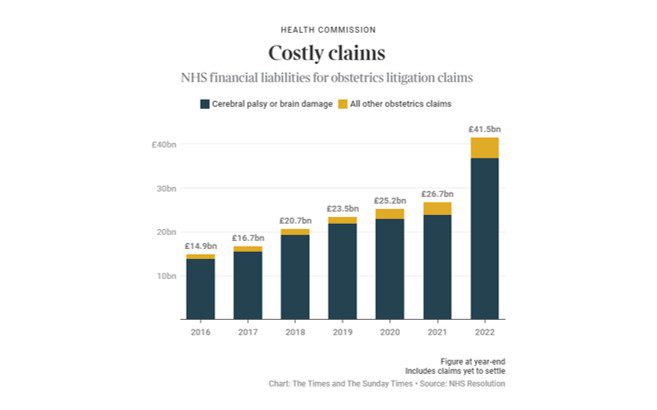
Many NHS maternity claims, particularly those involving birth injuries, cerebral palsy, or brain damage, can take years to resolve, significantly increasing long-term financial liabilities.

Thousands of Claims and Billions in Compensation

Independent research by the charity Baby Lifeline, analysed by the Times Health Commission, found that:

  • Over 10,000 clinical negligence claims were brought against the NHS in 2021-22
  • These claims were valued at more than £6 billion
  • Only 12% related to obstetrics, yet they accounted for 62% of the total value – £3.74 billion

In total, NHS obstetrics-related liabilities reached £41.5 billion, with £36.8 billion linked to negligence causing cerebral palsy or brain damage.

Families Want Learning and Accountability - Not Prolonged Litigation

James Titcombe, a bereaved father and campaigner with Baby Lifeline, said:

“We spend more on the cost of harm, when we could be spending more on prevention.”

He added that families affected by maternity negligence are not driven by financial gain:

“For the families affected, the last thing on their mind is litigation. They want the organisation to learn and they want to heal. They don’t want to be dragged through legal processes that re-traumatise them for years and years.”

NHS Response on Maternity Safety

An NHS spokesperson stated:

“Over the last decade, the NHS has made improvements to maternity services in England – with many fewer stillbirths and neonatal deaths – but we know further extensive action is needed to improve the experiences of women and their families across the country.”

Making a Maternity Negligence Claim

Why Families Chose to Make a Medical Negligence Claim

Clinical negligence in maternity care can be life-changing and devastating for both parents and children.

While no compensation can undo the harm, making a medical negligence claim can:

  • Provide a sense of justice
  • Secure vital financial support for ongoing care
  • Help drive systemic improvements to prevent future harm

Speak to Specialist Medical Negligence Solicitors

NJS Law Medical Negligence Expertise

Our NJS Law Medical Negligence Specialists are experienced in handling NHS maternity negligence claims, including cases involving:

  • Birth Injuries
  • Cerebral Palsy
  • Delayed diagnosis or poor obstetric care

We offer sympatheticconfidential support and will guide you through every step of the process.

Contact Our Medical Negligence Team

Call: 01625 667 262

Email: medical@njslaw.co.uk

Free, no-obligation consultation available

Ask NJS Law

For fast, friendly affordable legal advice. Contact a member of our team today.

FAQ

For any questions we may be able to answer, discover our FAQ section.

Categories
Serious Injury

Traumatic Brain Injury Claims: Understanding Your Rights and Legal Options

Have you or a loved one suffered a traumatic brain injury (TBI) due to an accident or negligence? If so, it is essential to understand your legal rights and the steps you can take to secure justice and compensation. Traumatic brain injuries can be life-changing, and pursuing a traumatic brain injury claim can provide vital financial and practical support.

Below, we explain what a traumatic brain injury is, the support available, and why making a claim may be crucial to your recovery.

What Is a Traumatic Brain Injury?

A traumatic brain injury occurs when a sudden blow or jolt to the head disrupts normal brain function. These injuries commonly result from:

  • Road traffic accidents
  • Falls from height
  • Workplace accidents
  • Sports-related injuries

TBIs can have long-lasting effects on cognition, memory, behaviour, and emotional wellbeing. In many cases, they also significantly reduce a person’s quality of life.

Medical Treatment and Rehabilitation After a TBI

After a traumatic brain injury, immediate medical attention is critical. Early diagnosis and treatment help stabilise the injury and prevent further damage. This process often includes brain imaging, neurological assessments, and specialist interventions.

In more serious cases, individuals may require care in an acute hospital setting or an inpatient rehabilitation facility. Here, a multidisciplinary medical team typically provides intensive support. This team may include neurologists, physicians, physiotherapists, occupational therapists, speech therapists, and psychologists.

Furthermore, people with severe or complex TBIs often need long-term rehabilitation. Ongoing therapy, vocational rehabilitation, and community support services can play a vital role in improving independence and quality of life. Importantly, every brain injury is different, so rehabilitation plans must be tailored to the individual’s needs.

Support and Resources for Families

When a family member sustains a traumatic brain injury, the impact extends beyond the injured person. Families often face emotional, practical, and financial challenges.

Common Challenges Families Experience

  • Emotional strain: Families may experience shock, anxiety, grief, or frustration while adjusting to changes in personality or behaviour.
  • Changing roles: Loved ones often take on caregiving responsibilities, manage medical appointments, and assist with daily living needs.
  • Financial pressure: Medical treatment, rehabilitation costs, and loss of income can place significant strain on household finances.

For these reasons, families should seek guidance from healthcare professionals, social workers, and organisations specialising in brain injury support. These resources can provide advice, emotional support, and access to essential services.

Why Traumatic Brain Injury Claims Are So Important

Making a traumatic brain injury compensation claim can help you or your loved one access the resources needed for recovery and long-term care. Compensation may cover:

  • Medical and rehabilitation expenses
  • Ongoing therapy and support services
  • Loss of earnings and future income
  • Pain, suffering, and reduced quality of life

Moreover, pursuing a claim holds the responsible party accountable and ensures that your future needs are properly addressed.

Time Limits for Traumatic Brain Injury Claims

It is important to act promptly. Strict time limits, known as limitation periods, apply to traumatic brain injury claims. These limits vary depending on the circumstances of the case. Therefore, speaking to an experienced brain injury solicitor as early as possible helps protect your right to claim compensation.

Why You Should Seek Specialist Legal Representation

Traumatic brain injury claims are often complex. As a result, you should seek advice from a solicitor who specialises in brain injury and catastrophic injury claims. A specialist lawyer will understand the medical and legal issues involved, work with expert clinicians, gather strong evidence, and negotiate with insurers on your behalf.

Most importantly, your solicitor will fight to secure the maximum compensation available, allowing you to focus on recovery rather than legal stress.

Start Your Journey to Justice Today

Traumatic brain injuries can have a profound and lasting impact on both individuals and their families. However, by making a traumatic brain injury claim, you take a positive step towards justice, financial security, and access to vital rehabilitation.

At NJS Law, we not only ensure you receive the compensation needed to support your future, but we also help arrange treatment and rehabilitation to improve your standard of living.

Our team has decades of combined experience representing clients in brain injury cases. We are compassionate, understanding, and committed to supporting you every step of the way.

CONTACT US

Get in touch using the form below or via the following methods:

Ask NJS Law

For fast, friendly affordable legal advice. Contact a member of our team today.

FAQ

For any questions we may be able to answer, discover our FAQ section.