

If you have been injured at work because of unsafe conditions or your employer’s negligence, you may be entitled to compensation — and you should not have to pay anything upfront to find out.
NJS Law’s accident at work solicitors work on a no win, no fee basis, which means if your claim is unsuccessful, you pay nothing.
We act for injured workers across England and Wales, covering everything from slips and falls to serious machinery and construction site injuries.
Accident at work claims are part of our Personal Injury Claims service. See also: Road Traffic Accident Claims · Serious Injury Claims
Trustpilot
Combined Legal Experience
Single Settlement Secured
Regulated - No. 8006550
Personal Injury Panel accreditation
680,000 workers were injured in the workplace in 2024–25. You may be entitled to compensation.
Complete the form below or contact us directly. Our solicitors will review your situation and confirm your eligibility in a free consultation.
An accident at work claim is a legal process that allows you to seek financial compensation when you have been physically or psychologically injured as a result of your employer’s negligence or a failure to take reasonable care for your safety.
In England and Wales, the law recognises that every employer owes their employees a duty of care — and if a failure in that duty caused your injury, you have the right to claim compensation. This principle was established in the landmark case of Donoghue v Stevenson [1932] and has formed the foundation of personal injury law ever since.
For a claim to succeed, three things need to be true:
Your employer owed you a legal duty to take reasonable care of your health and safety at work.
Health & Safety at Work Act 1974 · Employers’ Liability (Compulsory Insurance) Act 1969
Your employer failed to meet the standard of care expected — for example through unsafe systems of work, missing training, poor equipment maintenance, or ignored hazards.
Management of Health and Safety at Work Regulations 1999
There must be a direct causal link between the breach and the harm you suffered — the injury would not have happened, or would have been significantly less severe, if proper care had been taken.
Causation — the “but for” test
Compensation in an accident at work claim covers two main categories:
For a detailed breakdown of what you can claim for, read our guide: General Damages vs Special Damages Explained.
You may be able to make an accident at work claim if you are:
You may be entitled to make an accident at work claim if all three of the following apply:
You can still claim even if the accident was partly your fault. In those cases, your compensation may be reduced to reflect your share of responsibility — this is called contributory negligence. Read more: Can I Claim If the Accident Was Partly My Fault?
If you are unsure whether your situation qualifies, our solicitors can give you a free, no-obligation assessment.
In England and Wales, you have three years from the date of your accident — or the date you first became aware that your injury was linked to your work — to make a claim. This time limit is set out in the Limitation Act 1980.
Missing this deadline will almost always mean you lose your right to claim, so it is important to take legal advice as early as possible. There are, however, important exceptions:
For a full explanation of all time limit exceptions and what to do if you are approaching your deadline, see our guide: Personal Injury Claim Time Limits in England and Wales.
For guidance on how long the claim process itself takes once you have started: How Long Does a Personal Injury Claim Take?
There is no single fixed amount — compensation is calculated based on the type and severity of your injury, the impact it has had on your life, and the financial losses you have suffered as a result.
The starting point for valuing injuries is the Judicial College Guidelines, which set out the compensation brackets judges use when assessing general damages in England and Wales. The table below gives indicative ranges based on the 18th edition:
| Type of Injury | Key Factors | Indicative Range |
|---|---|---|
| Minor soft tissue / whiplash | Recovery period, impact on daily activities | £1,000 – £11,000 |
| Moderate back injury | Duration of symptoms, impact on mobility and work | £12,000 – £38,000 |
| Serious back injury | Permanent symptoms, disc damage, nerve involvement | £38,000 – £170,000+ |
| Leg fracture (simple) | Recovery time, surgery required, long-term impact | £7,000 – £20,000 |
| Serious leg / limb injury | Multiple fractures, permanent disability, amputation | £40,000 – £130,000+ |
| Arm / shoulder injury | Severity, dominant arm affected, impact on work | £6,500 – £45,000 |
| Head and brain injury | Cognitive impairment, personality change, long-term care | £15,000 – £380,000+ |
| Psychological injury (incl. PTSD) | Severity, duration, impact on employment and relationships | £3,500 – £100,000+ |
Important: these ranges are a general guide only, based on the Judicial College Guidelines, and do not constitute legal advice. Special damages — including lost earnings, medical costs, and care — are assessed separately and may significantly increase the total.
What Is the Average Personal Injury Compensation Payout in the UK?
Contact NJS Law for a free, no-obligation assessment of your specific claim.
Real result from our team: in one recent case, our solicitors secured a £3.7 million settlement for a warehouse worker who suffered catastrophic injuries in a forklift accident. While this reflects an exceptional case, it demonstrates the scale of compensation available for serious harm. This outcome is illustrative of results we’ve achieved — not typical or guaranteed. Read more of our case results below.
Our solicitors handle the full spectrum of workplace accident claims across England and Wales.
If you’ve been injured at work and aren’t sure what your rights are, our free guide gives you clear, straightforward answers.
Accident at work claims in England and Wales are governed by a combination of statute and common law. Understanding the legal basis strengthens your claim.
The primary health and safety statute in England and Wales. Requires every employer to ensure, so far as is reasonably practicable, the health, safety, and welfare of all employees. Also covers contractors and visitors on business premises.
Requires employers to carry out suitable and sufficient risk assessments of all workplace hazards. Failure to assess and control a risk that causes your injury is a breach of these Regulations.
Requires that all work equipment is suitable for its purpose, properly maintained, and that employees are trained to use it safely. Applies to everything from hand tools to industrial machinery and forklifts..
Requires employers to avoid manual handling tasks that risk injury where reasonably practicable, and to carry out proper risk assessments where manual handling cannot be avoided. A failure to do so is a common basis for back and shoulder injury claims.
Requires employers to prevent any work at height where reasonably practicable, and where it cannot be avoided, to use appropriate equipment and safeguards. Applies to ladders, scaffolding, roofs, and any elevated work platform.
Requires all employers to hold insurance covering their liability to employees for workplace injury. This means your claim is made against the insurer — even if your employer has since gone out of business or into administration, the insurer remains liable.
NJS Law has recovered over £6 million for injured workers in 2024–25 alone.
Making an accident at work claim with NJS Law follows five clear stages, from your first free call through to settlement. Here is exactly what happens at each step.
Report the accident to your employer as soon as possible and ensure it is recorded in the workplace accident book. Ask for a copy of the entry. This creates an official record of the incident date, location, and circumstances.
Visit your GP or A&E immediately after the accident — even if injuries seem minor. Describe exactly how the accident happened. Medical records are one of the most important pieces of evidence in any workplace injury claim.
Photograph the accident scene, the hazard that caused the injury, and your injuries. Collect witness names and contact details. Request CCTV footage immediately — most employers overwrite recordings within 30 days.
Speak to one of our specialist accident at work solicitors for a free, no-obligation assessment of your claim. We will tell you clearly whether you have a valid claim and what it is likely to be worth.
If we take on your case, we gather all available evidence and issue a formal Letter of Claim to your employer’s insurer. They have 21 days to acknowledge receipt and a further period to investigate and respond.
You will be referred to an independent medical expert who will examine you and produce a report on your injuries, prognosis, and any ongoing treatment you need. This report is central to valuing your claim.
We present a full Schedule of Loss to the defendant’s insurer and negotiate the best possible settlement on your behalf. Around 95% of claims settle at this stage — without going to court.
Once a settlement is agreed or judgment awarded, your compensation is paid. Your solicitor’s success fee is deducted at this stage — the amount is agreed with you before you sign anything.
| Stage | Typical Timeframe |
|---|---|
| Case assessment & funding agreement | 1–2 weeks |
| Medical evidence obtained | 4–12 weeks |
| Letter of Claim sent | Within 6–12 weeks |
| Defendant’s response | Up to 3 months |
| Negotiation and settlement | 3–6 months after response |
| Court proceedings if disputed | 12–24 months additional |
Straightforward workplace accidents — typically 9–18 months
Disputed liability or complex cases — typically 12–24 months
Serious & catastrophic workplace injury — typically 2–5 years
A warehouse operative suffered life-changing injuries when he was struck by a forklift truck operated by a colleague. Facing permanent disability and unable to return to work, he needed specialist support to rebuild his life.
Our solicitor Nichola Johnson built a comprehensive claim covering his injuries, future care needs, lost career earnings, and necessary home adaptations. After sustained negotiation, we secured a £3.7 million settlement — one of the largest workplace injury awards our firm has achieved.
“With the interim payments, I managed to rent and furnish a four-bedroom bungalow. I bought an SUV that's easier for me to get in and out of. I can walk a little and drive again. It won't bring back the life I once had, but it eases the pain. Stay strong and talk to people — there is life after your accident.”
— NJS Law client · Forklift accident · Workplace serious injury
Defective, poorly maintained equipment malfunctioned without warning, causing a heavy load to fall onto both legs and resulting in broken bones, ligament damage and long-term mobility issues. Our client's employer had failed to maintain the equipment properly.
Read More →Our client tripped over a pallet left in a cluttered workspace and was then trapped by a moving pump truck. We successfully argued liability based on unsafe conditions and poor housekeeping at the site.
Read More →A printer wedged tightly against a wall caused a serious arm injury when our client tried to clear a jam. We proved the employer failed to provide a safe workplace setup and risk assessment.
Read More →When Alan came to work one day, he had no idea he was about to suffer an injury that would change his life. A fall through an open, unguarded cellar hatch left him unable to drive, struggling with mobility, and under severe financial pressure. His employer refused to accept liability, leaving Alan uncertain about his next steps.
Alan chose NJS Law because he had trusted our solicitors before. With our accident at work specialists guiding him, he pursued his claim on a no win, no fee basis and secured the compensation he deserved.
“Absolutely elated… the compensation really helped and sorted a few things out. Most definitely the best solicitors I've ever dealt with — and I mean that truly. If you're unsure, always seek legal advice straight away.”
— Alan · Accident at work client · NJS Law
Case outcomes shown are genuine, individual results and are illustrative of outcomes we've achieved — not typical or guaranteed, as every claim is decided on its own facts.
Being injured at work can feel overwhelming, especially if you’re unsure of your rights or worried about your job. Our expert solicitors provide clear, honest advice and manage every aspect of your claim, so you can focus on recovery while we fight for justice.
Our specialist EL/PL team brings decades of expertise across workplace injury, employer liability, and serious injury claims.
Authorised by the Solicitors Regulation Authority (no. 8006550).
Rated Excellent from 764 Trustpilot reviews and 4.7★ from 796 Google reviews. Top 10 UK Personal Injury Lawyers on Trustpilot.
£3.7M forklift settlement · £135,000 Manchester worker · £33,000 overseas injury · £18,000 arm injury. Real outcomes for real clients.
All accident at work claims at NJS Law are handled under a Conditional Fee Agreement (CFA) — what most people call No Win, No Fee. Here is exactly what that means for you:
You can read a full plain-English explanation of how No Win, No Fee agreements work at No Win No Fee Claims Page.
Our accident at work solicitors combine decades of experience with a client-first approach. We know how difficult this time can be — and we’ll stand by your side throughout your claim.
Contact us today for a free consultation and take the first step toward securing the compensation you deserve.
At NJS Law, we understand that no two accident at work cases are the same. That’s why we offer personalised legal support, taking into account every aspect of your injury and its impact.
Here’s how we help build your claim:
We assess how serious your injury is, considering both immediate effects and long-term impacts on your health and daily life.
We consider permanent disability, ongoing medical care, or other long-term effects to understand how your quality of life may be affected.
Our team calculates the income lost from time off work and ensures you're compensated fairly for financial hardship and reduced earning potential.
If you need help from family or carers, we make sure this unpaid support is fully recognised in your compensation.
We assess adjustments to your home, vehicle, or lifestyle that were needed after your injury and ensure these costs are included.
NJS Law covers all treatment expenses, from therapy and prescriptions to travel for medical care, so you're not left out of pocket. We build the strongest possible case so you can focus on recovery while we handle the legal work with care and determination.
All accident at work claims at NJS Law are handled under a Conditional Fee Agreement (CFA) — what most people call No Win, No Fee. Here is exactly what that means for you:
We explain every detail of the agreement clearly before you sign. There are no hidden clauses and no unexpected deductions. Read more: No Win No Fee Claims – Explained.
680,000 workers were injured in the workplace in 2024–25. You may be entitled to compensation.
Making an accident at work claim can feel overwhelming. Below we’ve answered the most common questions our clients ask. These cover eligibility, time limits, compensation, and what happens if your case goes to court.
In most cases, you have three years from the date of your accident to issue court proceedings under the Limitation Act 1980. If your injury resulted from a gradually developing condition (such as an industrial disease), the three-year clock may run from when you first knew, or ought reasonably to have known, that the condition was linked to your work. For children, the three years starts on their 18th birthday. For full details, see our guide: Personal Injury Claim Time Limits
Compensation depends on the nature and severity of your injury, your recovery time, and the financial losses you have suffered. Minor injuries can attract a few thousand pounds. Serious or life-changing injuries can result in six or seven-figure awards. NJS Law will give you a realistic estimate at your free initial assessment. See the compensation table on this page for guidance on typical ranges by injury type.
The vast majority of accident at work claims — around 95% — settle before a court hearing. Court proceedings may be issued to protect the time limit or to accelerate negotiations, but in most cases a hearing is not required. If your case does go to trial, your solicitor will prepare you thoroughly for what to expect.
No. It is automatically unfair dismissal under the Employment Rights Act 1996 to dismiss an employee for asserting a statutory right, including the right to bring a workplace injury claim. You also cannot lawfully be subject to demotion or harassment for bringing one. Read more.
No. It is automatically unfair dismissal under the Employment Rights Act 1996 to dismiss an employee for asserting a statutory right, which includes the right to make a workplace injury claim. You also cannot legally be subject to detriment, demotion, or harassment for bringing a claim. Your employer’s liability insurer — not your employer personally — pays your compensation, which removes any financial incentive for your employer to treat you unfairly.
Yes, in many circumstances. If a site owner, principal contractor, or another employer had effective control over your working conditions, they may owe you a duty of care even if you were not their direct employee. Claims involving self-employed workers are more complex, but NJS Law handles them regularly. Contact us to discuss the specific circumstances of your accident.
The most useful evidence includes: the accident book entry, photographs of the hazard and your injuries, CCTV footage (request this immediately — most employers overwrite within 30 days), witness names and contact details, and your medical records from GP and hospital. Your solicitor will advise on any additional evidence needed once they have reviewed your case.
This is very common. An initial denial of liability does not mean your claim will fail. Your solicitor will investigate, gather evidence, and present a detailed legal case to the defendant’s insurer. If the insurer continues to dispute liability, court proceedings can be issued — which usually prompts a further round of negotiation. Most claims with strong evidence settle even after an initial denial.
You can still claim. The Employers’ Liability (Compulsory Insurance) Act 1969 requires all employers to hold liability insurance. The insurer remains liable even after the employer closes, goes into administration, or becomes insolvent. Your solicitor will trace the relevant insurer and pursue the claim directly against them. In some cases, insurers can be traced through the Employers’ Liability Tracing Office.
Yes. Where both you and your employer share responsibility for the accident, your compensation is reduced by the percentage of your fault under the Law Reform (Contributory Negligence) Act 1945. For example, if you are found 25% responsible and your injuries are valued at £40,000, you would recover £30,000. Contributory negligence reduces your award — it does not bar you from claiming. For more, read: Can I Claim If the Accident Was Partly My Fault?
RIDDOR (Reporting of Injuries, Diseases and Dangerous Occurrences Regulations 2013) requires employers to report certain serious workplace accidents to the HSE. If your accident should have been reported under RIDDOR, a copy of that report can support your claim as an independent official record. If your employer failed to file a required report, this itself is evidence of poor health and safety compliance — and it will not prevent you from claiming. See the RIDDOR section on this page for more detail.
Yes — in some circumstances. If liability has been admitted and your losses are clear, your solicitor can apply to the court for an interim payment — a sum paid on account of your final compensation to help with immediate financial needs such as lost wages, medical costs, or care. This is particularly valuable in serious injury cases. For full details, read: Interim Payments in Personal Injury Claims
Explore our latest guides and expert tips on accident at work claims. Learn what affects compensation, who may be liable, and how to strengthen your case.

Injured at work? Learn the key steps to take straight away to protect your health, evidence, and legal rights.

Find out how workplace injury compensation is calculated and what factors can affect the value of your claim.

Learn how No Win No Fee accident at work claims work and how you can start a claim without upfront legal fees.
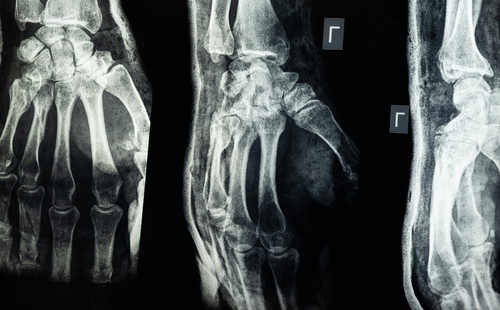
A simple guide to the personal injury claims process, from starting your claim to reaching a settlement.

Understand your rights if you are worried about your job after making a workplace injury claim.

Learn what RIDDOR is, which workplace accidents must be reported, and how it may support your claim.

Find out your rights after a construction site accident and how to claim compensation for your injuries.

Learn how PUWER 1998 protects workers injured by unsafe machinery, tools, or workplace equipment.

Understand the key time limits for making a personal injury claim in England and Wales.

Find out how partial fault can affect your personal injury claim and compensation amount.

Learn the difference between compensation for pain and suffering and compensation for financial losses.

Find out when interim payments may be available before your personal injury claim fully settles.
680,000 workers were injured in the workplace in 2024–25. You may be entitled to compensation.
For fast, friendly affordable legal advice. Contact a member of our team today.