
On this page
Fatal accident claims at a glance
| Who can claim | Certain relatives and dependants of the deceased, under the Fatal Accidents Act 1976; the executor or administrator of the estate, under the Law Reform (Miscellaneous Provisions) Act 1934 |
| Time limit to claim | Fatal accident claims: 3 years from date of death or the dependant's date of knowledge — see time limits |
| Cost to you | No Win No Fee — nothing upfront and, in most cases, nothing if your claim is unsuccessful |
| What can be claimed | Bereavement award; loss of financial dependency; loss of services; funeral expenses; general damages on behalf of the estate |
| Will the claim go to court? | Most cases settle out of court. If liability is disputed, we negotiate firmly and, if needed, represent you in court |
| Who regulates us | Solicitors Regulation Authority, SRA No. 8006550 |
Who can make a fatal accident claim?
Under the Fatal Accidents Act 1976, certain relatives and dependants of the deceased are legally entitled to bring a claim. These include:
In addition, the executor or administrator of the estate can bring a claim on behalf of the deceased’s estate under the Law Reform (Miscellaneous Provisions) Act 1934.
How long do I have to make a fatal accident claim?
In England and Wales, the limitation period for fatal accident claims is 3 years from date of death or the dependant's date of knowledge.
Personal injury claim time limits — a full breakdownHow is compensation calculated in a fatal accident claim?
Every fatal accident claim is different, and the amount of compensation awarded will depend on the individual circumstances of the case. In general, compensation is calculated by considering several key elements:
Bereavement award
A fixed statutory sum (currently £15,120 in England & Wales) payable to certain close relatives, such as a spouse, civil partner, or parents of a minor child.
Loss of financial dependency
Compensation for the financial support the deceased provided to their dependants, such as:
Loss of services
The value of services the deceased provided, including childcare, household tasks, care for elderly relatives, or other domestic contributions that now must be replaced.
Funeral expenses
Reasonable funeral and associated costs can usually be recovered as part of the claim.
General damages (estate claim)
If the deceased suffered pain, suffering, or financial losses between the accident and their death, these may be claimed on behalf of the estate under the Law Reform (Miscellaneous Provisions) Act 1934.
Factors considered in calculating compensation
Courts and insurers will also take into account:
Why specialist legal advice matters
Calculating compensation in fatal accident claims can be complex, particularly when assessing long-term financial dependency and services. An experienced fatal accident solicitor considers every element of the claim and works to recover the full compensation the family is entitled to. The same level of specialist expertise is crucial in serious injury claims, where long-term needs, future losses, and ongoing care must be carefully assessed.
What have we won in a serious injury claim?
Figures are compensation before any deductions.
Every case is different; past results do not guarantee a similar outcome.
You can read more about this case in our article Forklift Accident Compensation Claim.
What types of fatal accident claims do we handle?
Our fatal accident claim solicitors support families across a wide range of fatal accident cases, including:
Losing a loved one in a fatal accident is devastating and can place an enormous emotional and financial strain on families. Our experienced fatal accident solicitors understand the sensitivity of these cases. We gather the evidence, value your claim and negotiate with the insurer under the Fatal Accidents Act 1976.
We are here to guide and support you through every step of the claims process during this most difficult time.
Fatal accident claims are part of our Serious Injury Claims service.
How does a fatal accident claim work? A step-by-step guide
Losing a loved one in a fatal accident is devastating. Our fatal accident solicitors guide families through every step of the claims process, making it as straightforward as possible while ensuring you secure the compensation you are entitled to.
Free initial consultation
We offer a free consultation to assess your case honestly and without obligation, giving you clear advice on whether you can claim.
Evidence gathering
We gather medical records, accident reports, and expert testimony to prove liability and build your case with evidence.
Establishing liability
We identify who is legally responsible — whether that’s an employer, driver, medical professional, or another party — and present your case to them.
Calculating your losses
We calculate compensation to cover bereavement damages, loss of financial dependency, funeral expenses, loss of services, estate claims for pain, suffering or financial loss before death.
Negotiation or settlement
Most cases settle out of court. If liability is disputed, we negotiate firmly and, if needed, represent you in court to secure fair compensation.
What does No Win No Fee mean?
If your claim is unsuccessful, you pay us nothing in most cases. The arrangement is called a Conditional Fee Agreement (CFA):
Why choose NJS Law for a fatal accident claim?
When your family is dealing with the devastating loss of a loved one, you need a solicitor who combines legal expertise with compassion. At NJS Law, we understand the emotional and financial challenges that follow a fatal accident and are dedicated to guiding families through this difficult time.
Who will handle a fatal accident claim?
Our fatal accident claims solicitors combine more than 200 years of combined legal experience with a client-first approach. We know how difficult this time can be — and we’ll stand by your side throughout your claim.
 Leanne HentonHead of Personal Injury and Medical NegligenceView profile
 Hayley YatesSerious Injury SolicitorView profile
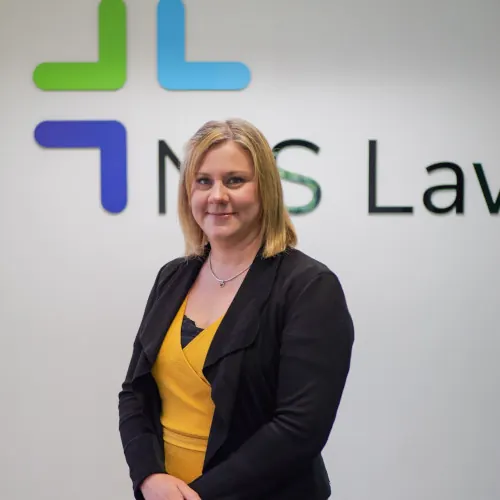 Nichola JohnsonSerious Injury SolicitorView profile
 Helen PenneySerious Injury SolicitorView profile
 Hannah MenziesSerious Injury LitigatorView profile
 Abbie JonesSerious Injury ParalegalView profile
Contact us today for a free consultation.
Where can I read more?
Where do these figures come from?
- Fatal Accidents Act 1976
- Law Reform (Miscellaneous Provisions) Act 1934
- Limitation Act 1980