
On this page
Serious injury claims at a glance
| Time limit to claim | Most claims must start within three years. Exceptions apply for children and individuals without mental capacity |
| Cost to you | No Win No Fee — nothing upfront and, in most cases, nothing if your claim is unsuccessful |
| What you can claim | General damages for pain, suffering and loss of amenity; special damages and future financial losses; rehabilitation and treatment; care and case management; equipment and adaptations; accommodation needs |
| Interim payments | Where liability is accepted, interim payments fund urgent treatment, rehabilitation, and essential support |
| How long it takes | 2–5 years for serious injury |
| Will I go to court? | Most cases settle without a hearing, but your solicitor will prepare the case for court if liability or damages are disputed |
| Who regulates us | Solicitors Regulation Authority, SRA No. 8006550 |
Could you be entitled to serious injury compensation?
You may be eligible to claim if all three of the following apply:
You suffered a physical or psychological injury
It happened within the last three years (or another time limit applies)
Another person, business or organisation was fully or partly at fault
What is a serious injury claim?
Catastrophic injuries, and other kinds of serious personal injury, often cause permanent or long-term changes that affect mobility, independence, employment, and future earnings.
To better understand the severity of injuries involved, read What Classifies as a Serious Injury? These injuries demand specialist representation to assess medical needs, evidence future losses, and secure the resources required for long-term independence.
Serious injury claims are part of our Personal Injury Claims service. Read how No Win No Fee works and what it costs on that page.
How long do I have to make a serious injury claim?
In England and Wales you have three years from the date of your injury — or the date you first became aware of it — to start a claim, under the Limitation Act 1980. Missing this deadline will almost always mean losing your right to claim. Important exceptions apply:
| Type of claim | Limitation period | Notes |
|---|---|---|
| Standard personal injury | 3 years | From date of accident or date of knowledge |
| Child injury claim | Until age 21 | 3-year clock begins on 18th birthday |
| Mental incapacity | Does not start | While the person lacks capacity from the date of injury. If capacity is lost later, the time limit keeps running |
| Fatal accident claims | 3 years | From date of death or the dependant's date of knowledge |
How much compensation can I claim for a serious injury?
Serious injury compensation reflects the long-term physical, psychological, and financial consequences of your accident. High-value claims often include extensive medical needs and significant future losses. This section explains what serious injury compensation claims can include.
General damages for pain, suffering and loss of amenity
General damages compensate for pain, reduced mobility, psychological trauma, and loss of independence. The amount reflects injury severity and long-term prognosis.
Special damages and future financial losses
Special damages cover measurable losses such as treatment, medication, lost earnings, and care. Future losses can be substantial when mobility, employment, or independence is permanently affected.
Rehabilitation, treatment and medical support
Compensation can fund physiotherapy, psychological therapy, occupational therapy, and long-term medical support. Interim payments may cover early rehabilitation while the claim is ongoing.
Care, assistance and case management
Claims include the cost of professional carers, family support, and long-term case management. Serious injuries often require structured daily assistance and coordinated therapy.
Equipment, mobility and adaptations
Compensation can cover mobility aids, prosthetics, wheelchairs, vehicle adaptations, and home modifications. Larger claims include lifetime replacement cycles for specialist equipment.
Housing and accommodation needs
If your home is no longer suitable, compensation can fund alternative accommodation or adaptations such as wider doorways, accessible bathrooms, ramps, or single-level living.
Can I get money before my serious injury claim is finished?
Sometimes, yes. This is called an interim payment: an advance on your final compensation. It can be paid voluntarily by the other side, or the court can order one. Under the Civil Procedure Rules (rule 25.23), the court may only order an interim payment where:
- the defendant has admitted liability to pay damages;
- you have obtained judgment against the defendant for damages to be assessed; or
- the court is satisfied that, if the claim went to trial, you would obtain judgment for a substantial amount of money.
The court must not order more than a reasonable proportion of the likely amount of the final judgment (rule 25.20). You may make more than one application (rule 25.21). In a claim for a child, or for an adult who lacks the capacity to conduct the claim, no payment, including a voluntary interim payment, is valid without the court’s approval (rule 21.10).
Will serious injury compensation be paid as a lump sum or as regular payments?
Under section 2 of the Damages Act 1996, a court awarding compensation for future financial loss after a personal injury may order that it is paid wholly or partly as regular payments, called periodical payments, and must consider whether to make that order. It can only do so if it is satisfied that the payments are reasonably secure. Other parts of the compensation can be paid this way only if both sides consent.
If it is proved or admitted that there is a chance you will develop a serious disease or suffer a serious deterioration in your physical or mental condition because of the injury, the law allows the court, in some cases, to award provisional damages: compensation now on the basis that this will not happen, and further compensation later if it does (section 32A of the Senior Courts Act 1981 in the High Court; section 51 of the County Courts Act 1984 in the county court).
Who makes decisions if my relative cannot manage the serious injury claim?
A claim can still be brought. Under the court rules (rule 21.2), an adult who lacks the mental capacity to manage their own court case must have a litigation friend, and so must a child unless the court orders otherwise. The litigation friend makes decisions about the court case on their behalf. The court will check that the person is suitable. When there is no one suitable, willing and able to act, the court may ask the Official Solicitor to step in.
Managing money is a separate question. Where an adult lacks the mental capacity to make their own decisions, the Court of Protection can appoint a deputy to make decisions for them, for example about their property and financial affairs. The court order says what the deputy can and cannot do.
Who pays compensation after a serious injury?
That depends on how you were hurt. The law requires insurance in two common situations:
- On the road. Under section 143 of the Road Traffic Act 1988, a person must not use a motor vehicle on a road or other public place unless there is a policy of insurance in force that meets the requirements of the Act.
- At work. Most employers must have employers’ liability insurance as soon as they become an employer, covering at least £5 million.
If the driver was uninsured, or left the scene without making their identity known, the Motor Insurers’ Bureau may be able to help. It follows the rules set out in the government’s Uninsured Drivers’ Agreement and Untraced Drivers’ Agreement, so a claim has to meet those rules.
What have we won for people in your position?
Figures are compensation before any deductions.
Every case is different; past results do not guarantee a similar outcome.
You can read more about this case in our article Forklift Accident Compensation Claim.
What types of serious injury claims do we handle?
Serious injury claims often involve complex rehabilitation needs and long-term financial planning. These case stories and guides highlight how our team supports clients recovering from catastrophic injuries, and explain key issues that affect serious injury claims, including compensation, liability, and rehabilitation.
Articles: Serious Injury Claims
- Amputation Claims UK: Compensation, Timelines & Your Legal Rights
- Serious Injury Claims: What You Need to Know
- Spinal Injury Claims – What You Need to Know
- What Is Classed as a Serious Injury?
- Traumatic Brain Injury Claims: Understanding Your Rights and Legal Options
- £1.9 Million Settlement Secured After Catastrophic Motorcycle Accident
- Catastrophic Personal Injury Claims – A Practical Guide
How do our serious injury solicitors support your claim?
We understand the physical, emotional, and financial impact a serious injury creates. Our service extends beyond legal advice. We coordinate treatment, support long-term rehabilitation, and help you rebuild your life with practical guidance and structured care.
We provide compassionate support while pursuing justice from those responsible. Our goal is not only to win your case but to protect your future.
How do I make a serious injury claim? A step-by-step guide
Speak to our specialists today, and we will guide you clearly through every stage of the claims process.
Initial advice
We provide free, no-obligation advice to assess your circumstances and identify early support needs.
Investigation
We gather evidence, expert reports, and financial records to establish liability and long-term impact.
Interim payments
Where liability is accepted, interim payments fund urgent treatment, rehabilitation, and essential support.
Rehabilitation
We coordinate physical, psychological, and occupational therapy to support your recovery and independence.
Settlement
Once prognosis and future needs are clear, we quantify losses, negotiate with insurers, and secure a settlement that protects your long-term future.
What does No Win No Fee mean?
If your claim is unsuccessful, you pay us nothing in most cases. The arrangement is called a Conditional Fee Agreement (CFA):
Can I get a quick answer in under a minute?
All Legal Minute Monday videosWhat do the legal terms mean?
When you're found partly responsible for your accident. You can still claim, but compensation is reduced by your share of blame.
Read moreThe legal name for a No Win No Fee agreement — what you pay if you win, and that in most cases you pay nothing if you don't.
Read moreInsurance that covers the other side's legal costs and some expenses if your claim is unsuccessful.
Read moreCompensation for the injury itself — pain, suffering and loss of enjoyment of life.
Read moreCompensation for financial losses — lost earnings, medical costs, travel and care.
Read moreThe legal deadline for starting a claim — usually three years under the Limitation Act 1980.
Read moreWhy choose NJS Law for your serious injury claim?
We provide support that extends beyond securing compensation. Our team delivers practical assistance that helps you achieve long-term recovery and independence.
Who will handle my serious injury claim?
Our team has more than 200 years of combined legal experience in dealing with Serious Injury Claims, delivering tailored and reliable personal injury support. Our NJS Law Personal Injury Specialists can help you get the compensation the law allows for your injury and losses. If you are looking for serious injury lawyers, this is the team that handles these claims at NJS Law; each person’s role is shown under their name.
 Leanne HentonHead of Personal Injury and Medical NegligenceView profile
 Hayley YatesSerious Injury SolicitorView profile
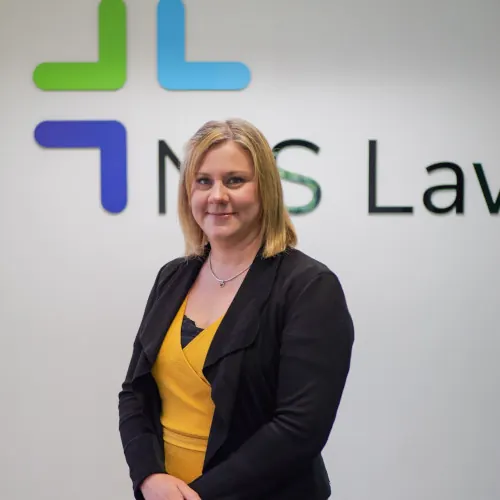 Nichola JohnsonSerious Injury SolicitorView profile
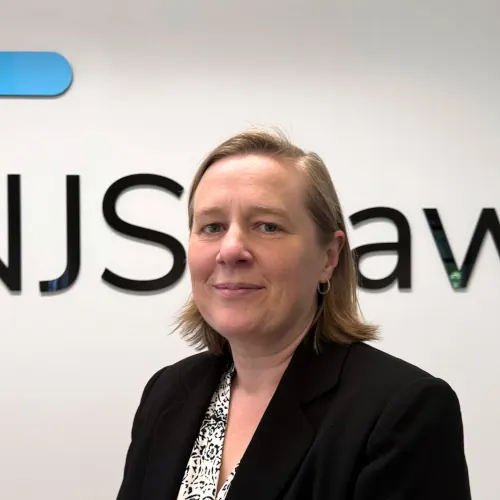 Helen PenneySerious Injury SolicitorView profile
 Hannah MenziesSerious Injury LitigatorView profile
 Abbie JonesSerious Injury ParalegalView profile
What else do people ask about serious injury claims?
What is a serious injury?
How do I make a serious injury claim?
How long do I have to claim?
How much compensation could I receive?
Will I have to go to court?
Where do these figures come from?
- Limitation Act 1980
- Civil Procedure Rules, Part 25 (rules 25.20, 25.21 and 25.23) and Part 21 (rules 21.2 and 21.10), justice.gov.uk
- Damages Act 1996, section 2
- Senior Courts Act 1981, section 32A
- County Courts Act 1984, section 51
- Road Traffic Act 1988, section 143
- GOV.UK: Employers’ liability insurance; Litigation friends; Deputies
- Motor Insurers’ Bureau: Make a claim with MIB