

Categories
Social Housing Disrepair

The Effect Of The Social Housing Regulation Bill 2022-23 On Tenants’ Rights

The Effect Of The Social Housing Regulation Bill 2022-23 On Tenants’ Rights

January 2023

As the Social Housing Regulation (SHR) Bill 2022-23 approaches its final report stage in the House of Commons our Housing Disrepair Solicitors thought it would be useful to set out why this Bill is so important and how it will improve the rights of tenants. 

Following the tragic death of a two-year-old boy due to respiratory disease linked to mould in his family’s social housing accommodation, we understand that many people are worried about the safety of their homes.

In the opening of the Social Housing White Paper on which many of the reforms in the SHR Bill 2022-23 are based, former Prime Minister, Boris Johnson reflected on the time he visited a mould and damp-infested house on a council estate in the 1980s:

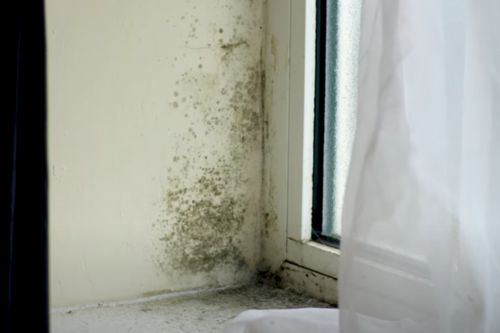
“And what struck me most when I arrived wasn’t the condensation streaming down the windows like a waterfall or the black spores of mould metastasising across the walls or even the rasping cough of the small baby, which seemed to get worse even in the short time I was there.

It was the miserable despair of the father, a man utterly bereft of hope at the problem ever being sorted out. He’d complained to the housing office, he’d complained to his local councillor, he’d complained to anyone who would listen and many who wouldn’t, but nobody seemed to care, nobody seemed willing or able to do anything about it.”

Mr Johnson stated that the White Paper aimed to develop a system to ensure social housing tenants were listened to. The SHR Bill 2022-23 is designed to make this happen.

What is the Social Housing Regulation Bill 2022-23?

The Bill aims to deliver the proposals set out in the Social Housing White Paper and the 2019 Conservative Government Manifesto. This will be achieved by introducing several measures to give tenants greater powers, improve access to swift and fair redress, and enhance the powers of the Regulator of Social Housing (the Regulator).

What did the Social Housing White Paper recommend?

The White Paper set out a charter detailing the standards social housing tenants should be able to expect:

  1. To be safe in your home. We will work with industry and landlords to ensure every home is safe and secure.
  2. To know how your landlord is performing, including on repairs, complaints and safety, and how it spends its money, so you can hold it to account.
  3. To have your complaints dealt with promptly and fairly, with access to a strong ombudsman who will give you swift and fair redress when needed.
  4. To be treated with respect, backed by a strong consumer regulator and improved consumer standards for tenants.
  5. To have your voice heard by your landlord, for example through regular meetings, scrutiny panels or being on its Board. The government will provide help, if you want it, to give you the tools to ensure your landlord listens.
  6. To have a good quality home and neighbourhood to live in, with your landlord keeping your home in good repair.
  7. To be supported to take your first step to ownership.
How has the Social Housing Regulation Bill 2022-23 implemented the standards set out in the White Paper?

The key provisions of the SHR Bill 2022-23 are:

  • Making safety, transparency, and energy efficiency part of the Regulator’s fundamental objectives.
  • Supporting the Regulator to set standards for the competence and conduct of staff working for registered providers of social housing.
  • Ensuring registered providers elect a designated person for health and safety issues.
  • Empowering the Secretary of State to introduce new requirements for registered providers relating to electrical safety checks.
  • Allowing the Regulator to order registered providers to collect and publish performance information.
  • Ensure registered social housing providers are regularly inspected.

The Regulator will also be able to make emergency repairs to ensure tenants are living in quality accommodation (the landlord will have to foot the bill). They will also be able to intervene if a landlord is not providing a decent standard of housing and guarantee timely action if the Regulator is concerned about the decency of the home in question.

Will the SHR Bill 2022-23 help tenants get their homes repaired faster?

Only time will tell. There will be a period of adjustment as the Regulator and registered providers understand their obligations and responsibilities under the new legislation. Much will depend on the willingness of the Regulator to act on specific cases.

In the meantime, it is vital that social housing tenants living in housing that requires repair contact us immediately. Not only can our expert Housing Disrepair Solicitors push your case to the front of the queue, but we may also be able to secure compensation for the damage you have suffered, for example, health issues and stress, due to repairs not being carried out.

How NJS Law can help you with housing disrepair claims

NJS Law is one of the few housing disrepair solicitors across England and Wales who have a professional and dedicated legal team to ensure that your repairs are completed and more importantly get your home into the excellent condition that you deserve.

We can help you with the following aspects:

  • Instruct a surveyor to assess the disrepair and provide a report to use as evidence.
  • If necessary, legally ensure your housing association or council completes all your repairs.
  • Claim compensation for you for the period of time your property has been in disrepair.

At NJS Law we are housing disrepair claim experts, assisting tenants nationwide on a NO WIN NO FEE basis to compel their council to conduct crucial repairs to their properties, in addition to recovering compensation for the period of time repairs have been delayed.

Our team has decades of combined experience in dealing with Housing Disrepair Claims. We are sympathetic, understanding, and are here to help you every step of the way.

Call us on 0800 093 3393 today to discuss your claim.

Ask NJS Law

For fast, friendly affordable legal advice. Contact a member of our team today.
FAQ

For any questions we may be able to answer, discover our FAQ section.

Categories
Council House Disrepair

The Housing Ombudsman Has Issued a Special Report on Birmingham City Council

The Housing Ombudsman has issued a special report on Birmingham City Council

January 2023

Since the conditions in which Awaab Ishak lived were made public and after the publication of the health problems that he suffered which led to his death, the Government and The Housing Ombudsman announced new regulations to monitor the quality and conditions of homes owned by local councils and housing associations.

The Housing Ombudsman has issued a special report on Birmingham City Council after finding fundamental failures in the handling of Housing Disrepair complaints and subsequent compensation.

“The Housing Ombudsman identified 4 key themes and delineate a series of recommendations:

  • Repairs – The aims of the landlord’s repairs policy were not met in practice, and residents had to make multiple attempts to get repairs resolved, often over a prolonged period. The report’s recommendations focus on how the landlord can improve triaging repairs requests, reviewing repairs progress with contractors, and taking a proactive approach to repairs.
  • Record keeping – The landlord’s response to repair requests and complaints showed the impact of poor record keeping. The landlord had no framework in place for the record keeping and the expectations on its staff and contractors. This is a significant weakness in the landlord’s approach and the cause of repeated service failure. Recommendations included developing a framework and an action plan to ensure better external and cross-departmental communications.
  • Complaint handling – The landlord’s complaints policy failed to comply with many of the requirements of the Complaint Handling Code, meaning there was little chance of individual complaints being handled appropriately. The report recommended the landlord update its complaint process to comply with the Code and then self-assess against it to detail how it will tackle cases of non-compliance.
  • Compensation – The landlord’s complaints policy did not allow for compensation to be paid for distress, inconvenience, time and trouble. It also said it could not make payments where the landlord decided there was no liability, which is entirely false. In one case the landlord initially refused to pay a financial remedy direct to the resident, instead wishing to offset it against rent arrears. The Ombudsman’s guidance on remedies is clear that compensation awarded by this Service should not be offset against arrears. The report recommends a new policy should be created so that a resident does not have to pursue a separate compensation claim.”

If you are a tenant, living in a Council or Housing Association rented property which has fallen into disrepair and your landlord has failed to repair it for you, you may have a disrepair claim against your Council or Housing Association.

How Nicholson Jones Sutton Solicitors can help you with damp and mould repairs

Nicholson Jones Sutton Solicitors are one of the few housing disrepair solicitors across England and Wales who have a professional and dedicated legal team to ensure that your repairs are completed and more importantly get your home into the excellent condition that you deserve.

We can help you with the following aspects:

  • Instruct a surveyor to assess the disrepair and provide a report to use as evidence.
  • If necessary, legally ensure your housing association or council completes all your repairs.
  • Claim compensation for you for the period of time your property has been in disrepair.

At NJS Law we are housing disrepair claim experts, assisting tenants nationwide on a NO WIN NO FEE basis to compel their council to conduct crucial repairs to their properties, in addition to recovering compensation for the period of time repairs have been delayed.

Our team has decades of combined experience in dealing with Housing Disrepair Claims. We are sympathetic, understanding, and are here to help you every step of the way.

Call us on 0800 093 3393 today to discuss your claim.

Ask NJS Law

For fast, friendly affordable legal advice. Contact a member of our team today.

FAQ

For any questions we may be able to answer, discover our FAQ section.

Categories
Inheritance Act Claims

Inheritance Act 1975 Claims Explained: Lessons from Fennessy v Turner

How To Make A Claim Under The Inheritance Act 1975

January 2023

The recent release of Prince Harry’s autobiography, Spare, illustrates just how fractious family relationships can be.

Although most families would be hard pressed to match the Windsor in both wealth and the occasional rancour towards each other, when it comes to money and inheritances, claims under the Inheritance (Provision for Family and Dependants) Act 1975 (Inheritance Act 1975) can demonstrate that each unhappy family is indeed “unhappy in its own way”.

A helpful example of how claims under the Inheritance (Provision for Family and Dependants) Act 1975 operate in practice can be found in the appeal case of Fennessy v Turner & another [2022] WTLR 1295.

The case concerned Hazel Fennessy, her two children Heidi and Patrick (the Claimant), and Mrs Turner, a third-party beneficiary.

Background to the Case

Hazel and her daughter Heidi lived together and shared an exceptionally close relationship throughout their lives. Tragically, Heidi died just six weeks before her mother. During her lifetime, Heidi was known to have difficult relationships with some family members, including her brother Patrick.

Patrick, who had seven children, worked for many years as a coalman and HGV driver and at one point ran the family coal merchant business. Importantly, he had been told that he would inherit “everything” once both Hazel and Heidi had passed away. As a result, this created a clear expectation.

Despite this, Hazel’s Will dated 24 January 2012 left her entire estate to Heidi and appointed her as sole executrix. The Will further stated that, if Heidi predeceased her, the estate would instead pass to Mrs Turner, who would also act as executrix. Patrick was entirely excluded.

The Inheritance Act 1975 Claim

Following Hazel’s death, Patrick brought a claim under the Inheritance Act 1975, arguing that the Will failed to make reasonable financial provision for him as Hazel’s son.

The estate was valued at £360,371.63. Patrick was awarded just over £195,000, and crucially, this decision was upheld on appeal.

This case provides a clear illustration of:

  • Who can bring a claim under the Inheritance Act 1975
  • How courts assess “reasonable financial provision”
  • The factors influencing the size of an award

What Is the Inheritance Act 1975?

The Inheritance Act 1975 allows certain individuals to apply to the court for reasonable financial provision if the deceased’s Will (or intestacy rules) fails to provide for them adequately.

In Patrick’s case, he qualified because he was the child of the deceased and had been completely excluded from the Will.

Other people who may be eligible to bring an Inheritance Act 1975 claim include:

  • A spouse or civil partner of the deceased
  • A former spouse or civil partner (provided they have not remarried or formed a new civil partnership, and are not barred by a divorce settlement)
  • A cohabiting partner who lived with the deceased for at least two years before death
  • A stepchild treated as a child of the family
  • A person who was financially maintained by the deceased immediately before death

⏱️ Time limit: Claims must usually be brought within six months of the Grant of Representation, although the court may extend this in limited circumstances.

What Is “Reasonable Financial Provision”?

In every Inheritance Act 1975 claim, the key question is whether the deceased made reasonable financial provision for the applicant, judged by the standard applicable to that person.

The burden of proof lies with the Claimant. Importantly, the court does not consider whether the deceased was morally right or wrong. Instead, it applies an objective legal test.

The court will examine:

  • The financial needs and resources of the Claimant and beneficiaries
  • The size and nature of the estate
  • Any physical or mental health issues affecting the parties
  • The obligations and responsibilities the deceased had to each party

Additionally, the court will consider factors specific to the Claimant’s status. For example:

  • For spouses, the court looks at age, duration of marriage, and what would have been awarded on divorce
  • For children, education, training, and future needs are relevant

Why Patrick Succeeded

In Fennessy v Turner, Patrick demonstrated genuine financial need. He lived in a motorhome, had limited savings, and due to disability, could only work part-time. He required stable accommodation and basic household necessities.

In contrast, Mrs Turner had no immediate or foreseeable financial needs and sufficient existing resources. Furthermore, Hazel owed no obligations to her.

As a result, the court awarded Patrick £195,000, covering:

  • His housing needs
  • Income shortfall
  • Furniture and white goods
  • His solicitor’s success fee under a No Win, No Fee agreement

Key Takeaways

While Inheritance Act 1975 claims carry risk—particularly the possibility of paying the other party’s costs if unsuccessful—this risk can often be managed with After the Event (ATE) insurance.

For this reason, it is vital to instruct a Contentious Probate Solicitor experienced in Inheritance Act claims. An experienced solicitor can assess prospects, manage costs, and often achieve an out-of-court settlement, saving time, expense, and emotional strain.

How We Can Help

Our team has decades of combined experience advising and representing clients who are:

We understand that these cases are often emotionally complex. Accordingly, we provide clear, practical advice and support at every stage of the process.

If you would like guidance on whether you can bring a claim, please get in touch for a confidential discussion.

CONTACT US TODAY

Use our contact form to message us below, or alternatively if you feel more comfortable, you can call us on

Ask NJS Law

For fast, friendly affordable legal advice. Contact a member of our team today.

FAQ

For any questions we may be able to answer, discover our FAQ section.

Categories
General Updates

What Is A No Win-No Fee Agreement

What Is A No Win-No Fee Agreement

January 2023

Fear concerning how to pay for legal fees prevents many people who have a compelling case for making a personal injury, medical negligence, or housing disrepair compensation claim from contacting a solicitor. However, for these types of cases, most solicitors work on a no-win no-fee basis.

No win-no fee allows more people to access justice and ensures those responsible for unresolved housing dilapidations and negligent acts or omissions that result in personal injury are held to account.

What is meant by no win-no fee?

No win-no fee agreements are often referred to as Conditional Fee Agreements (CFAs). Essentially, this means that if you lose your case, you will not have to pay your legal fees. However, depending on the contract you have with your Solicitor, you may need to pay for expenses associated with your case. These are referred to as disbursements.

How does a no-win-no-fee arrangement work?

If your solicitor agrees to work for no win-no fee, they can take out an insurance policy on your behalf to cover any costs incurred whilst running your compensation claim. These costs may include expert witness fees and court fees.

How does a solicitor get paid if my claim is successful?

If you win your compensation claim, your solicitor will charge a ‘success fee.’ 

Because your solicitor is shouldering all the risk in a no win-no fee agreement, they will carefully consider whether or not your compensation claim has strong merits before agreeing to take on your case. This is positive news for you as it means you can be confident that if your solicitor agrees to pursue your claim, they believe you have a strong chance of winning.

Do most personal injury, medical negligence, and housing disrepair cases go to court?

Thankfully, no. In most cases, solicitors for both sides settle the case before the court date. This is known as an ‘out of court settlement.’

Wrapping up

At NJS Law, we offer no-win- no fee arrangements for personal injury, medical negligence, and housing disrepair claims. Our friendly, approachable solicitors will take the time to explain the arrangement to you so you understand exactly what you will and will not have to pay if you lose and the fee, we will charge should you win your case.

Our team has decades of combined experience in successfully advising and representing clients claiming compensation. We are sympathetic, understanding, and are here to help you every step of the way.

Call us on 01 625 667166 today to discuss your claim.

Ask NJS Law

For fast, friendly affordable legal advice. Contact a member of our team today.
FAQ

For any questions we may be able to answer, discover our FAQ section.

Categories
Damp & Mould Disrepair

Recent Developments In Tackling Damp And Mould In Social Housing

Housing Disrepair Claim Guide

January 2023

Following the death of two-year-old Awaab Ishak from a respiratory condition exacerbated by damp and mould present in his flat, the Regulator of Social Housing (RSH) sent letters to registered providers of social housing reminding them:

a) of the potential danger of damp and mould to human health,
b) that damp and mould are potential dangers under the Housing Health and Safety Rating System,
c) that tenants’ concerns should be listened to, and
d) registered providers should have systems in place to identify and ensure that their homes are free from hazardous levels of damp and mould.

The largest social housing providers were asked in the letters to provide RSH with the following information by 19 December:

  • Their method for measuring damp and mould, including the most recent assessment of damp and mould in the context of this approach.
  • Action they are taking to remedy any issues and hazards, and ensuring homes meet the Decent Homes Standard.
  • How they ensure that individual damp and mould cases are detected and managed quickly and successfully.

The information provided to the RSH must be supported by relevant data.

The Social Housing Report published in July 2022

In late October 2022, the House of Commons Levelling Up, Housing and Communities Committee (the Committee) published the responses to its First Report of Session 2022–23, The Regulation of Social Housing (the Report).

In the initial Report, the Committee aimed to engage with as many social housing tenants as possible and received 628 responses covering matters such as the condition of their property, their providers’ responsiveness to requests for repairs, and their awareness of their right to take a complaint to the Ombudsman. The Committee also visited two housing association sites and spoke with tenants residing there.

With regards to housing disrepair, the Report spoke plainly, stating:

“It appears from most of the evidence to our inquiry that some social housing has deteriorated to the point of being unfit for human habitation. The worst conditions were variously described as “horrendous”, “appalling”, “disgraceful”, “scandalous”, and “unimaginable, uninhabitable and criminal”. Nick Murphy, Chief Executive, Nottingham City Homes (NCH), called this deteriorated housing an “embarrassment” to everyone in the sector, and Helen Garrett, BRE Group, even questioned “whether it would be safe for a surveyor to go into those homes”. Daniel Hewitt, ITV News, described one site as “the most indescribably poor, squalid and dangerous housing” he had ever seen, and the moment he saw it as “probably the angriest” he had ever been, “not just as a journalist, but as a human being”. Kate Henderson, Chief Executive, National Housing Federation (NHF), said the worst conditions were “completely unacceptable” and personally apologised on behalf of the providers her organisation represented.”

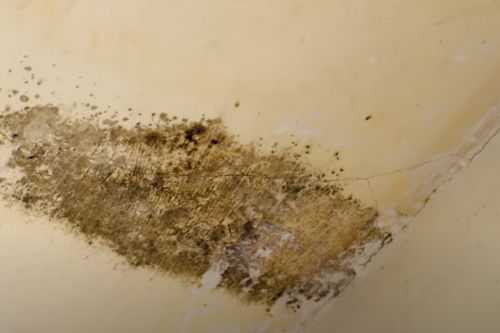
Damp and mould made up a considerable number of the social housing dilapidation issues. The Committee heard of one woman living in a flat with two children in which the black mould was so severe that mushrooms were growing in the corners. All three had developed breathing issues which their doctor blamed on their living conditions. Despite the tenant complaining for over two years, the housing provider had not addressed the problem.

Responses to the Social Housing Report

The Regulator of Social Housing responded to the Committee’s findings by pointing out that the examples highlighted by the Report, whilst “wholly unacceptable” did not represent the majority of social housing tenants’ experiences.

Regarding the treatment of tenants, the Regulator agreed that providers “must take concerns over stigma and discrimination seriously”. It stated that it will begin consultation this year on a new set of standards (subject to enactment of the Social Housing (Regulation) Bill and Direction to the Regulator by the Secretary of State) which may include the creation and support of tenant panels and groups to encourage better communication.

The Housing Ombudsman was also invited to respond. One of the Report’s recommendations was that all housing providers and the Housing Ombudsman co-ordinate to develop a strategy to increase awareness of the Housing Ombudsman and the rights of tenants to access its services. The Ombudsman agreed that more needed to be done to raise awareness of and access to the complaints procedure that can be accessed through its office.

Wrapping up

Unfortunately, when it comes to the government changing housing policies, nothing happens in a hurry. However, the Minister for Housing, Levelling Up and Communities, Michael Gove, has named and shamed several social housing providers over the past few months. One example is Birmingham City Council which failed to respond to a resident’s complaints of boiler faults and rotten floorboards in their living room.

The Social Housing (Regulation) Bill is currently at the Report stage and will receive its third and final reading at a date to be confirmed. According to the Explanatory Notes, the Bill

“…will facilitate a new, proactive approach to regulating social housing landlords on consumer issues such as safety, transparency and tenant engagement, with new enforcement powers to tackle failing landlords. The intent of this Bill is to reform the regulatory regime to drive significant change in landlord behaviour to focus on the needs of their tenants and ensure landlords are held to account for their performance.”

If you are a tenant and your home is in disrepair and your landlord has failed to respond to your complaints, it is imperative to contact an experienced Housing Claims Solicitor. They can not only ensure the problem with your property is fixed, but they can also get you compensation.

How NJS Law can help you with damp and mould repairs

At NJS Law we are one of the few housing disrepair solicitors across England and Wales who have a professional and dedicated legal team to ensure that your repairs are completed and more importantly get your home into the excellent condition that you deserve.

We can help you with the following aspects:

  • Instruct a surveyor to assess the disrepair and provide a report to use as evidence
  • If necessary, legally ensure your housing association or council completes all your repairs.
  • Claim compensation for you for the period of time your property has been in disrepair

At NJS Law we are housing disrepair claim experts, assisting tenants nationwide on a NO WIN NO FEE basis to compel their council to conduct crucial repairs to their properties, in addition to recovering compensation for the period of time repairs have been delayed.

Our team has decades of combined experience in dealing with Housing Disrepair Claims. We are sympathetic, understanding, and are here to help you every step of the way.

Call us on 0800 093 3393 today to discuss your claim.

Ask NJS Law

For fast, friendly affordable legal advice. Contact a member of our team today.

FAQ

For any questions we may be able to answer, discover our FAQ section.