Categories
Personal Injury

Key Factors Affecting Compensation in a Personal Injury Claim by Joanne Scrivens

mcpicadofelipe

When individuals suffer injuries due to someone else’s negligence, they may be entitled to compensation through a personal injury claim. The amount of compensation in such cases is influenced by several key factors. Understanding these factors can provide insight into how compensation amounts are determined and help individuals better navigate the legal process. In this article, Joanne Scriven explores the key factors that affect compensation in a personal injury claim.

General Damages
  • Nature and Severity of the Injury:
    The nature and severity of the injury sustained play a significant role in determining the compensation amount. Serious injuries resulting in long-term or permanent disabilities generally attract higher compensation. Factors such as the impact on daily life, ability to work, and the need for ongoing medical treatment or rehabilitation are considered when assessing the severity of the injury.
  • Duration of Recovery & Impact on daily life (PSLA):
    The length of time it takes for an individual to recover from their injuries affects the compensation amount. Prolonged recovery periods may result in higher compensation due to the extended impact on the injured person’s life, work, and overall well-being. Medical evidence and professional opinions are crucial in establishing the duration and impact of the recovery process.
    Pain, suffering, and loss of amenity are significant factors in determining the amount awarded. Loss of amenity refers to the impact on the injured person’s ability to enjoy life and pursue activities they previously enjoyed.
Financial Losses:

Compensation amounts in personal injury claims also take into account the financial losses incurred by the injured party. This includes medical expenses, rehabilitation costs, loss of earnings (both past and future), and any other expenses directly related to the injury. Keeping records of all expenses and financial losses can help support the claim for compensation.

Quality of Legal Representation:

Seeking legal representation is highly recommended when pursuing a personal injury claim. Experienced solicitors specialising in personal injury law can help maximise. They have the expertise to navigate the complex legal procedures and protect the rights of the injured person.

Conclusion:

Compensation in a personal injury claim is influenced by various factors, including the nature and severity of the injury, duration of recovery, impact on daily life, financial losses incurred and the quality of legal representation.

Each case is unique, and the compensation amount is determined on an individual basis.

If you have suffered a personal injury, it is important to consult with a qualified solicitor to understand your rights and pursue fair compensation for your losses.

Our team has decades of combined experience in successfully advising and representing clients in complex public and occupiers’ liability cases. We are sympathetic and understanding and are here to help you every step of the way.

CONTACT US

Get in touch using the form below or via the following methods:

Ask NJS Law

For fast, friendly affordable legal advice. Contact a member of our team today.

FAQ

For any questions we may be able to answer, discover our FAQ section.

Categories
Housing Disrepair

Housing Disrepair Claims Increase

mcpicadofelipe

Housing disrepair claims against social housing landlords have substantially increased since the Homes (Fitness for Human Habitation) Act 2018 came into force in England in March 2020. This legislation mandates that all landlords in England uphold a housing standard adequate for human habitation. As such, it empowers tenants, allowing them to pursue legal recourse against landlords who fail to maintain their property to the mandated standard, ultimately ensuring their protection.

There has been plenty written on the physical harm caused by unaddressed housing disrepair. However, living in damp, mouldy, dangerous, and unhygienic conditions can have a devastating impact on mental health as well (1). This was recently illustrated in the tragic case of a man who committed suicide after his landlord ignored 18 noise complaints concerning his upstairs neighbour. According to a report in the Evening Standard, the Housing Ombudsman stated that Clarion, the UK’s largest housing association, gave a “confusing and contradictory” service to the man and “ignored” his request for help in making a rehousing application.

The above case, alongside that of two-year-old Awaab Ishak, who died in December 2020 of a respiratory condition caused by exposure to the mould in his flat, has led to the Housing Secretary, Michael Gove, taking a robust approach concerning private and public landlords who repeatedly ignore tenant’s requests to repair their property and defy their responsibility to provide safe, healthy homes.

FIND OUT IF YOU ARE ELIGIBLE TO CLAIM FOR REPAIRS AND COMPENSATION

Average Compensation - £1,895
We work on a NO WIN NO FEE basis
to get your home put right and to get you compensated!

In August 2023, Mr Gove wrote to the CEOs of seven councils and seven housing associations, criticising their inaction on housing disrepairs. In some cases, it was the second letter the Housing Secretary had sent to the landlords. In one such letter, he stated he was “extremely disappointed” to be writing to the landlord again, describing two further findings of severe maladministration as “extremely concerning”.

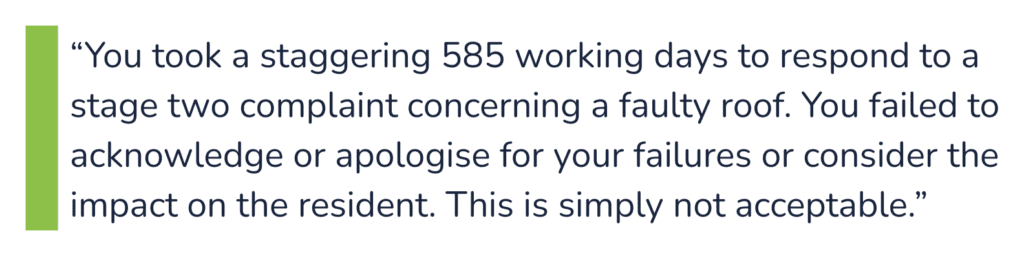
“In the second case, you took a staggering 585 working days to respond to a stage two complaint a resident made concerning a faulty roof,” he wrote.

“You failed to acknowledge or offer an apology for your failures and, again, did not consider the impact your failures had on the resident. This is simply not acceptable.”

The following month, Mr Gove chastised a Merseyside housing association after a tenant was awarded £3,000 in compensation because of damp in their home. The Housing Ombudsman Richard Blakeway told the BBC:

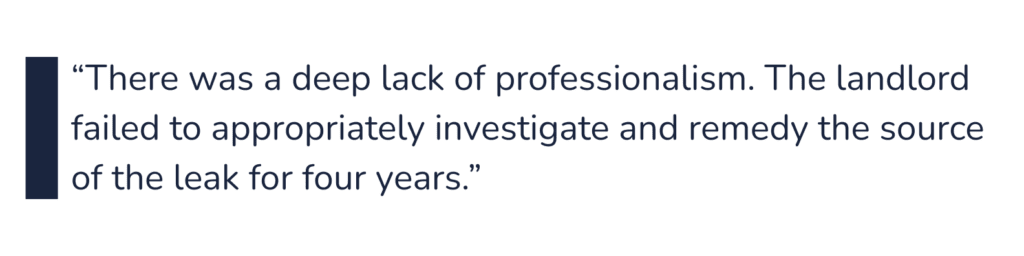
“There was a deep lack of professionalism in the way this case was handled, and the heavy-handed behaviour of some staff after multiple failings by the landlord was inappropriate.

“The landlord failed to appropriately investigate and remedy the source of the leak for four years.”

The confidence to bring a compensation claim

An example of a local authority facing a sharp increase in housing disrepair claims is Sheffield City Council, which has seen an increase of 1584% in the past five years. Despite this, a report issued in March 2023 showed that the local authority was only completing 8% of its disrepair works orders on time.

In addition to the media spotlight following the recent tragic deaths of tenants, a further reason for the rise in housing disrepair claims is the availability of ‘no win, no fee’ arrangements. Since 2013, legal aid has only been available for the most serious housing disrepair cases . No win, no fee (see below) provides a low risk way for tenants to enlist the legal help of a Housing Disrepair Solicitor to get repairs done and claim compensation.

Recently, a man who claimed he struggled to breathe in his home which was overrun with toxic mould successfully sued his landlord for £7,000. The problem was initially confined to the ceiling of his property; however, fungus started creeping into every room. What made the situation worse was the tenant was fitted with a pacemaker following a triple heart bypass.

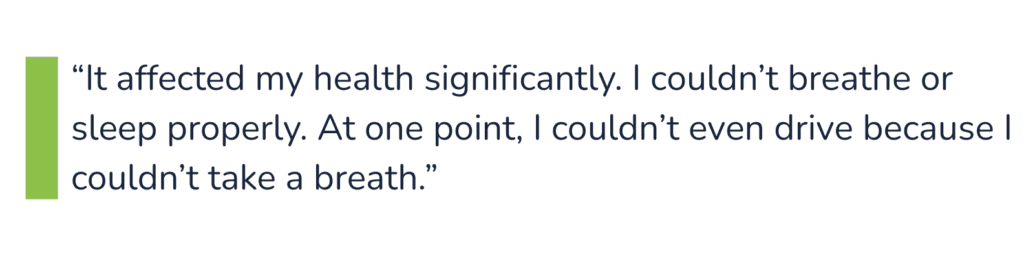
“It affected my health significantly. I couldn’t breathe and sleep properly, and there was one time when I couldn’t even drive my car out of the garage because I couldn’t take a breath. I had to seek immediate help.”

Concluding comments

The recent death of a social housing tenant because of unaddressed noise as well as that of little Awaab Ishak has brought the serious of housing disrepair and its health affects to the media’s attention. This, along with the availability of ‘no win, no fee’ arrangements has led to an increase in housing disrepair claims.

Please contact us immediately if you are living with damp, mould, or damage to your premises and you cannot get your landlord to act.

Our Solicitors have extensive experience in housing disrepair claims and almost always achieve positive results. We may be able to take your case on a no win, no fee basis, which means that if your claim is unsuccessful, you will not have to pay any legal fees (although you will been to pay any disbursements (expenses) such as court fees).

We can help you with the following:

– Instructing a surveyor to assess the disrepair and provide a report to use as evidence
– If necessary, legally ensuring that your housing association or council completes all your repairs
– Claiming compensation for you for the period your property has been in disrepair

Please contact us on 01625 667166 today to discuss your claim.

If you are struggling and need to talk, the Samaritans operate a free helpline open 24/7 on 116 123.

(1) Although you cannot claim for noise pollution under housing disrepair, the situation shows how desperate people living with housing disrepair can become.

Ask NJS Law

For fast, friendly affordable legal advice. Contact a member of our team today.

FAQ

For any questions we may be able to answer, discover our FAQ section.

Categories
Contesting A Will

Are Stepchildren Entitled to Contest Their Parent’s Will?

Is a Stepchildren Entitled to Contest Their Parents Will

mcpicadofelipe

The lawyer’s answer is “It Depends”.

There are two basic ways to challenge a Will – the first way is to say that the last Will is invalid – for example because the parent lacked testamentary capacity to make a Will when they made it. Sometimes people who make a Will have been subjected to undue influence from someone else.

These grounds can make a Will invalid – so if a stepchild was included in a previous Will, then they can make a claim under this ground – but not otherwise.

The other way to make a claim is to show that reasonable financial provision has not been made for that child. Under the Inheritance (Provision for Family & Dependants) Act 1975 (as subsequently amended) Parliament gave rights to some people who were not actually biological children to make a claim.

Someone in a family in which the person who died stood in the role of a parent was treated by the person who died as a child of the family – can make a claim. This is somewhat of a vague and in precise definition – and each case tends to be treated on its own facts – but what it does mean in general is that if someone has been treated as a child in relation to a family then they are entitled to bring a claim.

Just because a person is entitled to bring a claim it does not automatically mean that the claim will be successful.

Parliament has said that Judges have to take into account a whole variety of other facts – such as the financial resources and needs of the person making a claim, the financial resources and needs of other applicants or beneficiaries, the size and nature of the estate and any physical or mental disabilities of any relevant person.

One of the issues that courts have to consider is any obligations and responsibility which the person who died had towards the child – and this can give great scope for flexibility to allow a claim to be made – particularly if a stepchild had a legitimate expectation of benefit.

We can get it sorted

It’s what we do. 

Call us.  It’s free to ask.


CONTACT US TODAY

Use our contact form to message us below, or alternatively if you feel more comfortable, you can call us on

Ask NJS Law

For fast, friendly affordable legal advice. Contact a member of our team today.

FAQ

For any questions we may be able to answer, discover our FAQ section.

Categories
Dental Negligence

Rise in Oral Cancer Deaths Linked with the Shortage of NHS Dentists

mcpicadofelipe

A sharp rise in deaths from mouth cancers over the last decade is linked to a decline in access to NHS dentists, patients and oral health campaigners have said.

More than 3,000 people in England died from mouth cancer in 2021, compared with 2,075 in 2011, according to figures by Oral Health Foundation (ORF), representing an increase of 46%.

Nigel Carter, chief executive of the ORF, said: “With access to NHS dentistry in tatters, we fear that many people with mouth cancer will not receive a timely diagnosis.”

Ray Glendenning, 64, a jaw tumour patient, told the BBC he had to get a private diagnosis after being turned down by several NHS dentists.

The ORF, Toothless in England (TIE), a group that campaigns for free dentistry, and the British Dental Association (BDA) said the rise was a direct result of cuts to NHS dentistry. This is reinforced with a recent report published by the Health and Social Care Committee found that NHS dentistry is in crisis and need of fundamental reform.*

The NHS dental crisis, characterized by long waiting times, a shortage of dentists, and limited access to essential oral healthcare services, is a growing concern. In this article, we will delve into the causes, consequences, in this ongoing issue.

The Underlying Causes

Dentist Shortage

One of the biggest causes of the dental shortage is that many of our current NHS dentists are aged 55 plus, thus approaching retirement age. To add to the problem, it is becoming increasingly difficult to recruit and retain NHS dentists as many move to the private sector. According to the British Dental Association (BDA), around 3,000 dentists have moved from NHS to private dentistry in the last two years.

Funding Constraints

NHS dental care is chronically underfunded. The fees paid to dentists for NHS treatments are often insufficient, leading many practices to shift their focus towards private care, where they can charge higher fees. This financial incentive further strains the NHS dental system, as more patients opt for private care, exacerbating the shortage of available NHS dental appointments.

Complex Contractual System

The NHS dental system operates on a complex contractual framework, which many practitioners find complex and time-consuming to navigate. This has led to a reduced interest in providing NHS dental services among practitioners, as the bureaucratic process can be overwhelming.

Consequences of the Crisis

Inadequate Oral Healthcare

The consequences of the NHS dental crisis are alarming. A lack of access to dental care can result in a wide range of oral health issues going untreated. This includes tooth decay, gum disease, and even serious conditions that can have wide health implications. Preventive care is often neglected, leading to avoidable health complications.

Mental and Emotional Toll

Prolonged waiting times and the inability to access timely care can take a significant harm on patients’ mental and emotional well-being. Dental pain and discomfort can lead to anxiety, depression, and a diminished quality of life.

Greater Strain on Other Healthcare Services

The NHS dental crisis places an additional problem on other healthcare services. Patients who cannot access dental care often resort to seeking assistance from general practitioners or emergency departments, further stretching already limited resources.

The NHS dental crisis is a pressing issue that requires immediate attention and action. Without sufficient funding, an expanded workforce, efficient contracts, and increased public awareness, the crisis will persist, affecting the oral health and overall well-being of countless individuals.

Kate Barge, one of our Dental Negligence Solicitors who has a significant experience dealing with dental negligence claims, looks at the negative impact of the NHS dental crisis.


It is of great concern that some individuals are unable to obtain appointments with NHS Dentists. This appears to be causing delays in the diagnosis of serious dental conditions.

It is likely that these delays in some cases will cause individuals to have to undergo much more invasive and painful treatments which would not have been required with earlier diagnosis and treatment.


What should I do if I have received negligent dental treatment?

Negligent dental treatment can cause extraordinary pain and suffering. In addition, if your appearance is negatively affected your confidence and mental health can also deteriorate.

Dentists have a duty to act with due care and skill and if your dentist’s negligent acts or omissions have caused you harm you may be entitled to compensation.
This compensation can assist with paying for private dental treatment to repair the damage caused and cover medical expenses and loss of income if you have to take time off work.


Our intelligent, compassionate Dental Negligence Solicitors will carefully listen to your experience and, if they believe you have a compelling case, robustly advise and represent you, ensuring your best interests are always protected.

Our team has decades of combined experience in successfully advising and representing clients in dental negligence cases.

We are sympathetic, understanding, and are here to help you every step of the way.

Contact us today to discuss your claim.


*The Guardian

Ask NJS Law

For fast, friendly affordable legal advice. Contact a member of our team today.

FAQ

For any questions we may be able to answer, discover our FAQ section.

Categories
Contentious Probate

How Long Do You Have to Bring a Contentious Probate Claim?

mcpicadofelipe

This is an easy question to ask – but quite a complicated question to answer

There are two types of “Contentious Probate Claim”.

1-Dispute about the validity of a Will. This happens where, for example, someone has made a Will, but they didn’t have sufficient mental capacity to make it when it was signed. Alternatively, someone may have made a Will, but they were subject to undue influence – so that they made a Will that they wouldn’t otherwise have made.

The people who administer an estate, that means they are the people appointed to collect the assets, pay debts and then distribute the estate, are called Executors. Sometimes Executors don’t need to get a Grant of Probate if the estate is regarded as small – for example some banks and building societies will release to Executors up to £50,000 without a Grant of Probate. If there are assets such as a house, shares or premium bonds then it will be necessary to obtain a Grant of Probate.

Someone making a claim about the validity of a Will can register, what is known as, a “Caveat”. A Caveat stops a Grant of Probate being issued and is quite a powerful legal weapon in the hands of someone who wants to make a claim. It is best therefore to make a claim before a Grant of Probate is issued because this stops the estate being administered. There is therefore no strict calendar timetable to make a claim because the length of time taken to obtain a Grant of Probate varies from case to case.

It is still possible to challenge the validity of a Will after a Grant of Probate has been issued – but it is often more difficult to persuade the Executors or beneficiaries to negotiate – particularly if they have already had the money and spent it! The answer to this part of the question therefore is that it is best to make a claim as quickly as possible.

2- Some people make a claim for reasonable provision under, what is known as, The Inheritance (Provision for Family & Dependants) Act 1975. This was an Act of Parliament which lets certain categories of people make a claim – for example husbands or wives, civil partners, former husbands or wives or former civil partners, children (even adult children or stepchildren) or dependants.

It is best to make a claim for reasonable provision as soon as someone has diedbut in any event within six months after the Grant of Probate has been issued. Some Executors will distribute an estate before six months after the Grant of Probate has elapsed, so it is always best to make a claim as quickly as possible. The court does have a discretion to allow a claim to be made “out of time”. In one recent case the court allowed a claim to proceed some 29 years after a Grant of Probate was issued – but this type of case is rare.

It is perhaps best to forget about the legal timetables – the sooner a claim is made the better the prospects of success

We can get it sorted

It’s what we do. 

Call us.  It’s free to ask.


CONTACT US TODAY

Use our contact form to message us below, or alternatively if you feel more comfortable, you can call us on

Ask NJS Law

For fast, friendly affordable legal advice. Contact a member of our team today.

FAQ

For any questions we may be able to answer, discover our FAQ section.

Categories
Defending Inheritance Claims

Acting For A Defendant In Inheritance Disputes

mcpicadofelipe

Lawyers will often make claims against the estate of someone who has died. They will typically make claims on one of the following grounds: –

  • The Will was not signed or properly witnessed.
  • The Will is invalid – for example because the person making the Will didn’t have testamentary capacity, was subject to undue influence or made the Will as a result of lies being told about a different beneficiary (this is known by the strange phrase “Fraudulent Calumny”.
  • A claim can be made against an estate under the Inheritance (Provision for Family & Dependants) Act 1975.

At Nicholson Jones Sutton we are often involved in defending claims such as these.

Claims can be defended on a variety of grounds – firstly the allegations may, simply, be untrue. Just because a disappointed beneficiary says that a Will wasn’t property witnessed it does not necessarily mean that it wasn’t.

If a Will looks to be valid and is rational then there is a strong presumption that it was validly signed and witnessed – even if, perhaps many years later, one of the witnesses says that it wasn’t.

Likewise, some claimants basically run a claim on the basis “well they must have been mad – otherwise they wouldn’t have excluded me”. It is quite tragic how many disappointed beneficiaries seek to present claims without much more than this wholly inadequate, type of claim. Claims for reasonable provision under the Inheritance Act can be difficult and complex to defend – but there are a whole variety of tactics and strategies available to the defendant including: –

  • Presenting strong and credible defence to a claim.
  • Making a strategic and tactical offer to settle the claim sooner rather than later – just as an example in one of the claims we defended recently a claimant made a claim for £600,000 out of an estate. We persuaded our clients to make an early tactical offer of £10,000 and the offer was accepted – demonstrating a complete lack of belief in the claim by the claimant – but an offer like this avoided the worry, risk and expense of a trial for our client – indeed one of our strengths and talents is to be able to help clients to avoid the risk, worry and expense of a trial.
  • Mediation. In some circumstances we will advise our clients to embark on a process of mediation. It is important to choose the “right” mediator to help resolve a case. To be blunt some mediators are not very good – but the cases that we take to mediation have an astonishingly high success rate – again helping to avoid the worry, risk and expense of a trial.

So, if, like an increasing number of people in this country you find yourself involved in an Inheritance Dispute – either as a claimant or as a defendant then we are here to help. 

We can get it sorted

It’s what we do. 

Call us.  It’s free to ask.


CONTACT US TODAY

Use our contact form to message us below, or alternatively if you feel more comfortable, you can call us on

Ask NJS Law

For fast, friendly affordable legal advice. Contact a member of our team today.

FAQ

For any questions we may be able to answer, discover our FAQ section.

Categories
Inheritance Disputes

Acting For A Claimant In An Inheritance Dispute

Inheritance Disputes

mcpicadofelipe

An individual can make a claim on a variety of different legal grounds including: –

  • It wasn’t witnessed by two witnesses.
  • A Will does not comply with the technical requirements of the Wills Act 1837.
  • The Will is invalid for some other reason – for example the person making the Will did not have sufficient mental capacity to do so or was subject to undue influence.
  • A claim for reasonable provision can be made under the Inheritance Act of 1975.
Technical requirements?

It is quite astonishing to reflect that the technical requirements about how a Will is made were first set out in the Wills Act 1837 – at a time when plainly there were no computers, no mobile phones or no videos – but the rules relating to the making of a Will remain the same – it has to be in writing and signed in the presence of two independent witnesses who should then add their names.

If a Will does not comply with these requirements, then it is invalid.

The court has no power to rectify a Will that isn’t properly signed and witnessed. We have dealt with too many cases where someone intended to make a Will and even had a draft Will prepared – but never got around to signing it. It is heart breaking in those circumstances. Sometimes although a Will seems to be signed by two witnesses it later becomes apparent that they were not actually together when the person making the Will signed it – so again the Will is invalid.

If a Will is invalid then any previous valid Will generally “comes back to life” – and if there is no previous Will then the people who would benefit under, what are known as “the Intestacy Rules” stand to benefit.

The Intestacy Rules are what the government says should happen to an estate if there isn’t a Will (it is important to note that at present the Government does not recognise the automatic rights of people who live together without being married or in a civil partnership to inherit a share of the estate).

The Will is invalid for other reasons

It goes without saying that a Will is a very important document. On the one hand it is essential that if someone wants to make provision for people in their Will then they should be free to do so. On the other hand, it is equally important that someone making a Will should have the necessary mental capacity to do so – and should make the Will free from undue influence or lies of others (this last concept is known by the strange phrase “Fraudulent Calumny”). The law has to strive to achieve these two objectives in every case – and a lot of the work of Inheritance Dispute lawyers relates to claims like this – certainly we make or defend many of these claims on behalf of disappointed beneficiaries.

Inheritance (Provision for Family & Dependants) Act 1975 (Children including adult children and children who are treated as “children of the family”)

It is worthwhile remembering that laws are made by politicians – and the Inheritance Act of 1975 was passed to allow the courts to make reasonable financial provision for certain categories for individuals including: –

  • Husbands or wives, Civil Partners, or former husbands or wives or civil partners.
  • Children including (adult children)
  • Cohabitees who have lived together for more than two years
  • Individuals who are dependent on the person who has passed away. Dependency does not necessarily just mean financial dependency – but it could, for example, include living in the house of the person who died.

These legal provisions made by politicians are sometimes controversial. It is probably the case that most people would agree that if, for example, an unhappy husband left all of his estate to the cat’s home rather than to his long-suffering wife provision should be made for her. Opinions amongst society do, however, vary when, for example, a claim for reasonable provision is made by a long estranged healthy adult child. Claims like this can be difficult for lawyers and courts to resolve – but we can help.

So, if, like an increasing number of people in this country you find yourself involved in an Inheritance Dispute – either as a claimant or as a defendant then we are here to help. 

We can get it sorted

It’s what we do. 

Call us.  It’s free to ask.


Ask NJS Law

For fast, friendly affordable legal advice. Contact a member of our team today.

FAQ

For any questions we may be able to answer, discover our FAQ section.

Categories
Women’s Health Negligence

Gender Bias in Healthcare and the Impact of Delayed Diagnosis on Women’s Health

mcpicadofelipe

A growing body of research shows that women’s health concerns are frequently dismissed as being caused by emotions, stress, hormones, age, or even imagination. As a result, thousands of women experience delayed diagnoses, worsening symptoms, and long-term physical and psychological harm.

A recent study highlights the scale of this issue and raises serious concerns about gender bias in healthcare and its consequences for women across the UK.

Study Reveals Millions of Women Living With Undiagnosed Conditions

Researchers from King Edward VII’s Hospital, a charitable independent hospital, surveyed just over 1,000 women to assess their experiences with healthcare and diagnosis.

The findings were alarming:

  • An estimated three million women in the UK are living with symptoms of undiagnosed women’s health conditions
  • Nearly one in three women with symptoms have not received a formal diagnosis
  • Around one quarter have not sought medical help
  • One in four reported a negative impact on their mental health

These findings highlight a systemic problem in recognising and diagnosing women’s health conditions in a timely manner.

Study Reveals Millions of Women Living With Undiagnosed Conditions

On 18 October, BBC newsreader Naga Munchetty told the Women and Equalities Committee that she was only diagnosed with adenomyosis after consulting a private GP.

For decades, Naga experienced extremely heavy periods, repeated vomiting, and severe pain that could cause her to lose consciousness. Despite this, she was repeatedly told by doctors that her symptoms were “in her head” or not taken seriously.

Her diagnosis finally came in November of the previous year, after two weeks of heavy bleeding and intense pain led her to call an ambulance. Only then was she referred to a GP specialising in women’s reproductive health, who advised her to seek private treatment due to lengthy NHS waiting times.

Adenomyosis is a condition where the lining of the womb grows into the muscle wall, often causing severe pain and heavy bleeding if left untreated.

Other High-Profile Cases Highlight Systemic Issues

Naga Munchetty’s experience is not isolated. Television and media personality Vicky Pattison also shared her story as part of the committee’s investigation into the difficulties women face when seeking diagnosis and treatment for gynaecological and reproductive conditions.

Vicky was diagnosed with premenstrual dysphoric disorder (PMDD) at the age of 35, despite experiencing debilitating symptoms from her late twenties. These included:

  • Crippling anxiety
  • Insomnia
  • Extreme fatigue

For years, her symptoms were attributed to standard premenstrual syndrome (PMS), delaying appropriate treatment and support.

The Impact of Delayed Diagnosis on Medical Negligence Claims

Margaret Harvey, one of our experienced Medical Negligence Solicitors, regularly represents clients affected by delays in diagnosing and treating conditions such as endometriosis and adenomyosis.

Margaret frequently sees the consequences of gender bias in healthcare, where women report feeling dismissed or not taken seriously by GPs and hospital consultants—particularly in relation to sexual and reproductive health.

How Delayed Diagnosis Affects Women’s Lives

Many of our clients describe long-term suffering due to unrecognised symptoms and delayed diagnosis. Common impacts include:

  • Chronic pain and worsening physical conditions
  • Mental health issues such as anxiety and depression
  • Strain on personal relationships
  • Social stigma around conditions such as urinary or faecal incontinence
  • Loss of fertility or irreversible surgical outcomes

In some cases, delays in diagnosis have resulted in severe outcomes. Margaret is currently acting for clients where delayed diagnosis led to significant deterioration of their condition, including a case in which a young woman required a hysterectomy due to untreated adenomyosis.

When Delayed Diagnosis May Amount to Medical Negligence

A delayed diagnosis may give rise to a medical negligence claim if:

  • Symptoms were repeatedly reported but not appropriately investigated
  • Reasonable diagnostic steps were not taken
  • Treatment was delayed and the condition worsened as a result
  • Earlier diagnosis would have led to a better outcome

Each case depends on its specific facts, but women who have suffered harm due to diagnostic delays may be entitled to compensation.

How NJS Law Can Help

Our Medical Negligence Specialists at NJS Law are experienced in handling claims involving delayed diagnosis, misdiagnosis, and failures in women’s healthcare.

We offer:

  • Compassionate, client-focused legal support
  • Clear advice on whether you may have a claim
  • Experience in complex gynaecological negligence cases
  • A free, no-obligation consultation

If you believe your symptoms were dismissed or your diagnosis was delayed, we are here to help.

Speak to a Medical Negligence Solicitor Today

If you would like to discuss a potential medical negligence issue, please contact us to arrange a free, no-obligation consultation.


We are available by phone or email and are happy to talk through your concerns in confidence.

CONTACT US

Get in touch using the form below or via the following methods:

Ask NJS Law

For fast, friendly affordable legal advice. Contact a member of our team today.

FAQ

For any questions we may be able to answer, discover our FAQ section.

Categories
Inheritance Disputes

Inheritance Disputes

Inheritance Disputes

mcpicadofelipe

Inheritance Disputes are in the news.  Besides the regular reports of cases that have gone to trial that appear in newspapers there have recently been three television programmes about Inheritance Disputes. The first was called “The Sixth Commandment”. This was a crime drama that appeared on television in July this year and was based on a real-life crime committed by Ben Field – who murdered two people and then tried to benefit under their Will.  Incidentally the Sixth Commandment is “Thou shalt not kill”.

The second programme to appear on television was called “The Inheritance” and was a fictional drama about an individual trying to benefit under the Wills of people he had killed. 

The third programme appeared on Channel 5 called “Inheritance Wars – who gets the money”.  These programmes simply reflect the modern interest in disputes about who gets what after someone has passed away.

Lots of lawyers advertise for work under the banner in “unfairly left out of a Will”.  We have to end that myth.  The law is crystal clear.  Just because someone has been unfairly left out of a Will it does not mean that they are entitled to make a claim – in England and Wales (unlike much of Europe) our citizens are subject to, what is known as, “testamentary freedom”.   This means that people can generally leave whatever they want to whoever they want.  In a recent case it was said that “the freedom of testation allowed by English law means that people can make a valid Will even if they are old or infirm or in receipt of help from whom they wish to benefit and even if the terms of the Will are hurtful, ungrateful or unfair to those whose legitimate expectations of testamentary benefit are disappointed”.  This is a profound starting point.  A Will cannot be challenged just because it is unfair.


So why are there so many inheritance disputes?

Inheritance Disputes can typically arise in one of three ways.

  • The Will is not a valid document – it doesn’t comply with the technical requirements of the Wills Act 1837 – for example for a Will to be valid there needs to be two witnesses.
  • The Will is invalid for some other reason – for example the person making it did not have “testamentary capacity” or was subject to undue influence.
  • A claim for reasonable provision can be made under the Inheritance (Provision for Family & Dependants) Act 1975

A claim for “reasonable financial provision” can only be made by particular classes of individuals for example a husband or wife, a civil partner, a child (even an adult child) or someone who is dependant on the person who died.  This means that, for example, a friend or neighbour could not generally make a claim even if they had been led to believe that they would be left something in a Will.

So, if, like an increasing number of people in this country you find yourself involved in an Inheritance Dispute – either as a claimant or as a defendant then we are here to help. 

We can get it sorted

It’s what we do. 

Call us.  It’s free to ask.


CONTACT US TODAY

Use our contact form to message us below, or alternatively if you feel more comfortable, you can call us on

Ask NJS Law

For fast, friendly affordable legal advice. Contact a member of our team today.
FAQ

For any questions we may be able to answer, discover our FAQ section.