
Categories
Occupier Liability

The Occupiers’ Liability Act 1984

The Occupiers’ Liability Act 1984

The Occupiers’ Liability Act 1984

When accidents occur on land where someone did not have permission to be — such as abandoned buildings, construction sites or private land — liability is not automatically excluded.

The Occupiers’ Liability Act 1984 governs the duty owed by occupiers of premises to non-visitors, including trespassers.

Although the duty under the 1984 Act is more limited than the duty owed to lawful visitors under the Occupiers’ Liability Act 1957, it does not mean occupiers owe no responsibility at all.

In certain circumstances, an occupier can still be legally liable if a trespasser or other non-visitor suffers injury due to a dangerous condition on the land.
The Act strikes a balance between:

  •  Protecting landowners from unfair liability, and
  •  Preventing occupiers from ignoring serious, foreseeable dangers.

Understanding when the 1984 Act applies is essential if an injury occurred in circumstances involving trespass or unauthorised entry.

What Is the Occupiers’ Liability Act 1984?

The Occupiers’ Liability Act 1984 sets out when a duty of care may arise towards individuals who are not lawful visitors.
Unlike the 1957 Act, which imposes a general “common duty of care” to visitors, the 1984 Act only imposes a duty in specific circumstances involving known and foreseeable dangers.
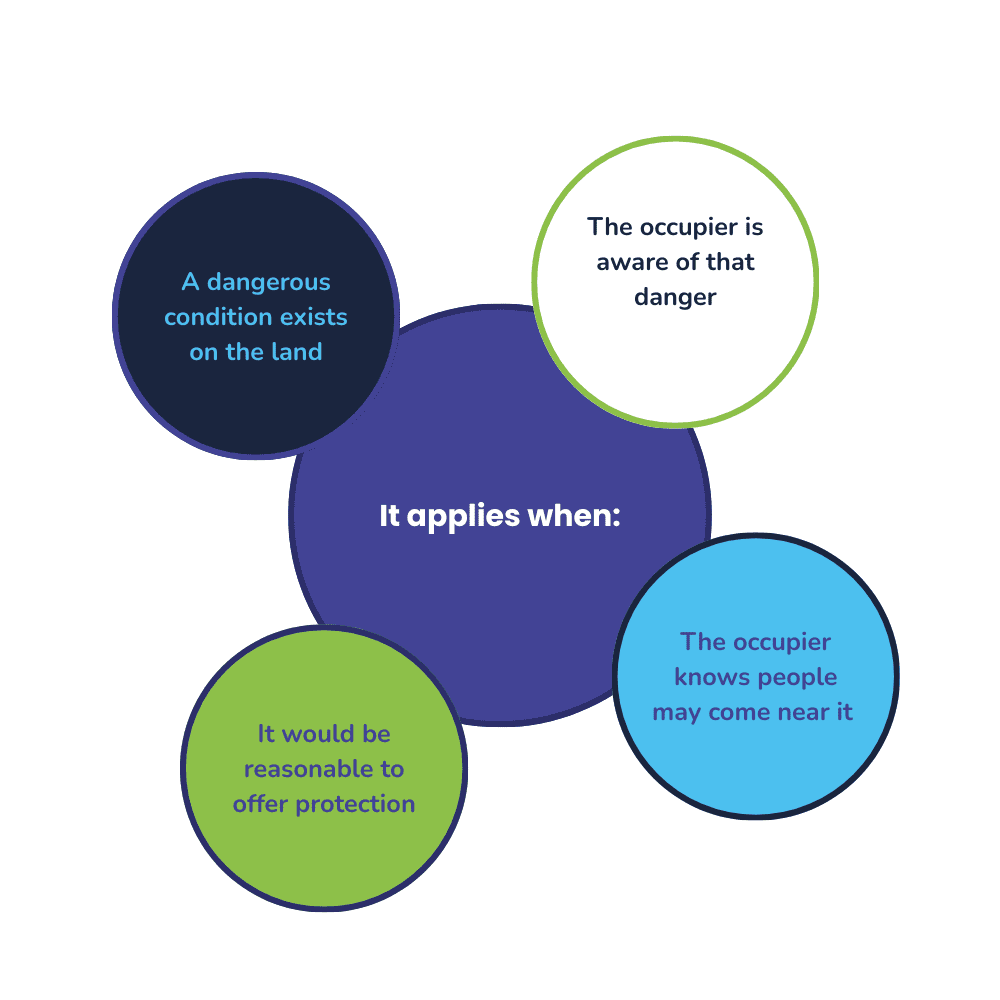
It applies where:

  •  A dangerous condition exists on the land
  •  The occupier is aware of that danger
  •  The occupier knows people may come near it
  •  It would be reasonable to offer protection

This most commonly arises in cases involving:

  •  Abandoned or derelict buildings
  •  Unsecured construction sites
  •  Dangerous land features
  •  Industrial premises
The Occupiers’ Liability Act 1984

When Does a Duty Arise Under the 1984 Act?

Under Section 1 of the Act, a duty is owed only if three conditions are satisfied:

  1.  The occupier is aware of the danger (or has reasonable grounds to believe it exists).
  2.  The occupier knows or has reasonable grounds to believe that someone may come into the vicinity of the danger.
  3.  The risk is one against which the occupier may reasonably be expected to offer some protection.

All three elements must be present.
If they are, the occupier owes a duty to take reasonable care to prevent injury from the identified danger.

What Does “Reasonable Protection” Mean?

The duty under the 1984 Act is narrower than under the 1957 Act.
Occupiers are not required to make premises fully safe for trespassers. However, they may need to take reasonable steps such as:

  •  Securing abandoned buildings
  •  Locking gates or fencing off hazardous areas
  •  Posting clear warning signs
  •  Boarding up unsafe structures
  • Repairing extremely dangerous defects

The law balances personal responsibility with the occupier’s knowledge of foreseeable risk.

Common Situations Where the 1984 Act Applies

Claims under the 1984 Act commonly arise in cases involving:

  •  Abandoned or derelict buildings
  •  Unsecured construction sites
  •  Open shafts or pits
  •  Unfenced drops or cliffs
  •  Disused industrial land
  •  Dangerous machinery left accessible
  •  Uncovered wells or water hazards

A recurring issue is children entering unsecured premises. The courts recognise that children may not appreciate certain risks in the same way adults do.

The Importance of Foreseeability

Foreseeability is central to claims under the 1984 Act.
An occupier is not automatically liable simply because someone trespassed and was injured.
The court will consider:

  • Was it foreseeable that people might trespass?
  • Had there been previous incidents?
  • Was the danger obvious or concealed?
  • How serious was the risk?
  • How easy would it have been to reduce the risk?

For example, if children regularly enter an abandoned site through a broken fence and the occupier is aware of this, failing to repair the fence or secure dangerous features may amount to a breach.

Obvious Risks and Personal Responsibility

The 1984 Act recognises that some dangers are obvious.
Courts may find that an occupier is not liable where:

  • The risk was clearly apparent
  • The injured person voluntarily accepted the risk
  • The occupier had no reason to expect anyone would be present

Personal responsibility plays a greater role under the 1984 Act than under the 1957 Act.

Differences Between the 1957 and 1984 Acts

While both Acts concern premises liability, there are important differences:

1957 Act

1984 Act

Applies to lawful visitors

Applies to trespassers and non-visitors

Imposes a “common duty of care”

Imposes a limited duty in defined circumstances

Focuses on making premises reasonably safe

Focuses on protection from known dangers

Broader scope of protection

Narrower and more restrictive

The 1984 Act does not create a general obligation to make land safe for all intruders. It addresses specific, foreseeable dangers.

Proving a Claim Under the 1984 Act

To succeed, a claimant must prove:

  1. A dangerous condition existed.
  2. The occupier knew (or should have known) about it.
  3. The occupier knew (or should have known) that people might come near it.
  4. Reasonable steps were not taken to reduce the risk.
  5. The breach caused the injury.
Evidence may include:
  • Photographs of the site
  • Prior complaints or reports
  • Evidence of previous trespassing
  • Maintenance records
  • Witness statements
These cases can be complex and highly fact-specific.

Why the 1984 Act Matters

The Occupiers’ Liability Act 1984 reflects a balance between:

  •  Protecting landowners from excessive liability, and
  •  Preventing occupiers from ignoring serious, foreseeable dangers.

It ensures that occupiers cannot simply disregard hazardous conditions where they know people are likely to encounter them.

Why Choose NJS Law for Your Occupier Liability Claim?

When you are injured on someone else’s property, you need clear advice from solicitors who understand premises liability law and insurer tactics.

At NJS Law, we act exclusively for injured individuals. We understand the physical, financial and emotional impact of unexpected accidents. You can read what clients say about our service on our NJS Law reviews.

When you instruct NJS Law, you can expect:

  •  Clear, honest advice
  •  Thorough investigation of liability
  •  Strategic handling of insurers
  •  Realistic assessment of compensation
  •  No Win No Fee representation in appropriate cases

We handle claims involving:

  •  Slip and fall accidents
  •  Supermarket accidents
  •  Restaurant and café injuries
  •  Landlord negligence
  •  Injuries at private homes
  •  Accidents in public buildings

Every case is handled with care and attention to detail.

Speak To NJS Law Today

If you have suffered an injury on someone else’s property, early advice can make a significant difference.

Contact our Occupier Liability Solicitors today for a confidential discussion about your situation. We will explain:

  •  Whether you have a valid claim
  •  What your claim may be worth
  •  How the No Win No Fee process works
  •  The next steps to protect your rights

There is no obligation to proceed — just clear, professional advice.
Call us today or complete our online enquiry form to speak with a specialist occupier liability solicitor.
Your recovery matters. Your rights matter.
Let NJS Law help you secure the compensation you deserve.

→ Learn more About Us

We’re Here To Help

Frequently Asked Questions

Can a trespasser really claim compensation?

Yes, but only in limited circumstances.
A trespasser must prove that the occupier knew of the danger, knew people might encounter it, and failed to take reasonable steps to prevent injury.
Claims are typically more difficult than those brought under the 1957 Act.

Does the Act apply to children who trespass?

Yes.
Courts may take into account that children are less likely to appreciate risks.
If an occupier knows that children regularly access a dangerous area, they may be expected to take reasonable steps to secure it.

What if the danger was obvious?

If a risk is obvious and the injured person voluntarily accepted it, the occupier may have a defence.
However, each case depends on the specific facts, including the age of the injured person and the nature of the hazard.

Are landowners liable for natural features like lakes or cliffs?

Not automatically.
Courts often consider whether the danger was a natural and obvious feature of the landscape.
Liability may arise if the occupier created or significantly increased the risk, or failed to act despite knowing of a specific foreseeable danger.

Does the occupier have to fence off all dangerous land?

No.
The law does not require occupiers to eliminate all risks.
The question is whether reasonable steps were taken in light of foreseeable trespassing and the seriousness of the danger.

What is the time limit for bringing a claim under the 1984 Act?

In most cases, the time limit is three years from the date of the accident (or date of knowledge).
Different rules apply to children and individuals lacking mental capacity.

CONTACT US

Get in touch using the form below or via the following methods:

Ask NJS

For fast, friendly affordable legal advice. Contact a member of our team today.

FAQ

For any questions we may be able to answer, discover our FAQ section.

Categories
Occupier Liability

The Occupiers’ Liability Act 1957 Explained

The Occupiers’ Liability Act 1957 Explained

The Occupiers’ Liability Act 1957 Explained

Accidents in shops, restaurants, rental properties, offices and private homes are often legally assessed under one key piece of legislation: the Occupiers’ Liability Act 1957.

If you have been injured on someone else’s premises, this Act is likely to form the legal foundation of your claim.

The legislation establishes when a person or organisation that controls property can be held legally responsible for injuries suffered by visitors. It defines the standard of care required, the scope of that duty, and the circumstances in which liability may arise.

Understanding how the Act works is essential for determining:

  • Whether a duty of care was owed
  • Whether that duty was breached
  • Whether you may be entitled to compensation

Below, we explain the Occupiers’ Liability Act 1957 in clear, practical terms.

What Is the Occupiers’ Liability Act 1957?

The Occupiers’ Liability Act 1957 is the primary legislation governing accidents involving lawful visitors to premises in England and Wales.

It sets out the legal duty owed by those who control premises to ensure that visitors are reasonably safe when using the property for the purpose for which they are invited or permitted to be there.

In practical terms, this Act forms the legal foundation of most slip, trip and fall claims arising in:

  • Shops and supermarkets
  • Restaurants and cafés
  • Rental properties
  • Offices and workplaces
  • Public buildings
  • Private homes

If an occupier fails to take reasonable care and someone is injured as a result, the Act provides the legal basis for bringing a compensation claim.

What Duty Does the Act Impose?

Section 2 of the Act imposes what is known as the “common duty of care.”

This requires occupiers to take reasonable care to ensure visitors are reasonably safe in using the premises for the purposes for which they are invited or permitted to be there.

This includes:

  • Maintaining floors and walkways
  • Repairing hazards within a reasonable time
  • Cleaning spillages promptly
  • Providing adequate lighting
  • Installing appropriate handrails
  • Maintaining car parks and external areas
  • Displaying warning signs where appropriate

The duty relates not just to the physical condition of the premises but also to activities carried out there.

What Does “Reasonably Safe” Mean?

The law does not require occupiers to eliminate all risks. Instead, the standard is reasonableness.

Courts consider factors such as:

  • The likelihood of injury
  • The seriousness of potential harm
  • The practicality of preventing the risk
  • The cost of precautions
  • Industry standards and common practice

For example:

  • A supermarket is expected to have regular inspection and cleaning systems in place due to high foot traffic.
  • A restaurant should address spillages quickly and mark wet floors clearly.
  • A landlord must repair reported defects within a reasonable timeframe.

Failing to carry out basic safety checks, inspections or maintenance may amount to a breach of duty.

Special Considerations Under the Act

Children

Occupiers must be prepared for children to be less careful than adults. The premises should be reasonably safe for a child of that age.

For example, features that might be safe for adults could present foreseeable risks to children.

Skilled Visitors

The Act recognises that certain visitors — such as tradespeople — may be expected to guard against risks ordinarily associated with their profession.

For example, an electrician may be expected to understand basic electrical risks.

However, this does not remove the occupier’s duty entirely.

Independent Contractors

If damage is caused by faulty work carried out by an independent contractor, the occupier may avoid liability only if it was reasonable to:

  • Entrust the work to the contractor, and
  • Believe the contractor was competent.

Simply hiring a contractor does not automatically remove responsibility.

Examples of Breach Under the 1957 Act

Examples of situations that may amount to a breach include:

  • Failing to implement a reasonable cleaning system in a supermarket
  • Ignoring repeated complaints about loose flooring
  • Allowing uneven paving stones to remain unrepaired
  • Not providing adequate lighting in stairwells
  • Leaving cables trailing across walkways
  • Failing to treat icy car parks in winter

Each case depends on the specific facts and whether the occupier took reasonable steps.

Causation: Linking the Breach to the Injury

It is not enough to show that a hazard existed. A claimant must prove that:

  1. The occupier breached their duty, and
  2. That breach caused the injury.

For example, if a spillage occurred seconds before a fall, and no reasonable inspection system could have prevented it, liability may not arise.

The timing and foreseeability of the hazard are often central to disputes.

Defences Available to Occupiers

Occupiers may defend claims by arguing:

  • A reasonable inspection system was in place
  • The hazard arose too shortly before the accident to be identified
  • Adequate warning signs were displayed
  • The visitor failed to take reasonable care for their own safety

In some cases, compensation may be reduced for contributory negligence if the injured person was partly responsible.

Why the 1957 Act Matters

The Occupiers’ Liability Act 1957 plays a vital role in promoting safety standards across public and private premises.

It ensures that:

  • Businesses implement inspection systems
  • Landlords maintain safe housing
  • Public spaces are properly managed
  • Visitors have legal protection if standards fall short

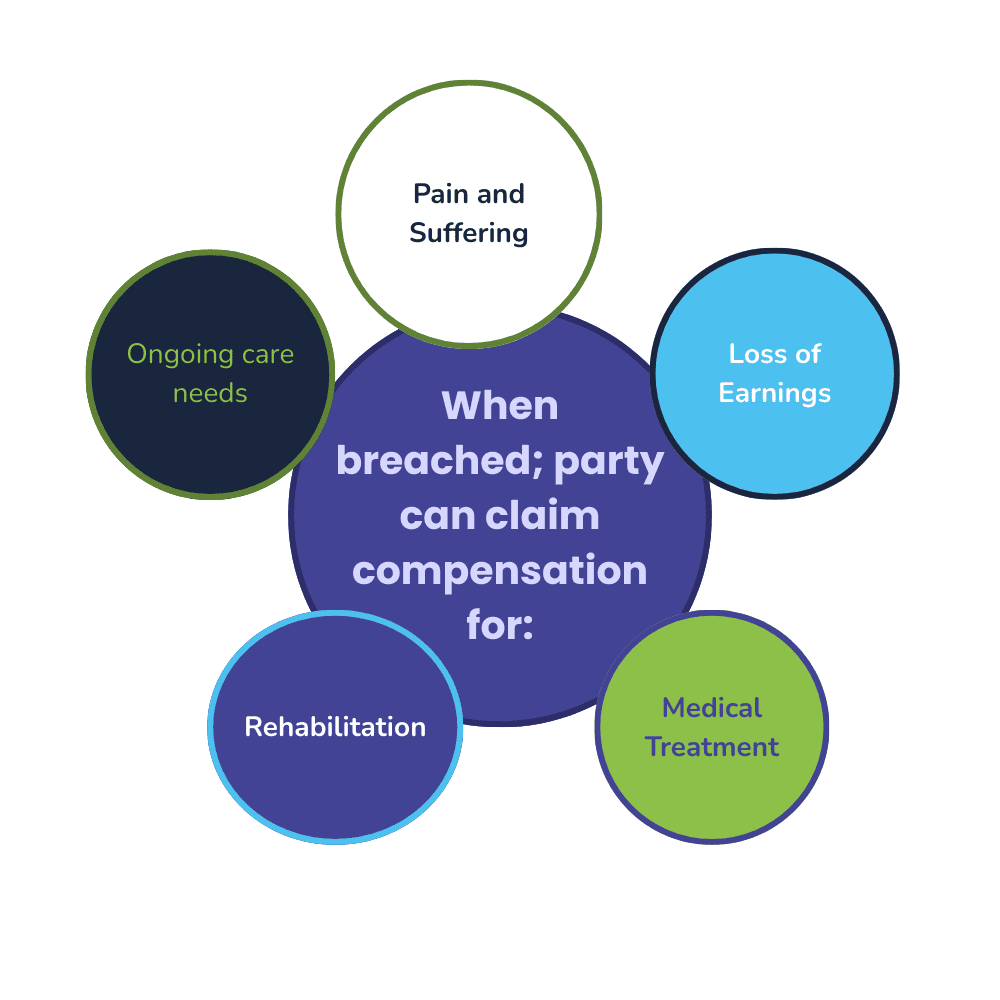
When the duty under the Act is breached and injury results, the injured party may pursue compensation for:

  • Pain and suffering
  • Loss of earnings
  • Medical treatment
  • Rehabilitation
  • Ongoing care needs
The Occupiers’ Liability Act 1957 Explained

Why Choose NJS Law for Your Occupier Liability Claim?

When you are injured on someone else’s property, you need clear advice from solicitors who understand premises liability law and insurer tactics.

At NJS Law, we act exclusively for injured individuals. We understand the physical, financial and emotional impact of unexpected accidents. You can read what clients say about our service on our NJS Law reviews.

When you instruct NJS Law, you can expect:

  • Clear, honest advice
  • Thorough investigation of liability
  • Strategic handling of insurers
  • Realistic assessment of compensation
  • No Win No Fee representation in appropriate cases

We handle claims involving:

  • Slip and fall accidents
  • Supermarket accidents
  • Restaurant and café injuries
  • Landlord negligence
  • Injuries at private homes
  • Accidents in public buildings

Every case is handled with care and attention to detail.

Speak To NJS Law Today

If you have suffered an injury on someone else’s property, early advice can make a significant difference.

Contact our Occupier Liability Solicitors today for a confidential discussion about your situation. We will explain:

There is no obligation to proceed – just clear professional advice.

Call us today or complete our online enquiry form to speak with a specialist occupier liability solicitor.

Your recovery matters. Your rights matter.

Let NJS Law help you secure the compensation you deserve.

→ Learn more About Us

We’re Here To Help

Frequently Asked Questions

Does the Act apply to private homes?

Yes.

Homeowners owe a duty of reasonable care to lawful visitors, including friends, family members and delivery drivers.

However, the standard of care is judged in light of what is reasonable for a private homeowner rather than a commercial business.

What is meant by “lawful visitor”?

A lawful visitor is someone who has express or implied permission to be on the premises.

This includes customers, invited guests, tenants and individuals entering during normal business hours.

A trespasser would generally fall under the Occupiers’ Liability Act 1984 instead.


Is an occupier automatically liable if someone is injured?

No.

The Act does not impose automatic liability.

A claimant must prove:

  • A duty existed
  • The duty was breached
  • The breach caused the injury

Accidents can occur even where reasonable systems were in place.

Are warning signs enough to avoid liability

Not always.

A warning must be sufficient to enable a visitor to be reasonably safe.

If the hazard could reasonably have been removed rather than merely warned about, a sign alone may not be enough.

The adequacy and placement of the warning are also important.

Does the Act require constant inspection of premises?

No, but it requires a reasonable inspection system.

The frequency and nature of inspections depend on:

  • The type of premises
  • The level of foot traffic
  • The risk profile of the environment

High-traffic retail environments require more frequent checks than low-use private areas.

What happens if the injured person was partly at fault?

If a visitor failed to take reasonable care for their own safety, compensation may be reduced under contributory negligence principles.

For example, running in a clearly marked wet area may reduce damages, but it may not eliminate liability entirely.

How long do I have to bring a claim under the 1957 Act?

In most cases, you have three years from the date of the accident (or date of knowledge) to issue court proceedings.

There are exceptions for children and individuals lacking mental capacity.

In most cases, claims are handled through insurance.

Businesses and homeowners carry liability insurance specifically for situations like this. A claim is made against the insurer — not the individual personally.

Professional organisations understand that accidents happen and that insurance exists to protect both parties.

CONTACT US

Get in touch using the form below or via the following methods:
Ask NJS

For fast, friendly affordable legal advice. Contact a member of our team today.

FAQ

For any questions we may be able to answer, discover our FAQ section.

Categories
Occupier Liability

What Should I Do Immediately After Being Injured on Someone Else’s Property? (Complete UK Guide)

What Should I Do Immediately After Being Injured on Someone Else’s Property? (Complete UK Guide)

What Should I Do Immediately After Being Injured on Someone Else’s Property? (Complete UK Guide)

An injury on someone else’s property can be shocking, painful and confusing. Whether the accident happened in a supermarket, restaurant, rented accommodation, public building or even at a friend’s home, the steps you take in the minutes, hours and days that follow can significantly affect both your recovery and your legal rights.

Many people are unsure what to do. Some worry about causing trouble. Others assume the accident was simply bad luck. However, UK law places clear responsibilities on those who control property. If reasonable safety standards were not met and you were injured as a result, you may be entitled to compensation.

Acting promptly helps protect:

  • Your health
  • Your ability to prove what happened
  • Your right to bring a claim
  • Your financial position

This guide explains exactly what you should do immediately after being injured on someone else’s property and why each step matters.


What Should You Do After an Injury on Someone Else’s Property?

If you’ve been injured on someone else’s property — whether in a shop, restaurant, public building, rented accommodation or even a friend’s home — knowing what to do immediately can protect:

  • Your health
  • Your legal rights
  • Your right to compensation
  • Your financial position

Many people feel awkward about pursuing a claim, especially if the accident happened at a friend’s house or small business. Others assume it was “just bad luck.”

However, UK law places clear legal duties on those who control property. Under the rules of occupier liability in the UK those responsible for premises must take reasonable steps to keep visitors safe. If those duties are breached and you are injured, you may be entitled to compensation.

Taking the right steps early can make a significant difference to both your recovery and the strength of any potential claim.

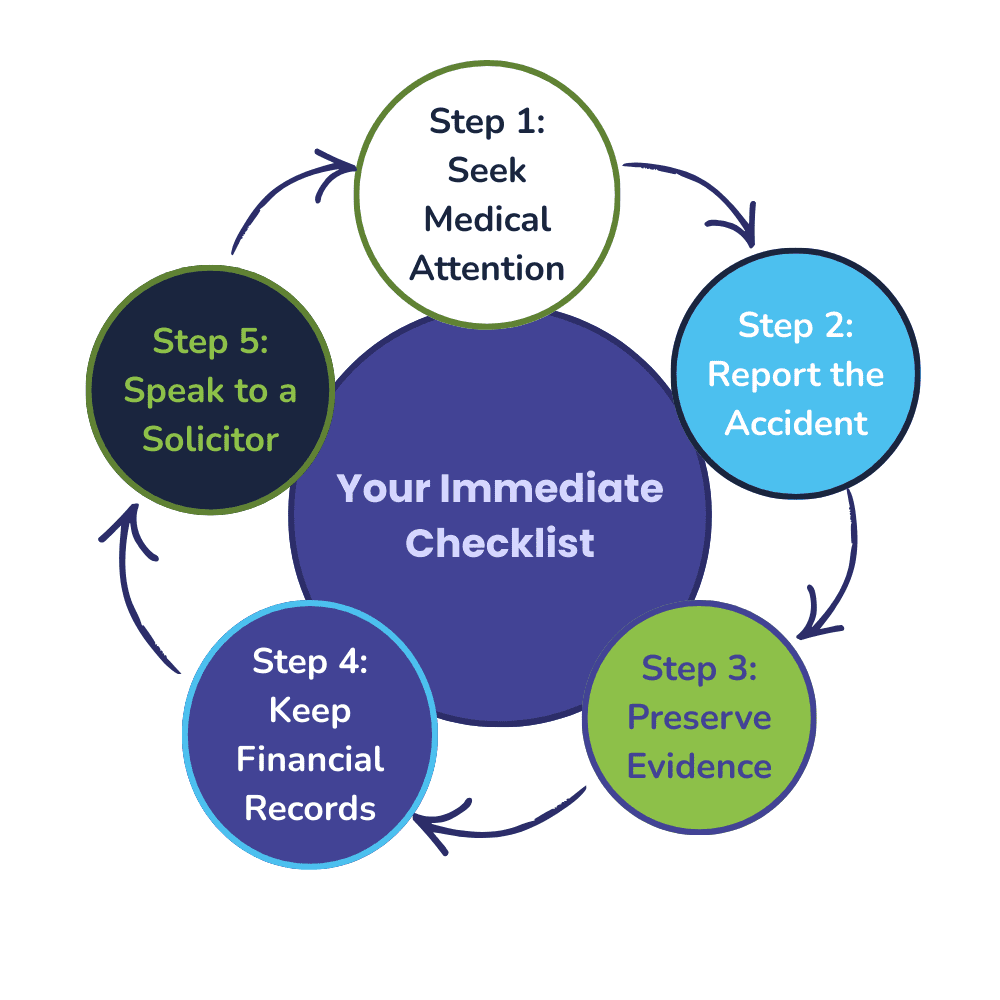
Step 1: Seek Immediate Medical Attention

Your health must always come first.

Even injuries that seem minor — including soft tissue injuries, head injuries, sprains or back pain — can worsen over time.

You should:

  • Call 999 in an emergency
  • Attend A&E if necessary
  • Visit your GP
  • Follow all medical advice

Medical records are crucial evidence. They help prove:

  • The nature of your injuries
  • When symptoms began
  • The severity of the injury
  • Whether there is long-term impact

Delaying medical treatment can weaken both your recovery and your legal claim.

Step 2: Report the Accident to the Occupier

You should notify the person or organisation responsible for the property as soon as possible.

This could be:

  • A shop manager
  • A restaurant owner
  • A landlord
  • A managing agent
  • A homeowner

If the accident happened in a business premises, ask for the incident to be recorded in their accident book. Request a copy or take a photograph.

Ensure the report includes:

  • Date and time
  • Exact location
  • How the accident occurred
  • Description of the hazard
  • Names of witnesses

If the accident happened at a private property (for example, a friend’s house), follow up with a polite written message confirming what occurred. This creates a record.

Step 3: Preserve Evidence

Early evidence is often the key to proving occupier liability.

If you are able, you should:

  • Take photographs of the accident scene
  • Photograph the hazard (wet floor, broken step, uneven paving, poor lighting, loose carpet etc.)
  • Photograph warning signs (or lack of them)
  • Obtain names and contact details of witnesses
  • Keep damaged clothing or footwear

If CCTV may have captured the incident, request that footage be preserved immediately. Many systems automatically overwrite footage within days.

Step 4: Keep Financial Records

If your injury leads to financial losses, these may be recoverable.

Keep records of:

  • Loss of earnings
  • Missed work or reduced hours
  • Medical expenses
  • Travel costs
  • Rehabilitation costs
  • Care provided by family members

These are known as special damages and can significantly increase the value of your claim.

Step 5: Seek Specialist Legal Advice

Many people hesitate to claim because:

  • The accident happened at a friend’s home
  • They feel embarrassed
  • They assume it was their fault
  • They believe claims are complicated

However, most occupier liability claims are handled by insurance — not paid personally by the homeowner or business.

Early legal advice ensures:

  • Time limits are protected
  • Evidence is secured
  • Liability is properly investigated
  • Insurers are dealt with correctly
What Should I Do Immediately After Being Injured on Someone Else’s Property? (Complete UK Guide)

Why Choose NJS Law for Occupier Liability Claim?

When you are injured on someone else’s property, you need more than general advice — you need clear, strategic legal guidance from solicitors who understand occupiers’ liability law, premises safety obligations, and insurer defence tactics.

At NJS Law, we act exclusively in the interests of injured individuals. We understand the physical, financial and emotional pressure that follows a workplace accident. Our role is to remove that pressure and handle the legal process with clarity and confidence. You can read what clients say about our service on our NJS Law reviews.

When you instruct NJS Law, you can expect:

  • Straightforward, honest advice from the outset
  • A clear explanation of your legal position
  • Thorough investigation of employer breaches
  • Direct handling of insurer negotiations
  • Maximised compensation reflecting the true impact of your injury

We are experienced in handling claims involving:

Every case is handled with attention to detail and a focus on achieving the best possible outcome for you.

Speak To NJS Law Today

If you have been injured on someone else’s property, seeking early legal advice can make a significant difference to the strength and value of your claim.

Contact our Occupier Liability Solicitors today for a confidential discussion about your situation. We will explain:

There is no obligation to proceed – just clear professional advice.

Call us today or complete our online enquiry form to speak with a specialist accident at work solicitor.

Your recovery matters. Your rights matter.

Let NJS Law help you secure the compensation you deserve.

→ Learn more About Us

We’re Here To Help

Frequently Asked Questions

Can I claim compensation if the accident was partly my fault?

Yes.

Even if you were partly responsible for the accident, you may still be entitled to compensation under the principle of contributory negligence.

For example, if you slipped while distracted by your phone but there was also an unmarked wet floor, a court may find both parties share responsibility.

Your compensation may be reduced to reflect your share of responsibility, but you are not automatically prevented from claiming.

How long do I have to claim for an injury on someone else’s property?

In most cases, you have three years from:

  • The date of the accident, or
  • The date you became aware that your injury was connected to the accident

This is the standard time limit for personal injury claims in the UK.

Exceptions apply for:

  • Children (three years from their 18th birthday)
  • Individuals lacking mental capacity

It is important to seek legal advice early, as court proceedings must be issued within the limitation period.

What if there were no warning signs?

The absence of warning signs can strengthen your claim — but it is not the only factor.

An occupier must take reasonable steps to make premises safe. In some cases, simply putting up a sign may not be enough if:

  • The hazard should have been removed entirely
  • The risk was foreseeable
  • The area was high traffic

Each case depends on the specific facts and whether reasonable care was taken.

Can I claim if I was injured at a friend’s house?

Yes.

Many people feel uncomfortable about claiming against a friend or family member. However, most homeowner insurance policies include public liability cover.

In most cases:

  • The claim is handled by the insurer
  • Your friend does not personally pay compensation
  • The process is handled professionally and sensitively

If a homeowner failed to repair or warn about a known hazard and you were injured as a result, you may have a valid claim.

What is considered a hazard under occupier liability law?

Common examples include:

  • Wet or slippery floors
  • Uneven paving or loose tiles
  • Broken steps or handrails
  • Poor lighting in stairwells
  • Trailing cables
  • Untreated ice or snow
  • Loose carpets or flooring


The key issue is whether the occupier knew (or should reasonably have known) about the hazard and failed to address it.

What evidence do I need to make a claim?

Strong evidence can include:

  • Photographs of the hazard
  • CCTV footage
  • Witness statements
  • Accident report forms
  • Medical records
  • Maintenance or cleaning logs

Early evidence often makes a significant difference to the success of a claim.

Will I have to go to court?

Most occupier liability claims settle without going to court.

If liability is admitted and medical evidence is agreed, settlement can often be reached through negotiation.

Court proceedings are usually only necessary if:

  • Liability is denied
  • The value of the claim is disputed
  • Settlement negotiations fail

Even if court proceedings are issued, most cases still settle before trial.

How much compensation could I receive?

Compensation depends on:

  • The severity of your injury
  • Whether you made a full recovery
  • Long-term symptoms
  • Loss of earnings
  • Care or treatment needs

Minor injuries may result in modest awards, while serious orthopaedic, spinal or head injuries can attract significantly higher compensation.

Every case is assessed individually based on medical evidence and financial losses.

Will making a claim affect my relationship with the business or homeowner?

In most cases, claims are handled through insurance.

Businesses and homeowners carry liability insurance specifically for situations like this. A claim is made against the insurer — not the individual personally.

Professional organisations understand that accidents happen and that insurance exists to protect both parties.

CONTACT US

Get in touch using the form below or via the following methods:

Ask NJS

For fast, friendly affordable legal advice. Contact a member of our team today.

FAQ

For any questions we may be able to answer, discover our FAQ section.

Categories
Accident at Work

Can I Be Sacked for Making an Accident at Work Claim?

Can I Be Sacked for Making an Accident at Work Claim?

Can I Be Sacked for Making an Accident at Work claim?

One of the biggest fears employees have after being injured at work is this:

“Will I lose my job if I make a claim?”

It is completely understandable to worry about your position — particularly if you rely on your income, have worked for your employer for many years, or feel uncomfortable about bringing a claim against the company.

However, UK law provides strong protection for employees who assert their legal rights.

Bringing an accident at work claim is not misconduct. It is not disloyal. It is not unreasonable. It is a lawful step to recover compensation where your employer’s negligence has caused injury.

In most cases:

  • Claims are handled by the employer’s insurance company
  • The employer does not personally pay compensation
  • You are legally protected from unfair treatment

Understanding your rights can remove much of the anxiety that prevents injured workers from seeking proper legal advice.

Is It Legal for My Employer to Dismiss Me?

No.

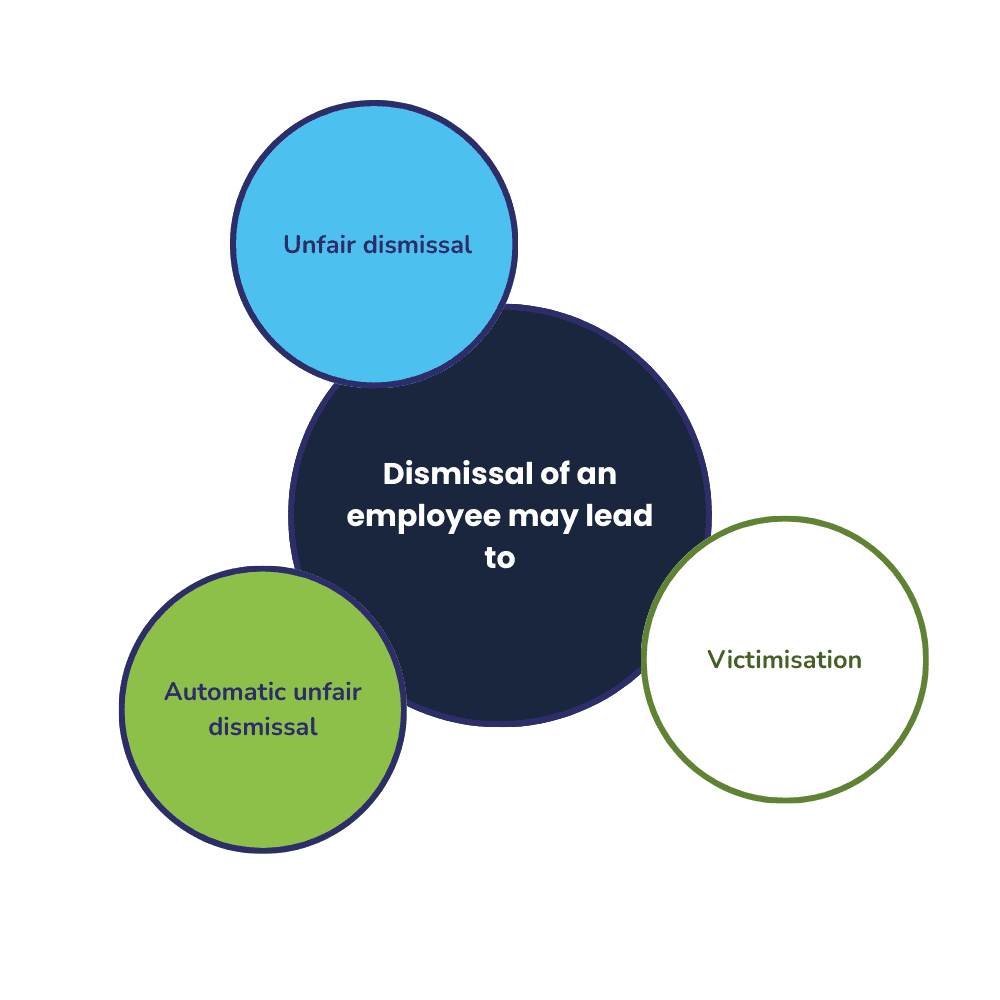
Dismissing an employee for asserting a legal right — including bringing a personal injury claim — may amount to:

  • Unfair dismissal
  • Automatic unfair dismissal
  • Victimisation

Employers cannot lawfully penalise you simply because you have pursued compensation following a workplace injury. You can read more about your protections in our guide to workplace accident legal rights in the UK.

If a dismissal is connected to your claim, you may have additional legal remedies.

Dismissing an employee for asserting a legal right — including bringing a personal injury claim — may amount to:

What If I Experience Retaliation?

Sometimes the concern is not dismissal, but subtle changes in treatment.
Examples of unlawful retaliation can include:

  •  Reduced hours
  •  Demotion
  •  Hostility
  •  Unjustified disciplinary action
  •  Being excluded from meetings or opportunities

If this occurs, you may have separate employment law claims in addition to your injury claim.
Keeping written records of any changes in treatment can be important evidence.

Who Actually Pays?

Employers in the UK are legally required to hold Employers’ Liability Insurance.

This means:

  • Compensation is paid by the insurer
  • The claim is handled by insurance solicitors
  • It does not come directly from your manager’s salary or daily business operations

Personal injury claims are a standard and anticipated part of employer insurance arrangements.

They are not personal attacks — they are legal processes designed to ensure injured workers are compensated fairly.

We’re Here To Help

Why Choose NJS Law for Your Accident at Work Claim?

When you are injured at work, you need more than general advice — you need clear, strategic legal guidance from solicitors who understand employer liability, workplace regulations and insurer tactics.

At NJS Law, we act exclusively in the interests of injured individuals. We understand the physical, financial and emotional pressure that follows a workplace accident. Our role is to remove that pressure and handle the legal process with clarity and confidence. You can read what clients say about our service on our NJS Law reviews.

When you instruct NJS Law, you can expect:

We are experienced in handling claims involving:

  • Manual handling injuries
  • Slips, trips and falls
  • Construction site accidents
  • Machinery and equipment failures
  • Industrial and factory injuries 
  • Workplace head and back injuries

Every case is handled with attention to detail and a focus on achieving the best possible outcome for you.

Speak To NJS Law Today

If you have suffered an accident at work, early advice can make a significant difference to your claim.

Contact our Accident at Work Solicitors  today for a confidential discussion about your situation. We will explain:

There is no obligation to proceed – just clear professional advice.

Call us today or complete our online enquiry form to speak with a specialist accident at work solicitor.

Your recovery matters. Your rights matter.

Let NJS Law help you secure the compensation you deserve.

→ Learn more About Us

Frequently Asked Questions

Can I claim if the accident was partly my fault?

Yes. Even if you were partly responsible, you may still receive compensation under contributory negligence principles.

Your compensation may be reduced to reflect your share of responsibility, but you are not automatically prevented from claiming. Employers still have a legal duty to provide a safe working environment.

What if the accident wasn't recorded in the Accident Book?

You can still bring a claim.

While accident book entries are helpful evidence, they are not essential. Medical records, witness statements, CCTV footage and photographs can all support your case.

It is advisable to notify your employer in writing as soon as possible if the incident was not formally recorded.

How long do I have to make an accident at work claim?

In most cases, you have three years from the date of the accident to start court proceedings. You can read a detailed guide on accident at work time limits and how long you have to claim.

If your injury developed over time (for example, repetitive strain injury), the three year period may begin from the date you became aware that your condition was work-related.

There are exceptions for children and individuals lacking mental capacity.

Will claiming compensation affect my job?

Most workplace accident claims are handled by the employer’ liability insurance.

The claim is made against the insurer – not directly against your employer personally. Professional employers understand that insurance exists for this purpose.

CONTACT US

Get in touch using the form below or via the following methods:
Ask NJS

For fast, friendly affordable legal advice. Contact a member of our team today.

FAQ

For any questions we may be able to answer, discover our FAQ section.

Categories
Accident at Work

No Win No Fee Accident at Work Claims – How It Works

No Win No Fee Accident at Work Claims – How It Works

Molly Newbery

Many injured employees delay making a claim because they are worried about legal costs.

It is completely understandable to ask:

“Can I afford to bring a claim?”

“What happens if I lose?”

The good news is that most accident at work claims are handled under a No Win No Fee agreement, known as a Conditional Fee Agreement (CFA).

This funding arrangement allows you to pursue compensation without paying upfront legal fees and without taking on financial risk.

At NJS Law, we believe access to justice should not depend on your financial position. A No Win No Fee agreement allows you to protect your legal rights while keeping costs transparent and controlled.

What Is a No Win No Fee Agreement?
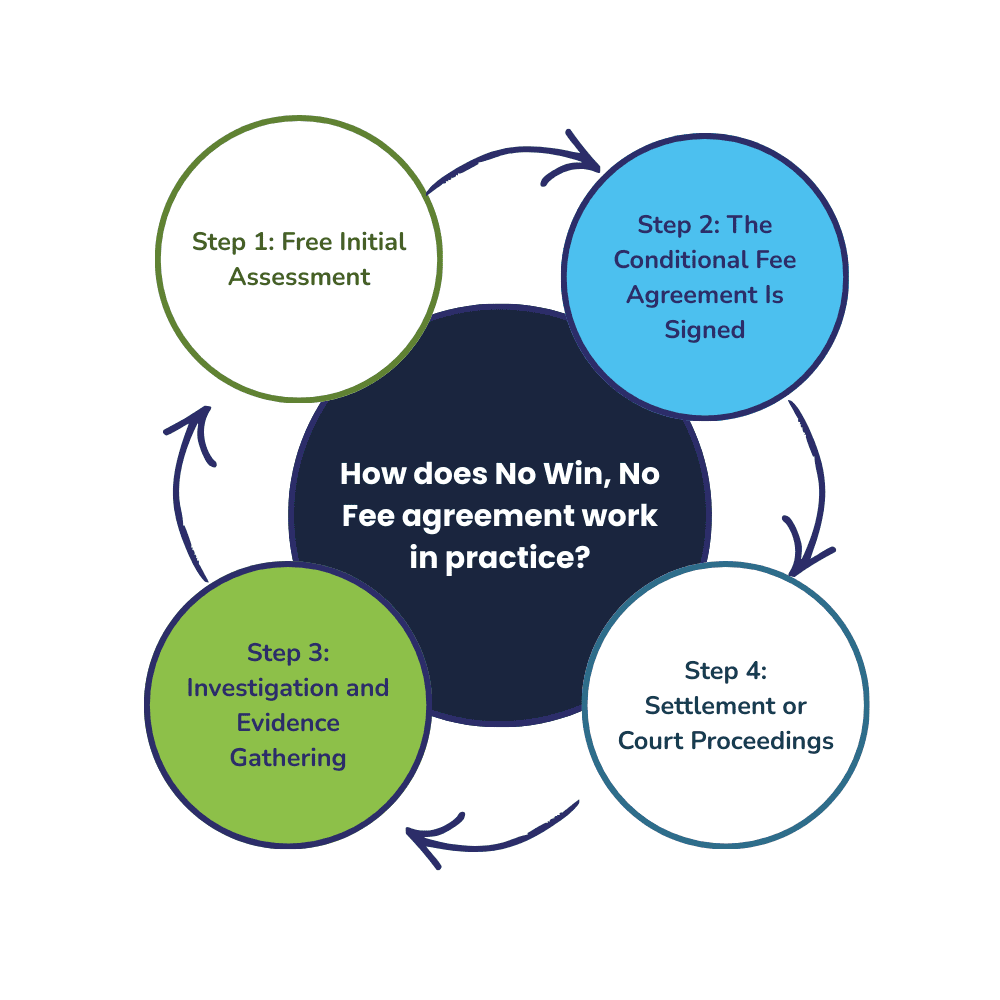
How Does a No Win No Fee Claim Work in Practice?

A No Win No Fee agreement (Conditional Fee Agreement) means:

  •  You do not pay any upfront legal fees
  •  You do not pay your solicitor’s fees if the claim is unsuccessful
  •  If you win, a legally capped success fee is deducted from your compensation

The success fee is agreed with you in advance and is subject to a statutory cap. There are no hidden charges.

This structure ensures that:

  •  Your solicitor shares the financial risk
  •  Your case is carefully assessed before proceeding
  •  Your interests are aligned with your solicitor’s

Step 1: Free Initial Assessment

We review your case at no cost and advise you on:

  •  Whether you have a valid claim
  •  The likely prospects of success
  •  The potential value of your case

If your claim has reasonable prospects, we offer to act under a No Win No Fee agreement.

Step 2: The Conditional Fee Agreement Is Signed

Before work begins, you will receive:

  •  A clear explanation of the success fee
  •  Details of how costs are handled
  •  Information about insurance protection

Everything is explained in straightforward language so you can make an informed decision.

Step 3: Investigation and Evidence Gathering

We, then:

  •  Obtain medical evidence
  •  Secure witness statements
  •  Request employer documentation
  •  Preserve CCTV where relevant
  •  Value your claim properly

We deal directly with the employer’s insurers, so you do not have to.

Step 4: Settlement or Court Proceedings

 Most accident at work claims settle without the need for a court hearing.
If settlement is achieved:

  •  Compensation is paid
  •  The agreed success fee is deducted
  •  The remainder is transferred to you

If the claim does not succeed, you do not pay our legal fees.

How a no win no fee agreement works

What About Legal Costs If the Claim Fails?

A common concern is:

“What if I lose — will I owe thousands of pounds?”

 In most cases:

  • You do not pay your solicitor’s fees
  • After-the-Event (ATE) insurance can protect you from paying the opponent’s legal costs
  • The cost of that insurance is only payable if you win

This structure is specifically designed to protect claimants from financial risk.

We explain all potential scenarios clearly before you proceed.

For more detailed information about funding and insurance, please visit our dedicated ‘No Win No Fee Claims’ page.

Why This System Exists

The No Win No Fee system was introduced to ensure:

  •  Access to justice for injured individuals
  •  Protection from financial hardship
  •  Fair legal representation
  •  Accountability where employers breach health and safety laws

Without this system, many injured workers would be unable to pursue legitimate claims

Is There Any Risk to Me?

While no legal claim can ever be described as “risk-free,” a properly structured No Win No Fee agreement significantly reduces financial exposure.

At NJS Law, we:

  •  Carefully assess claims before accepting them
  •  Provide written cost transparency
  •  Explain insurance protection
  •  Keep you informed at every stage

Our role is to ensure you understand exactly how funding works before making any decision.

We’re Here To Help

Why Choose NJS Law for Your Accident at Work Claim?

When you are injured at work, you need more than general advice — you need clear, strategic legal guidance from solicitors who understand employer liability, workplace regulations and insurer tactics.

At NJS Law, we act exclusively in the interests of injured individuals. We understand the physical, financial and emotional pressure that follows a workplace accident. Our role is to remove that pressure and handle the legal process with clarity and confidence. You can read what clients say about our service on our NJS Law reviews.

When you instruct NJS Law, you can expect:

We are experienced in handling claims involving:

  • Manual handling injuries
  • Slips, trips and falls
  • Construction site accidents
  • Machinery and equipment failures
  • Industrial and factory injuries 
  • Workplace head and back injuries

Every case is handled with attention to detail and a focus on achieving the best possible outcome for you.

Speak To NJS Law Today

If you have suffered an accident at work, early advice can make a significant difference to your claim.

Contact our Accident at Work Solicitors  today for a confidential discussion about your situation. We will explain:

  • Whether you have a valid claim
  • What your claim may be worth
  • How the No Win No Fee process works 
  • The next steps to protect your rights

There is no obligation to proceed – just clear professional advice.

Call us today or complete our online enquiry form to speak with a specialist accident at work solicitor.

Your recovery matters. Your rights matter.

Let NJS Law help you secure the compensation you deserve.

→ Learn more About Us

Frequently Asked Questions

Can I claim if the accident was partly my fault?

Yes. Even if you were partly responsible, you may still receive compensation under contributory negligence principles.

Your compensation may be reduced to reflect your share of responsibility, but you are not automatically prevented from claiming. Employers still have a legal duty to provide a safe working environment.

What if the accident wasn't recorded in the Accident Book?

You can still bring a claim.

While accident book entries are helpful evidence, they are not essential. Medical records, witness statements, CCTV footage and photographs can all support your case.

It is advisable to notify your employer in writing as soon as possible if the incident was not formally recorded.

How long do I have to make an accident at work claim?

In most cases, you have three years from the date of the accident to start court proceedings. You can read a detailed guide on accident at work time limits and how long you have to claim.

If your injury developed over time (for example, repetitive strain injury), the three year period may begin from the date you became aware that your condition was work-related.

There are exceptions for children and individuals lacking mental capacity.

Can my employer dismiss me for making a claim?

No. It is unlawful for an employer to dismiss or treat you unfairly for pursuing a legitimate personal injury claim. You can read more about your rights in our guide on being sacked for making an accident at work claim.

If your employer takes adverse action against you because you exercised your legal rights, this may amount to unfair dismissal or victimisation.

Will claiming compensation affect my job?

Most workplace accident claims are handled by the employer’ liability insurance.

The claim is made against the insurer – not directly against your employer personally. Professional employers understand that insurance exists for this purpose.

CONTACT US

Get in touch using the form below or via the following methods:

Ask NJS

For fast, friendly affordable legal advice. Contact a member of our team today.

FAQ

For any questions we may be able to answer, discover our FAQ section.

Categories
Criminal Injuries

Psychological Injuries and PTSD: How CICA Assesses Trauma Claims

Molly Newbery

At NJS Law, we work with many clients whose most serious injury is not visible.

While bruises and fractures may heal, psychological injuries and PTSD can last for years, affecting work, relationships and day-to-day life.

The Criminal Injuries Compensation Authority (CICA) does recognise mental health injuries – but the rules are technical, and claims are often under-valued or refused without the right evidence.

This guide explains, in clear terms:

  • Whether you can claim CICA for PTSD and psychological trauma
  • How CICA assesses mental injuries
  • What evidence you need to support your claim
  • How to strengthen your case with specialist help

If you’d like tailored advice, you can speak to our team here: CICA Specialists

Can You Claim CICA for Psychological Injury or PTSD?

Yes. You can make a CICA claim for psychological injury even where there is no physical injury.
You may be entitled to compensation if you developed:

  • Post-Traumatic Stress Disorder (PTSD)
  • Complex PTSD (C-PTSD)
  • Depression linked to the crime
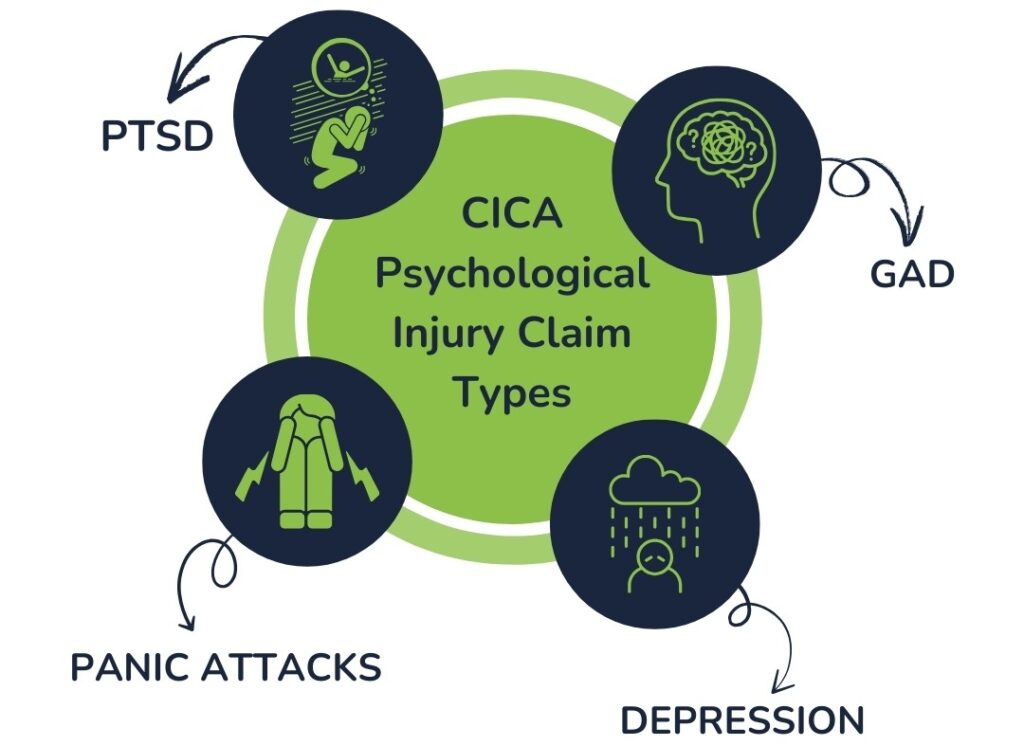
  • Generalised anxiety or panic disorder
  • Adjustment disorder
  • Personality change or long-term behavioural change due to trauma
  • Psychological harm following sexual assault, domestic abuse

To qualify, your condition must be directly linked to a crime of violence that has been reported to the police, and you must be formally diagnosed by a psychologist or psychiatrist.

How CICA Assesses Psychological Trauma Claims

CICA uses strict criteria when it considers a psychological injury. In most cases, it will expect:

  • A formal diagnosis from a consultant psychiatrist or clinical psychologist
  • Clear evidence that your condition is caused by the incident you reported
  • Medical records confirming the duration, severity and impact of your symptoms

A short GP note is rarely enough on its own. The strongest claims usually include a full psychiatric report and ongoing treatment records.

Mental Health Criteria - What CICA Looks For

To award compensation for Mental Health, CICA looks for symptoms that match recognised diagnostic standards (for example DSM-5 criteria), such as:

1. Re-experiencing the trauma

  • Flashbacks
  • Nightmares
  • Intrusive memories

2. Avoidance

  • Avoiding places, people or reminders of the incident
  • Emotional numbing
  • Withdrawing from friends and family

3. Negative Thoughts and Mood

  • Persistent guilt, shame or fear
  • Feeling detached or “numb”
  • Difficulty feeling positive emotions

4. Hyperarousel

  • Being on constant alert
  • Sleep problems
  • Irritability or anger outbursts
  • Being easily startled

You do not need to tick every box, but your medical evidence should show a recognised psychiatric injury, not just ordinary upset or distress.

CICA Compensation Levels for Psychological Injuries

CICA uses a fixed tariff system. The amount you receive depends on how severe and long-lasting your psychological injury is.

While every case is different, psychological injuries often fall into categories along these lines:

  • Moderately severe psychological injury– symptoms lasting a number of years with a significant impact, but with some recovery over time.
  • Severe mental injury – long-term or permanent symptoms that seriously affect work, relationships and independence.
  • Psychological trauma linked to sexual assault or abuse – awards can be higher where there is prolonged abuse, childhood abuse or particularly serious psychiatric harm.

You can only be compensated for the single highest-value psychological injury – CICA does not add multiple mental injuries together.

For some clients, additional compensation may be available for loss of earnings or special expenses.

See our main guide on Criminal Injuries Compensation for more detail.

Common Crimes That Lead to PTSD and Psychological Injury

We regularly see psychological injuries after:

  • Domestic violence and coercive control
  • Sexual assault, rape and serious sexual offences
  • Historic childhood abuse (including institutional or familial abuse)
  • Physical assault and violent robbery
  • Witnessing extreme violence or homicide

If the incident was reported to the police and you’ve suffered a psychological injury as a result, you may have grounds to claim. 

What Evidence Do You Need for a CICA Mental Health Claim?

CICA understands that victims may not have extensive evidence. Still, strong documentation helps your case.

1. Formal Psychological Diagnosis

CICA gives greatest weight to:

  • Consultant psychiatrist reports
  • Clinical psychologist assessments
  • Structured trauma assessments and therapy reports

These should confirm:

  • Your diagnosis (e.g. PTSD, C-PTSD, depression, anxiety)
  • How it links to the criminal incident
  • The severity and likely prognosis

2. Medical Records

Helpful documents include:

  • GP consultations mentioning trauma or mental health
  • Hospital records
  • Medication history (e.g. antidepressants, sleeping tablets)
  • Referral letters to mental health services
  • Notes from counselling or therapy sessions

3. Police Evidence

CICA will want to see that:

  • The crime was reported promptly (or you have a good reason for any delay)
  • You cooperated with the investigation as far as you reasonably could

Your crime reference number and police statements are key documents.

4. Evidence of Daily Impact

To demonstrate how your psychological injury affects your life, you can use:

  • Workplace absence records
  • Occupational health reports
  • Statements from family, friends or support workers
  • Social services involvement
  • Evidence of withdrawing from social activities, education or work

How CICA Decides Between "Severe" and "Moderately Severe" Mental Injury

CICA looks at much more than just your diagnosis label. It may consider:

  • How long your symptoms have lasted
  • Whether you are able to work or study
  • The extent of your social withdrawal
  • Whether you need ongoing therapy or medication
  • Whether there is a realistic chance of recovery

The more serious and long-lasting the impact, the higher the bracket your award is likely to fall into.

Why CICA PTSD Claims Are Often Rejected - And How We Help

Sadly, many psychological injury claims are refused or under-valued.
Common reasons include:

  • No formal psychiatric diagnosis
  • Only GP-level notes with limited detail
  • Insufficient evidence linking the condition to the crime
  • Inconsistencies between medical records and police statements
  • Applications made after the 2-year time limit without a clear exceptional reason

At NJS Law, we regularly review refused CICA cases and identify where:

  • Further medical evidence is needed
  • A clearer link to the crime should be drawn
  • An extension of the time limit can be argued (see: CICA Claim Time Limits)

We then prepare a structured, evidence-based challenge on your behalf.

Can You Claim for PTSD Without Any Physical Injury?

Yes. CICA can award compensation for psychological injury alone.

This is particularly common in:

  • Domestic abuse and coercive control cases
  • Sexual assault and rape
  • Historic childhood abuse

You do not need broken bones or visible wounds for your trauma to be real – and for it to qualify for compensation.

Do You Need a Solicitor for a CICA Psychological Injury Claim?

You are allowed to apply directly, but many clients find the process stressful – especially while managing mental health symptoms.

Working with a specialist CICA team like NJS Law can help you to:

  • Understand how CICA will view your psychological injury
  • Obtain the right psychiatric evidence
  • Present your case in a clear, structured way
  • Seek a fair award that reflects the true impact of your trauma
  • Challenge any refusal or low offer through review and appeal

If you’d like to discuss your situation in confidence, contact us today.

👉 Speak to our CICA team

FAQ – Psychological Injury & PTSD CICA Claims

Do I need a formal PTSD diagnosis to make a CICA claim?

You will usually need a diagnosis from a psychiatrist or clinical psychologist. CICA rarely accepts claims based only on short, informal notes.

Can I claim if my PTSD developed months after the incident?

Yes. Delayed-onset PTSD is recognised. Your medical evidence should explain how the symptoms emerged over time.

Can I claim for psychological injury from childhood abuse many years later?

In some cases, yes. CICA can extend the usual time limit where there are exceptional circumstances and ongoing impact.

What if I have not started therapy yet?

You may still be able to claim, but CICA may request updated evidence. We often advise clients to seek an assessment so their condition is properly documented.

CONTACT US

Get in touch using the form below or via the following methods:
Ask NJS

For fast, friendly affordable legal advice. Contact a member of our team today.

FAQ

For any questions we may be able to answer, discover our FAQ section.

Categories
Criminal Injuries

CICA for Victims of Domestic Abuse: What You Can Claim

Molly Newbery

Domestic abuse remains one of the most underreported crimes in the UK. Many victims feel trapped, frightened or unsure of their rights — but you may still be eligible for financial compensation through the Criminal Injuries Compensation Authority (CICA).

CICA provides compensation for victims of violent crime, including domestic violence, sexual abuse, and coercive or controlling behaviour.

If you’ve suffered physical, emotional, or sexual abuse — even if it happened years ago — you may be entitled to compensation.

You may also find our guide helpful: How to Make a CICA Claim.

Does CICA Cover Domestic Abuse?

Yes – CICA recognises domestic abuse as a crime of violence, including:

  • Physical assault
  • Sexual assault, marital rape or rape within a relationship
  • Psychological trauma resulting from abuse

You can claim whether the abuse was:

  • Multiple incidents reported together
  • A repeated pattern of violence
  • A long-term abusive relationship
  • Historical abuse only recently disclosed

For more details on your rights, see Domestic Abuse Compensation Claims.

What You Can Claim Through CICA for Domestic Abuse

CICA provides compensation across several award categories depending on your injuries and losses.

1. Physical Injuries

Examples include:

  • Cuts, bruising, fractures
  • Broken bones
  • Head injuries
  • Burns or scalds
  • Organ damage
  • Loss of teeth
  • Scarring or disfigurement

CICA uses a tariff-based system, awarding higher compensation for more serious injuries.

2. Psychological Injuries & PTSD

Many victims develop long-term psychological trauma, such as:

  • PTSD or C-PTSD
  • Depression & anxiety
  • Panic attacks
  • Sleep disturbances
  • Hypervigilance
  • Emotional numbing
  • Suicidal thoughts

CICA does award compensation for psychological injury alone, provided you have a formal diagnosis from a psychologist or psychiatrist.

Learn more: PTSD & Trauma Compensation Claims.

3. Loss of Earnings

If abuse has affected your ability to work, you may claim compensation for:

  • Short-term time off
  • Long-term inability to work
  • Mental health conditions preventing employment

You usually need proof of stable employment for at least 3 years pre-incident.

4. Special Expenses

These cover essential costs directly resulting from the abuse, including:

  • Medical aids or mobility equipment
  • Property damage caused during incidents
  • Home adaptations
  • Therapy or counselling not available on the NHS

These must be necessary, reasonable and linked to the crime.

5. Sexual Assault & Rape Compensation

Domestic abuse often involves sexual violence, including:

  • Sexual assault
  • Repeated assaults
  • Marital rape
  • Pregnancy resulting from rape
  • STIs
  • Severe psychological trauma

Victims of partner or spousal rape absolutely qualify for compensation.

More details: Sexual Assault CICA Claims.

Can You Claim CICA for Coercive Control?

No, unless there is physical and sexual abuse attached to it.

CICA recognises forms such as:

  • Isolation from friends or family
  • Financial control
  • Monitoring of devices or messages
  • Restricting movement
  • Manipulation and intimidation
  • Repeated threats

CICA Time Limits for Domestic Abuse Claims

Normally, you must apply within 2 years.

However, CICA allows extensions in domestic abuse cases where:

  • You were too afraid to report the offender
  • Trauma prevented you from acting sooner
  • You were manipulated or controlled
  • You feared retaliation
  • You were a minor at the time of the abuse
  • You have recently disclosed historic abuse

The time limit is flexible if you can demonstrate “exceptional circumstances.”

What Evidence Do You Need for a Domestic Abuse CICA Claim?

CICA understands that victims may not have extensive evidence. Still, strong documentation helps your case.

✓ Police Evidence

  • Crime reference number
  • Statements
  • Records of reports or domestic incidents

✓ Medical Evidence

  • GP records
  • Hospital treatment
  • Mental health assessments
  • Therapy or counselling notes

✓ Psychological Diagnosis

A report from a psychiatrist or clinical psychologist is ideal.

✓ Supporting Documents

  • Social services involvement
  • IDVA/ISVA or refuge support letters
  • Photos of injuries
  • Employer absence notes
  • Statement from family/friends

How CICA Judges Domestic Abuse Claims

CICA considers:

  • The seriousness of the abuse
  • Duration and pattern of the behaviour
  • Long-term physical or psychological harm
  • Whether you reported the abuse (and reasons for delay if you didn’t)
  • Medical and police evidence
  • Credibility and consistency of statements.

It recognises that victims often conceal abuse due to fear or coercion.

Historic Domestic Abuse Claims

Many victims come forward years – even decades – later.

You may still be eligible if:

  • You can explain why you did not report earlier
  • Evidence still exists for CICA to assess the case
  • You have a current psychological diagnosis connected to the abuse

We see many successful historic claims every year.

Why Domestic Abuse CICA Claims Are Often Rejected - And How to Avoid it

Common reasons include:

❌ Lack of police report
❌ Claim made after 2 years without explanation
❌ No psychiatric diagnosis
❌ Inconsistent statements
❌ Insufficient medical evidence

With the right preparation — or an appeal — many rejected claims can be overturned.

Do You Need a Solicitor for a Domestic Abuse CICA Claim?

You can apply on your own, but domestic abuse claims are emotionally difficult and often complex.

A specialist solicitor can help you:

  • Gather evidence
  • Prepare a strong psychological injury case
  • Argue for time-limit extensions
  • Maximise your compensation
  • Appeal wrongful refusals

Our trauma-informed team handles these cases sensitively and confidentially.

👉 Speak to our CICA team

Frequently Asked Questions

Can I Claim if the Abuser was my Partner?

Yes. CICA covers all forms of domestic abuse, including partner or ex-partner violence.

What if the Offender was Never Charged or Convicted?

You can still claim – CICA only requires that the crime was reported.

What if I Reported the Abuse Late?

You may still be eligible if you have an exceptional reason, such as coercion or fear.

Can I Claim for Psychological Injury Alone?

Yes – provided you have a formal diagnosis.

Conclusion - You Deserve Support and May be Entitled to Compensation

Domestic abuse leaves lasting physical and emotional scars.

CICA compensation can support your recovery, cover losses, and acknowledge the harm you’ve suffered.

CONTACT US

Get in touch using the form below or via the following methods:

Ask NJS

For fast, friendly affordable legal advice. Contact a member of our team today.

FAQ

For any questions we may be able to answer, discover our FAQ section.

Categories
Criminal Injuries

CICA Claim Time Limits Explained – Exceptions, Extensions & Evidence

Molly Newbery

Victims of violent crime often worry they may be “out of time” to apply for compensation. However, the Criminal Injuries Compensation Authority (CICA) time limit rules are more flexible than most people realise.

If you’re asking:

  • How long do I have to make a CICA claim?
  • Can I apply after 2 years?

This guide covers everything you need to know.

What is the Time Limit for a CICA Claim?

The standard CICA claim time limit is:

  • 2 years from the date of the incident
  • As soon as reasonably possible

This applies to most claims, including:

  • Assault
  • Sexual assault
  • Domestic abuse
  • Violent crime
  • Robbery

However, this two-year rule has several important exceptions.

CICA Time Limit Exceptions - When You Can Claim After 2 Years

The CICA may extend the deadline if “exceptional circumstances” prevented you from applying earlier.

1. Psychological Trauma

Mental health conditions such as PTSD, depression or anxiety can delay reporting or making a claim.

2. Historic Child Abuse

CICA frequently accepts late claims involving:

  • Child sexual abuse
  • Physical abuse
  • Grooming or exploitation
  • Institutional abuse

3. Intimidation or Coercive Control

Victims in abusive relationships may be unable to safely report the crime.

4. Illness or Disability

Medical or cognitive impairments can justify a delayed claim.

5. Valid Reasons for Late Police Reporting

CICA requires prompt reporting unless you can show:

  • Fear of the offender
  • Mental health difficulties
  • Being a minor at the time
  • Trauma-related avoidance

You may still qualify if the delay was beyond your control.

How to Get a CICA Time Limit Extension

To secure an extension, you must demonstrate:

✔ A compelling reason for the delay
✔ That enough evidence still exists for CICA to assess your claim

Evidence Supporting a Time Extension

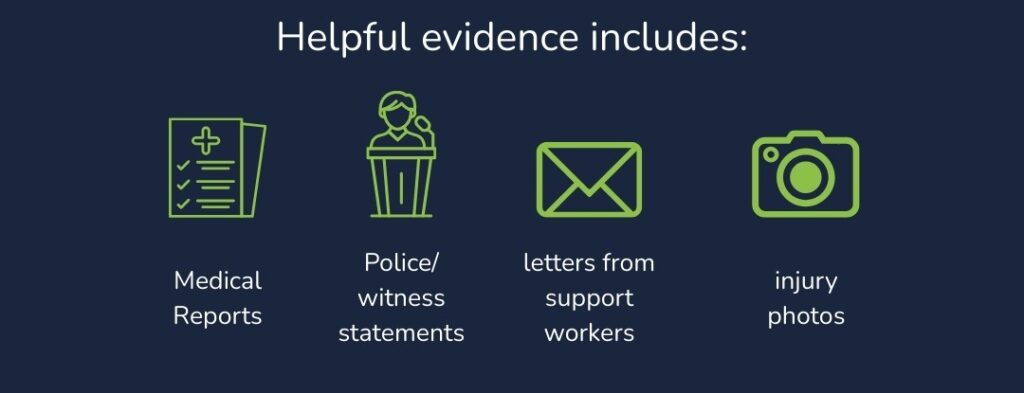
Strong documents include:

  • Medical or psychological reports
  • Police statements
  • GP records
  • Social service files
  • Letters from domestic abuse services, counsellors or support workers

What Evidence Do You Need for a CICA Claim?

The strength of your evidence often determines the value and success of your claim.

Police Evidence

  • Crime reference number
  • Police reports or officer notes (if available)

Medical Evidence

  • GP and hopsital records
  • A&E documentation
  • Photgraphs of injuries
  • Mental health assessments
  • Therapy of counselling notes

Evidence of Impact

  • Loss of earnings
  • Employer confirmation of absences
  • Specialist medical reports

Evidence of Impact

  • Psychiatric assesments
  • Support worker letters
  • Domestic abuse reports
  • Police confirmation of late disclosure
  • Social services involvement

How Late Can You Make a CICA Claim?

There is no absolute maximum time limit.

CICA can accept claims many years, or even decades, later, if:

✔ You have a valid reason for delay
✔ Sufficient evidence still exists
✔ You can show ongoing impact today

Historic abuse survivors routinely succeed with claims 10–40 years after the incident.

How Late Can You Make a CICA Claim?

Common reasons include:
No explanation for a late claim
❌ Crime not reported promptly
Missing medical evidence
Inconsistencies in statements
❌ Withdrawing or changing statements
Ongoing contact with the offender without explanation

These issues can often be resolved with professional support.

Should You Use a Solicitor for Your CICA Claim?

While you can apply yourself, a specialist CICA solicitor can:

  • Strengthen your claim with supporting evidence
  • Argue for a successful time extension
  • Obtain police and medical records
  • Maximise your compensation
  • Appeal refusals or unfair awards

Claimants with professional representation often achieve significantly higher compensation.

Frequently Asked Questions About CICA Time Limits

Can I make a CICA claim after 2 years?

Yes – if exceptional circumstances caused the delay.

What counts as exceptional circumstances?

Psychological trauma, childhood abuse, illness, coercion, or valid reasons for late police reporting.

Do historic abuse cases qualify?

Yes. Many are successful even decades later.

Do I need evidence for a late claim?

Absolutely – you must show why you couldn’t apply sooner.

Is there a maximum time limit?

No fixed limit, but older cases require stronger evidence.

Get Help With Your CICA Claim Today

If you’re unsure whether you’re still within time, don’t assume you’re ineligible.

A specialist solicitor can advise you, gather evidence and help secure the compensation you deserve.

CONTACT US

Get in touch using the form below or via the following methods:
Ask NJS

For fast, friendly affordable legal advice. Contact a member of our team today.

FAQ

For any questions we may be able to answer, discover our FAQ section.

Categories
Medical Negligence Women’s Health Negligence

Endometriosis Medical Negligence Claims – How You Can Take Action

Molly Newbery

For many women, living with untreated or misdiagnosed endometriosis causes life-altering pain, fatigue, and emotional distress. Yet far too often, patients are dismissed, ignored, or misdiagnosed despite showing clear symptoms. A recent parliamentary report has attributed this pattern to “medical misogyny” – a systemic failure to take women’s health seriously.

If you’ve suffered due to a delayed diagnosis of endometriosis, or if your symptoms were ignored, you may be entitled to make an endometriosis medical negligence claim.

Being dismissed by a GP or gynaecologist despite clear symptoms is unacceptable and may amount to negligence. In some cases, women affected by gynaecology negligence could be owed thousands in compensation.

What is Endometriosis - and Why Does Misdiagnosis Happen?


Endometriosis is a condition in which tissue, similar to the womb lining, grows elsewhere in the body. It often causes severe pain, internal scarring, and fertility problems. Common symptoms include:

• Pelvic and abdominal pain
• Painful or heavy periods
• Fatigue and shortness of breath
• Bleeding in other areas (such as the bladder or bowel)

Despite affecting 1 in 10 women in the UK, endometriosis is frequently misdiagnosed as IBS, dismissed as normal period pain, or overlooked entirely. This often stems from medical misogyny and a general lack of awareness in women’s reproductive health.

The longer endometriosis goes untreated, the more severe the pain and potential complications – including fertility issues and long-term organ damage.

When Does Endometriosis Misdiagnosis Become Medical Negligence?


Medical negligence occurs when a healthcare professional breaches their duty of care, causing avoidable harm.

In endometriosis cases, this might include:

  • Failing to investigate or refer a patient despite persistent symptoms
  • Misdiagnosing the condition as another illness
  • Delaying tests, scans, or treatment
  • Poor follow-up or mismanagement after diagnosis

Not every misdiagnosis is negligent, but when a doctor’s actions fall below the accepted medical standard, you may have grounds for an endometriosis negligence claim.

“They just wanted to give me something quick, so I was out of there and done with. It is appalling that the only option I had to stop my gynaecological pain was the pill.”Vicky Gibbons

How to Prove an Endometriosis Negligence Claim


Under UK law, you generally have three years from the date you became aware of the negligence to start a claim. Here’s how to build a strong case:

  1. Collect your medical records: GP visits, referrals, scans, and test results.
  2. Obtain expert evidence: A medical specialist can confirm if your care fell below the expected standard.
  3.  Prove the harm caused: Show how the delay or misdiagnosis led to worsened pain, fertility loss, emotional distress, or additional surgery.
  4. Establish causation: Demonstrate that proper care would have prevented or reduced your suffering.

Our team at NJS Law can guide you through each stage, from gathering evidence to negotiating a fair settlement.

What Compensation Can You Claim for Endometriosis Negligence?


Compensation varies depending on your circumstances, but may include:

  • General damages: for pain, suffering, and loss of amenity.
  • Special damages: to cover lost earnings, ongoing treatment, and future care.
  • Endometriosis-specific losses: such as fertility treatment costs, emotional distress, or repeat surgeries.

For example, if you were misdiagnosed for years and required major surgery as a result, your compensation would consider both your physical pain and the financial impact of your delayed diagnosis.

Every case is unique, and the amount awarded depends on the individual facts and medical evidence.

Why Choose NJS Law for Endometriosis Negligence Claims


At NJS Law, our specialist medical negligence solicitors have extensive experience in women’s health and gynaecology negligence cases.

We understand both the medical and emotional impact of endometriosis and will handle your case with empathy and expertise.

  • No Win, No Fee: Start your claim risk-free.
  • National Coverage: We handle cases across England and Wales.
  • Trusted Reputation: Highly rated on Trustpilot for client care and success.

Contact our endometriosis negligence solicitors today for a free, confidential consultation. We’ll assess whether you have a claim and guide you through the next steps.

Frequently Asked Questions

Can I sue for endometriosis misdiagnosis?


Yes, if your doctor failed to diagnose or treat endometriosis properly, and that failure caused you harm, you may have grounds for a medical negligence claim.

How long do I have to claim for medical negligence?


In the UK, you generally have three years from the date you became aware of the negligence to start legal action.

What if my treatment was private?


Negligence in private healthcare is treated the same as NHS negligence, you can still make a claim.

What if my endometriosis was misdiagnosed as IBS?


If this misdiagnosis led to worsening symptoms, fertility issues, or financial losses, you should seek legal advice immediately.

Conclusion


If your endometriosis was delayed or misdiagnosed, and you’ve suffered as a result, you may be entitled to make an endometriosis medical negligence claim.

Contact our specialist women’s health solicitors at NJS Law today for a free consultation. We’re here to help you secure the compensation and recognition you deserve. But, don’t delay, as limitation periods apply.

CONTACT US

Get in touch using the form below or via the following methods:

Ask NJS

For fast, friendly affordable legal advice. Contact a member of our team today.

FAQ

For any questions we may be able to answer, discover our FAQ section.