

Categories
Dental Negligence

A Complete Guide to Dental Negligence Claims in the UK (Step-by-Step)

A Complete Guide to Dental Negligence Claims in the UK (Step-by-Step)

mcpicadofelipe

“This guide explains the dental negligence claims process in detail.

If you’re ready to speak to a solicitor about your situation, visit our dental negligence claims page for a free consultation.”

Dental negligence can cause avoidable pain, infection, tooth loss, nerve damage, and expensive corrective treatment — often leaving patients uncertain about their rights and unsure where to start.

This guide explains the dental negligence claims process in plain English: how to gather evidence, what negligence actually means in legal terms, how expert witnesses assess your case, and what to expect at each stage — including when a dentist disputes liability.

Ready to speak to a solicitor?

If you’ve already experienced dental harm and want to discuss your situation with a specialist, visit our dental negligence claims page for a free, no-obligation consultation. This guide is designed to help you understand the process first.

Download the Free Dental Negligence Claims Guide (PDF)

Our free guide covers the full claims process step-by-step — from what to do first and how to gather evidence, through to time limits, expert reports, and compensation. Download the Dental Negligence Claims Guide (PDF).

What Dental Negligence Actually Means in Legal Terms

A poor dental outcome is not automatically negligence. Many things can go wrong in dentistry without anyone being at fault — a filling can fail, an extraction can be more complex than expected, and healing can be unpredictable.

A successful dental negligence claim needs to show three things:

  1. Duty of care — the dental professional owed you a duty (almost always straightforward once a treatment relationship existed)
  2. Breach of duty — treatment fell below the standard a reasonably competent dentist would have provided in the same circumstances
  3. Causation — that breach directly caused the harm you suffered, rather than the harm arising from a pre-existing condition or an unavoidable risk

Causation is often the hardest element to prove. For example, a root canal reinfection might be caused by a dentist’s poor technique — or by the natural complexity of the tooth’s anatomy. Establishing which requires independent expert evidence.

Example: A filling failing within a year is not automatically negligent. It may be if there is evidence that decay was not fully removed before placement, that isolation technique was poor, or that the patient reported symptoms that were dismissed without further investigation.
 

For a full overview of the types of treatment that commonly give rise to claims — including implants, root canals, orthodontics, and cosmetic dentistry — see our dental negligence claims page.

What Evidence Supports a Dental Negligence Claim?

You do not need to prove negligence yourself — that is your solicitor’s job, supported by independent expert evidence. But the material you already have, or can gather early, can significantly strengthen your position.

Your dental records

Your full dental records are the foundation of any claim. You are legally entitled to request them from your dentist or dental practice under UK data protection law, and they must provide them within one month. Your solicitor will also formally request them as part of the claims process, but requesting them early yourself can help you understand what treatment you actually received and identify gaps or inconsistencies.

Dental records relevant to a claim typically include:

Clinical notes and treatment history for every appointment

X-rays, CT scans, and other imaging taken before, during and after treatment

Treatment plans and consent forms — including what risks were explained to you

Referral letters — or the absence of referrals that should have been made

Laboratory prescriptions for crowns, bridges, dentures, or orthodontic appliances

Follow-up notes — particularly where you reported ongoing symptoms

Important: If you notice that your records seem incomplete — appointments you attended are not documented, or X-rays you remember being taken are missing — flag this to your solicitor immediately. Unexplained gaps in dental records can themselves be relevant evidence.

Evidence you can gather yourself

Beyond the clinical records, the following personal evidence can support a claim and help your solicitor build a fuller picture:

  • Photographs of swelling, bruising, gum damage, facial asymmetry, or visible dental problems — taken as soon as possible and dated
  • A symptom diary recording pain levels, medication taken, the impact on eating, speaking, and daily life, and any appointments you attended as a result
  • Correspondence with the dental practice — emails, letters, text messages, or any written response to a complaint
  • Financial records — receipts for private remedial treatment, travel expenses to additional appointments, prescription costs, and any evidence of lost earnings
  • Private quotes or reports from a second dentist who assessed the damage — these can provide an early independent view on what went wrong and what corrective work is needed
  • Witness evidence from anyone who accompanied you to appointments, observed your pain or distress, or heard conversations with the dentist about your treatment

Can I Still Claim If I Signed a Consent Form?

Yes — and this is one of the most common misconceptions in dental negligence. Signing a consent form does not prevent you from making a claim.

For consent to be legally valid, it must be informed consent. That means the dental professional must have:

  • Explained the proposed treatment clearly in terms you could understand
  • Disclosed all material risks — risks that a reasonable patient in your position would want to know about before deciding whether to proceed
  • Explained the likely outcomes and any alternatives to the proposed treatment, including doing nothing
  • Given you adequate time to consider the information and ask questions

A signature on a generic consent form — particularly one signed immediately before treatment, or without any meaningful discussion of risks — does not necessarily demonstrate that proper informed consent was obtained.

The Montgomery standard: Since the 2015 Supreme Court ruling in Montgomery v Lanarkshire Health Board, the legal test for informed consent in the UK shifted from what a reasonable doctor would disclose to what a reasonable patient would want to know. This is particularly relevant in dental negligence cases involving procedures such as implants, orthodontic treatment, or root canal surgery, where the risks of nerve damage, implant failure, or long-term complications should be explicitly discussed before treatment begins.
 

If you were not told about a risk that then materialised — and you would have chosen differently had you known — that failure of consent may form part of your claim even if the procedure itself was technically performed competently.

What If You Are Still Receiving Treatment?

If you are currently mid-treatment and have concerns about negligence, the situation requires careful handling — and specialist legal advice before you decide how to proceed.

Should you continue treatment with the same dentist?

In most cases, it is advisable to seek an independent dental opinion before continuing treatment with the same practice. There are two reasons for this. First, a second dentist can give you an objective view of whether the treatment so far has been appropriate and what, if anything, has gone wrong. Second, continuing treatment with the same dentist — particularly if they are aware you have raised concerns — can complicate the evidence picture.

However, if you are in the middle of time-sensitive treatment such as orthodontics, implant placement, or infection management, abruptly stopping may itself cause harm. Your solicitor can advise on the safest course for your specific situation.

Preserving the current condition for expert review

In some cases — particularly where failed restorative work is visible, or where an implant is in place but causing problems — it may be important to have an independent expert examine or photograph the current state before any corrective work is carried out. Once a new dentist has repaired the damage, the evidence of the original negligence may be harder to reconstruct from records alone.

Your solicitor will advise whether urgent preservation steps are needed before any further dental work proceeds.

Completing urgent corrective work first

Your health comes first. If you need urgent corrective treatment — to treat an active infection, to stabilise a failing implant, or to address a dental emergency — this should not be delayed for the sake of preserving evidence. Your solicitor can work with the available records, photographs, and expert assessment even where corrective work has already been carried out.

The Role of the Independent Dental Expert

Independent expert evidence is the cornerstone of most dental negligence claims. Without it, even a claim with strong factual evidence is unlikely to succeed — the court requires a qualified dental professional to assess the standard of care provided and connect any failings to the harm caused.

Who is the expert?

The expert is an independent, qualified dental professional — typically a specialist in the relevant field (for example, an oral surgeon for implant claims, a periodontist for gum disease claims, or an endodontist for root canal claims). They must have no prior involvement in your treatment and no connection to the defendant dental practice.

What does the expert assess?

The expert will be asked to provide a written report addressing some or all of the following:

  • Whether the treatment you received fell below the standard of a reasonably competent dentist in that field
  • What a competent dentist would have done differently in the same circumstances
  • Whether the harm you suffered was caused by the negligent treatment or by a pre-existing condition or unavoidable risk
  • What corrective or remedial treatment you are likely to need and an estimate of the cost
  • Your long-term prognosis — including whether the damage is permanent, whether it is likely to worsen, and what ongoing maintenance may be required
  • In cases involving consent failures — whether the risks that materialised were ones that should have been disclosed before treatment
The expert’s report is disclosed to the defendant as part of the pre-action protocol process. The defendant’s dental indemnity insurer will typically instruct their own expert in response. If the two experts’ views differ significantly, the court may direct them to produce a joint statement identifying the areas of agreement and disagreement — known as a “without prejudice” experts’ meeting.

The Pre-Action Protocol — What Happens Before a Formal Claim

The vast majority of dental negligence cases are resolved without ever going to court. Before formal proceedings are issued, both parties are required to follow the Pre-Action Protocol for the Resolution of Clinical Disputes — a process designed by the courts to encourage early information exchange and settlement.

1- Obtaining records and initial investigation

Your solicitor requests your full dental records, commissions independent expert evidence, and assesses the merits of the claim. This stage can take several months, particularly where specialist expert availability is limited.

2 – Letter of Notification (optional but recommended)

An early informal notification to the defendant that a claim is being considered. This gives them the opportunity to begin their own investigation and can speed up the overall process. It does not start the formal protocol clock.

3 – Letter of Claim

A formal letter setting out the full details of the alleged negligence, the harm caused, and the compensation sought. The defendant — usually their dental indemnity insurer — hasfour monthsto investigate and respond.

4 – Letter of Response

The defendant either admits or denies liability. If they admit, negotiation on quantum (the amount of compensation) begins. If they deny, the parties enter a period of further evidence exchange — which may include disclosure of the defendant’s own expert report.

5 – Negotiation and settlement

Most claims settle at this stage without court proceedings. Settlement can be reached through direct negotiation between solicitors, or through formal mediation. If agreement cannot be reached, court proceedings may be issued — but this remains relatively uncommon in dental negligence cases.

What Happens If the Dentist Disputes Liability?

A denial of liability in the Letter of Response does not end your claim — it is a normal part of the process. Dental indemnity insurers are instructed to investigate thoroughly and will rarely admit liability without reviewing the full evidence.

When liability is disputed, the following typically happens:

  • Exchange of expert evidence — both your expert and the defendant’s expert provide reports, which are then shared between the parties
  • Joint experts’ meeting — the two experts may be directed to meet (in person or remotely) to produce a joint statement narrowing the issues in dispute
  • Further negotiation — even where liability is initially denied, claims frequently settle once both experts’ reports have been exchanged and the areas of genuine dispute become clear
  • Court proceedings — if settlement cannot be reached, your solicitor will issue a formal claim at court. Most cases still settle before a final hearing
A denial is not a dead end. Many claims that are initially denied settle successfully once the full expert evidence is in place. The strength of your independent expert’s report — and the quality of the clinical records — are the most important factors at this stage.

The figures below are indicative ranges based on the Judicial College Guidelines — the framework used by courts across England and Wales to value personal injury claims. They reflect general damages only; special damages and future care costs are assessed separately and may increase the total significantly.

Time Limits for Dental Negligence Claims

In most cases, you must start a claim within three years of either:

  • the date of the negligent treatment, or
  • the date you first became aware — or could reasonably have become aware — that you may have received negligent treatment (your “date of knowledge”)

The date of knowledge rule is particularly important in dental cases, because many people only discover that treatment was negligent when:

  • they seek a second opinion and a new dentist identifies errors in previous work
  • an implant fails or a crown deteriorates prematurely
  • an infection worsens or recurs despite treatment
  • nerve damage symptoms persist longer than the original dentist indicated they would

Special time limit rules apply for children (the three-year period does not begin until they turn 18) and for people who lack mental capacity. If you are unsure whether your claim is in time, seek legal advice as soon as possible — the rules are complex and missing the limitation period is one of the few things that cannot be recovered.

How Much Compensation Could You Receive?

Compensation in a dental negligence claim covers both the physical impact of the negligence (general damages) and any financial losses — including corrective treatment costs, lost earnings, and travel expenses (special damages). Where long-term or ongoing treatment is required, future costs are included in the valuation.

The indicative ranges below are based on the Judicial College Guidelines — the framework courts use to value personal injuries — and reflect general damages only.

Type of dental negligenceKey factors consideredIndicative range
Nerve damageInferior alveolar or lingual nerve injurySeverity, permanence, impact on taste, speech or sensation£12,000 – £95,000+
Delayed diagnosisOral cancer, gum disease or other conditionStage at diagnosis, treatment required, long-term prognosis£15,000 – £150,000+
Jaw fractureCaused by negligent procedure or techniqueSeverity, recovery period, long-term complications£8,000 – £35,000
Multiple tooth lossNegligent extractions or untreated gum diseaseNumber of teeth, reconstructive treatment, aesthetic impact£8,000 – £45,000+
Orthodontic negligenceBraces, aligners or treatment planning errorsSeverity of misalignment, corrective treatment needed, duration of harm£5,000 – £30,000
Cosmetic dentistry failureImplants, veneers, crowns or composite bondingCost of corrective work, psychological impact, aesthetic outcome£3,000 – £25,000
Failed root canal treatmentReinfection, instrument fracture or poor techniqueOngoing pain, further treatment required, tooth loss£2,500 – £15,000
Single tooth lossNegligent extraction or wrong tooth removedAge, implant or bridge costs, aesthetic and functional impact£2,000 – £12,000

Important — please read before relying on these figures
These ranges are provided as a general guide only, based on the Judicial College Guidelines (16th edition), and do not constitute legal advice or a guarantee of outcome. The value of any individual claim depends on its specific facts and circumstances. Special damages — including the cost of corrective dental treatment, lost earnings, and travel — are assessed separately and are not reflected in the ranges above. For an accurate assessment of what your claim may be worth, contact our solicitors for a free, no-obligation consultation.

Want to know what your claim could be worth?

Speak to a specialist dental negligence solicitor for a free, no-obligation assessment. No win, no fee.

Funding Your Claim: No Win No Fee

Most dental negligence claims at NJS Law are funded by a Conditional Fee Agreement (no win, no fee), which means:

  • No upfront legal costs
  • No legal fees if the claim is unsuccessful
  • If successful, a capped success fee is deducted from your compensation — the maximum is set by law

We will explain the funding arrangement clearly at the outset so you understand exactly what you will receive if your claim succeeds.

Frequently Asked Questions

Can I claim if I signed a consent form?

Yes. A signature does not mean informed consent was properly obtained. Consent must include a clear explanation of material risks, alternatives, and likely outcomes. Under the Montgomery standard, dentists must disclose any risk a reasonable patient would want to know — not just risks the dentist considers significant.

Seek an independent second opinion before continuing if possible. In some cases it may be important to preserve the current condition for expert review before further work is carried out. If you need urgent treatment, your health comes first — your solicitor can work with the available records and expert assessment even where corrective work has already been done.

No. A formal complaint to the practice is not a prerequisite for a legal claim. That said, the practice’s response to any complaint you have already made — including any admissions or explanations — can be useful evidence. The GDC complaints process and a legal claim are entirely separate routes.

Yes. Claims can be brought whether your original treatment was NHS or private. If negligent NHS treatment has caused you to need private remedial work — implants, specialist referrals, or complex restorations — the cost of that private treatment is recoverable as special damages.

A denial is not the end. Many claims that are initially denied settle once the full independent expert evidence is exchanged. Your solicitor will review the defendant’s denial and expert evidence and advise on whether to continue to court proceedings or pursue further negotiation. The majority of dental negligence cases still settle even after an initial denial of liability.

Straightforward claims where liability is admitted early can settle within 12–18 months. More complex cases — particularly those involving disputed liability, significant expert evidence, or ongoing treatment needs — can take 2–4 years. Your solicitor will give you a realistic timeline based on the specifics of your case.

Yes. Claims can be brought on behalf of children (the three-year limitation period does not begin until they turn 18), on behalf of someone who has died as a result of negligent dental treatment, and on behalf of someone who lacks the mental capacity to bring a claim themselves.

CONTACT US

Get in touch using the form below or via the following methods:

Ask NJS

For fast, friendly affordable legal advice. Contact a member of our team today.

FAQ

For any questions we may be able to answer, discover our FAQ section.

Categories
Accident at Work

Can I Claim Compensation for an Accident at Work

Can I Claim Compensation for an Accident at Work?

mcpicadofelipe

If you have been injured at work, one of the first questions you may ask is: “Can I claim compensation?”

Many employees hesitate to pursue a claim because they:

  • Blame themselves for the accident
  • Feel loyal to their employer
  • Worry about losing their job
  • Assume compensation claims are complicated or confrontational

UK law provides strong protection for employees who are injured due to unsafe working conditions. Employers have a legal duty to protect your health and safety. If they fail to do so and you are injured as a result, you may be entitled to bring an accident at work claim. You can read more about your legal protections in our guide to workplace accident legal rights in the UK.

Compensation is not about punishing your employer — it is about ensuring you are financially supported if their breach of duty has caused you harm. You can learn more about potential claim values in our guide on accident at work claims and how much compensation you could get.

This guide explains:

  •  When you are legally entitled to claim
  •  The types of workplace accidents that qualify
  •  What must be proven
  •  Whether agency and temporary workers can claim
  • How claims are handled in practice
  • Understanding your rights is the first step towards protecting them.

When Are You Entitled to Claim?

You may be entitled to claim compensation if your employer breached their duty of care and that breach caused your injury.

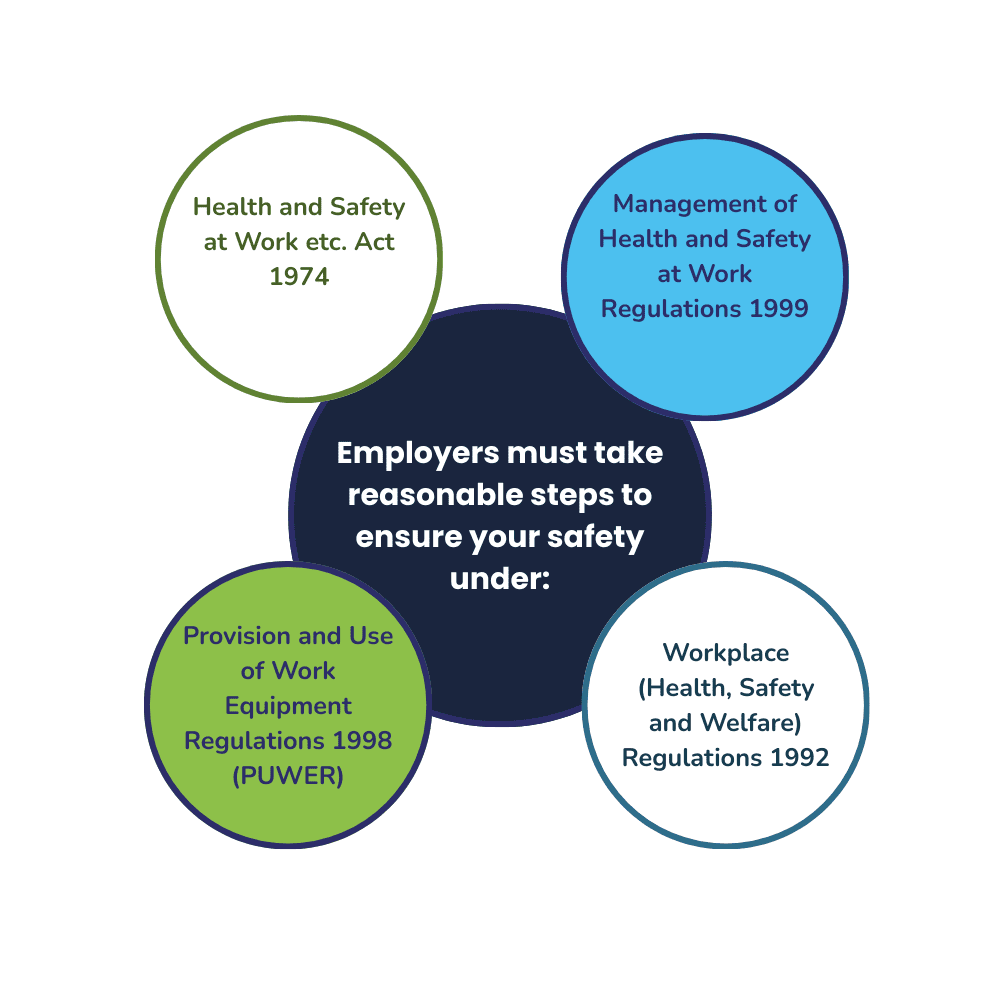
Employers must take reasonable steps to ensure your safety under:

Employers must take reasonable steps to ensure your safety under:

Common Causes of Workplace Accident Claims

You may have grounds to claim if your injury resulted from:

  •  Slips or trips due to spillages
  •  Unsafe flooring
  •  Falling objects
  •  Manual handling without proper training
  •  Defective machinery
  •  Lack of safety guards
  •  Inadequate PPE
  •  Poor supervision
  •  Exposure to hazardous substances

These are among the most common worksite personal injury claims we handle.

What Must Be Proven?

To succeed in a claim, you must prove:

  1. Your employer owed you a duty of care
  2. That duty was breached
  3. The breach caused your injury

Understanding the early steps to take can make a significant difference. Read our complete guide on what to do immediately after an accident at work.

A solicitor will investigate:

  •  Risk assessments
  •  Training records
  •  Maintenance logs
  •  CCTV
  •  Witness statements
  •  HSE involvement

Can Agency Workers Claim?

Yes. Your employment status does not remove your right to a safe workplace.

Agency workers, contractors and part-time staff are all protected.

Does Claiming Affect My Employer?

In most cases:

  • The claim is handled by insurers
  • The employer has mandatory Employers’ Liability Insurance
  • Compensation is paid by insurers

Claims are a legal process — not a personal attack.

We’re Here To Help

Why Choose NJS Law for Your Accident at Work Claim?

When you are injured at work, you need more than general advice — you need clear, strategic legal guidance from solicitors who understand employer liability, workplace regulations and insurer tactics.

At NJS Law, we act exclusively in the interests of injured individuals. We understand the physical, financial and emotional pressure that follows a workplace accident. Our role is to remove that pressure and handle the legal process with clarity and confidence. You can read what clients say about our service on our NJS Law reviews.

When you instruct NJS Law, you can expect:

We are experienced in handling claims involving:

  • Manual handling injuries
  • Slips, trips and falls
  • Construction site accidents
  • Machinery and equipment failures
  • Industrial and factory injuries 
  • Workplace head and back injuries

Every case is handled with attention to detail and a focus on achieving the best possible outcome for you.


Speak To NJS Law Today

If you have suffered an accident at work, early advice can make a significant difference to your claim.

Contact our Accident at Work Solicitors  today for a confidential discussion about your situation. We will explain:

There is no obligation to proceed – just clear professional advice.

Call us today or complete our online enquiry form to speak with a specialist accident at work solicitor.

Your recovery matters. Your rights matter.

Let NJS Law help you secure the compensation you deserve.

→ Learn more About Us

Frequently Asked Questions

Can I claim if the accident was partly my fault?

Yes. Even if you were partly responsible, you may still receive compensation under contributory negligence principles.

Your compensation may be reduced to reflect your share of responsibility, but you are not automatically prevented from claiming. Employers still have a legal duty to provide a safe working environment.

What if the accident wasn't recorded in the Accident Book?

You can still bring a claim.

While accident book entries are helpful evidence, they are not essential. Medical records, witness statements, CCTV footage and photographs can all support your case.

It is advisable to notify your employer in writing as soon as possible if the incident was not formally recorded.

How long do I have to make an accident at work claim?

In most cases, you have three years from the date of the accident to start court proceedings. You can read a detailed guide on accident at work time limits and how long you have to claim.

If your injury developed over time (for example, repetitive strain injury), the three year period may begin from the date you became aware that your condition was work-related.

There are exceptions for children and individuals lacking mental capacity.

Can my employer dismiss me for making a claim?

No. It is unlawful for an employer to dismiss or treat you unfairly for pursuing a legitimate personal injury claim. You can read more about your rights in our guide on being sacked for making an accident at work claim.

If your employer takes adverse action against you because you exercised your legal rights, this may amount to unfair dismissal or victimisation.

Will claiming compensation affect my job?

Most workplace accident claims are handled by the employer’ liability insurance.

The claim is made against the insurer – not directly against your employer personally. Professional employers understand that insurance exists for this purpose.

CONTACT US

Get in touch using the form below or via the following methods:
Ask NJS

For fast, friendly affordable legal advice. Contact a member of our team today.

FAQ

For any questions we may be able to answer, discover our FAQ section.

Categories
Accident at Work

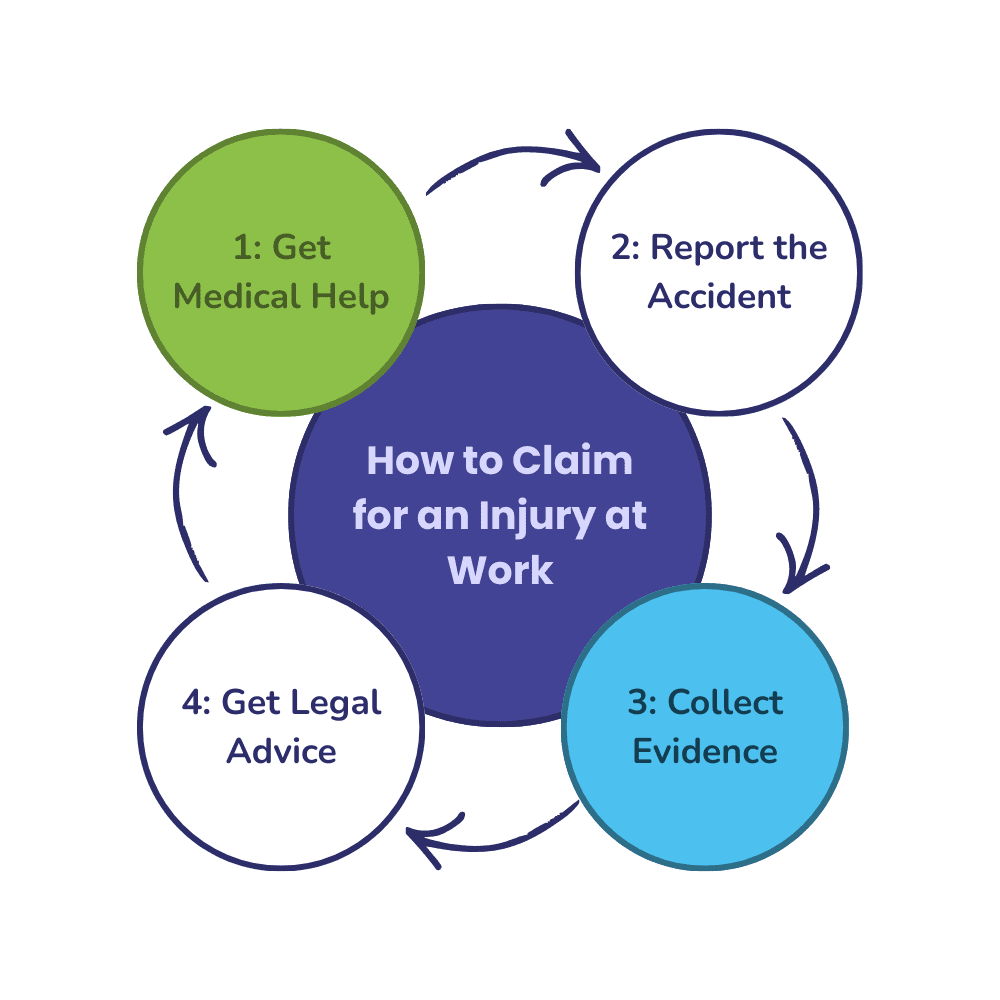
Accident at Work: What to Do Immediately -Complete UK Guide-

Accident at Work: What to Do Immediately -Complete UK Guide-

mcpicadofelipe

What Should You Do After an Accident at Work?

If you’ve suffered an accident at work, knowing what to do immediately can protect:

  • Your health
  • Your job
  • Your legal rights
  • Your right to compensation

Many people feel unsure, worried about their employer’s reaction, or assume their injury is “just one of those things.” However, UK law places clear responsibilities on employers to protect their staff.

This guide explains the exact steps you should take.

Step 1: Seek Immediate Medical Attention

Your health must always come first.

Even if your injury appears minor, certain conditions — including whiplash, soft tissue injuries, concussions and back injuries — can worsen over time.

You should:

  • Call 999 in an emergency
  • Attend A&E if necessary
  • Visit your GP
  • Follow all medical advice

Medical records are vital evidence. If you later bring an accident at work claim, your medical notes will help prove:

  • The nature of your injuries
  • When symptoms began
  • The seriousness of the injury
  • Any long-term impact

Failing to seek medical attention early can weaken both your recovery and your claim.

Step 2: Report the Accident to Your Employer

Under UK law, workplace accidents must be properly recorded.

You should report the incident:

  • Immediately, or
  • As soon as reasonably possible

Ask for the accident to be entered into the Accident Book. This is a legal requirement for most workplaces.

Ensure the record includes:

  • Date and time
  • Location
  • How the accident occurred
  • Details of the injury
  • Names of witnesses

Take a photograph of the accident book entry for your records.

If your employer refuses to record the accident, send a follow-up email confirming what happened. This creates a written trail.

Step 3: Preserve Evidence

Evidence gathered early can make the difference between a straightforward claim and a disputed one.

If you are able, you should:

  • Take photographs of the accident scene
  • Photograph any defective equipment
  • Photograph spillages, broken flooring, or hazards
  • Keep damaged clothing or PPE
  • Obtain names and contact details of witnesses

If CCTV may have captured the incident, request that footage be preserved. Many systems automatically overwrite footage within days.

Step 4: Keep Financial Records

If your injury leads to financial loss, you may recover these costs as part of your claim. You can read more about potential claim values in our guide on accident at work claims and how much compensation you could get.

Keep records of:

  • Loss of earnings
  • Reduced overtime
  • Prescription charges
  • Travel expenses
  • Rehabilitation costs
  • Care provided by family members

These are known as special damages and can significantly increase the value of your claim.

Step 5: Seek Specialist Legal Advice

Many injured workers delay speaking to a solicitor because they:

  • Feel loyal to their employer
  • Fear losing their job
  • Assume the accident was their fault
  • Think claims are complicated

However, most accident at work claims are handled through the employer’s insurance and do not create direct conflict.

Early legal advice ensures:

  • Deadlines are protected
  • Evidence is preserved
  • Your rights are clearly explained
  • Insurers are dealt with properly

Why Choose NJS Law for Your Accident at Work Claim?

When you are injured at work, you need more than general advice — you need clear, strategic legal guidance from solicitors who understand employer liability, workplace regulations and insurer tactics.

At NJS Law, we act exclusively in the interests of injured individuals. We understand the physical, financial and emotional pressure that follows a workplace accident. Our role is to remove that pressure and handle the legal process with clarity and confidence. You can read what clients say about our service on our NJS Law reviews.

When you instruct NJS Law, you can expect:

We are experienced in handling claims involving:

  • Manual handling injuries
  • Slips, trips and falls
  • Construction site accidents
  • Machinery and equipment failures
  • Industrial and factory injuries 
  • Workplace head and back injuries

Every case is handled with attention to detail and a focus on achieving the best possible outcome for you.

Speak To NJS Law Today

If you have suffered an accident at work, early advice can make a significant difference to your claim.

Contact our Accident at Work Solicitors  today for a confidential discussion about your situation. We will explain:

There is no obligation to proceed – just clear professional advice.

Call us today or complete our online enquiry form to speak with a specialist accident at work solicitor.

Your recovery matters. Your rights matter.

Let NJS Law help you secure the compensation you deserve.

→ Learn more About Us

Frequently Asked Questions

Can I claim if the accident was partly my fault?

Yes. Even if you were partly responsible, you may still receive compensation under contributory negligence principles.

Your compensation may be reduced to reflect your share of responsibility, but you are not automatically prevented from claiming. Employers still have a legal duty to provide a safe working environment.

What if the accident wasn't recorded in the Accident Book?

You can still bring a claim.

While accident book entries are helpful evidence, they are not essential. Medical records, witness statements, CCTV footage and photographs can all support your case.

It is advisable to notify your employer in writing as soon as possible if the incident was not formally recorded.

How long do I have to make an accident at work claim?

In most cases, you have three years from the date of the accident to start court proceedings. You can read a detailed guide on accident at work time limits and how long you have to claim.

If your injury developed over time (for example, repetitive strain injury), the three year period may begin from the date you became aware that your condition was work-related.

There are exceptions for children and individuals lacking mental capacity.

Can my employer dismiss me for making a claim?

No. It is unlawful for an employer to dismiss or treat you unfairly for pursuing a legitimate personal injury claim. You can read more about your rights in our guide on being sacked for making an accident at work claim.

If your employer takes adverse action against you because you exercised your legal rights, this may amount to unfair dismissal or victimisation.

Will claiming compensation affect my job?

Most workplace accident claims are handled by the employer’ liability insurance.

The claim is made against the insurer – not directly against your employer personally. Professional employers understand that insurance exists for this purpose.

CONTACT US

Get in touch using the form below or via the following methods:

Ask NJS

For fast, friendly affordable legal advice. Contact a member of our team today.

FAQ

For any questions we may be able to answer, discover our FAQ section.

Categories
Dental Negligence

Dental Negligence Claims: A Step-by-Step Guide (UK)

How long does a dental negligence claim take

mcpicadofelipe

When patients experience dental negligence, understanding the timeline of a dental negligence claim is often a key concern. While every case is different, most claims follow a similar legal process. Several factors can influence how long a claim takes, including complexity, expert evidence, and whether the case settles early.

This guide explains each stage of a dental negligence claim and outlines what you can expect at every step.

Initial Investigation

First, the process begins with an initial investigation. During this stage, your solicitor gathers evidence to assess the strength of your claim. This typically includes obtaining dental records, reviewing treatment history, and consulting independent dental experts.

At the same time, your solicitor will evaluate whether the care you received fell below an acceptable standard. This stage is crucial, as it determines whether the claim can proceed.

Pre-Action Protocols

Next, solicitors must follow the pre-action protocols for dental negligence claims. This involves formally notifying the dentist or dental practice of the claim and setting out the allegations in detail.

As part of this process, both sides exchange information and evidence. Importantly, this stage encourages early settlement discussions and may resolve the claim without court proceedings.

Issuing a Formal Claim

However, if the claim does not settle during the pre-action phase, your solicitor may issue a formal legal claim. This step involves submitting court documents that outline the allegations and the compensation sought.

In most cases, a claim is issued within a few months of completing the pre-action protocols.

The Defendant’s Response

Once the claim is issued, the defendant has a limited period to respond. They may admit liability, deny the claim, or raise arguments about causation or value.

At this stage, negotiations often continue. As a result, the timeline can vary depending on how cooperative the parties are and how complex the issues remain.

Gathering Expert Evidence

In more complex cases, both sides may instruct independent dental experts. These experts provide opinions on whether the treatment met acceptable standards and whether negligence caused the injury.

Although expert evidence is essential, obtaining reports can take several months. Consequently, this stage often adds time to the overall dental negligence claim timeline.

Settlement Negotiations or Court Proceedings

Many dental negligence claims settle through negotiation before reaching court. If an agreement is reached, the claim can conclude relatively quickly.

On the other hand, if settlement proves impossible, court proceedings may follow. This inevitably extends the timeline, as the court sets deadlines and hearing dates.

Trial and Judgment

If the claim proceeds to trial, the court will hear evidence from both sides before delivering a judgment. The length of the trial and the time taken to receive a decision vary depending on the court’s schedule and the complexity of the case.

As a result, claims that reach this stage may take significantly longer to conclude.

How Long Does a Dental Negligence Claim Usually Take?

Overall, the timeline of a dental negligence claim depends on several factors. Straightforward claims may settle within 12 months. However, more complex cases can take several years, particularly if they proceed to trial.

Throughout the process, patience is essential. Staying informed and working closely with experienced solicitors can help reduce delays and ensure the claim progresses smoothly.

Get Expert Legal Advice

If you believe you have been affected by serious or gross dental negligence, seeking legal advice as early as possible is crucial. Understanding your rights and the available evidence will help you take confident and informed action.

Our Dental Negligence team has decades of combined experience successfully advising and representing clients in dental negligence claims. We are sympathetic, approachable, and committed to supporting you every step of the way.

Contact us today to discuss your dental negligence claim and arrange a free, no-obligation consultation.

CONTACT US

Get in touch using the form below or via the following methods:
Ask NJS Law

For fast, friendly affordable legal advice. Contact a member of our team today.

FAQ

For any questions we may be able to answer, discover our FAQ section.

Categories
Medical Negligence

Lens Opacification vs PCO (Secondary Cataract): What’s the Difference?

mcpicadofelipe

If you have noticed cloudy, hazy, or “misty” vision after cataract surgery or lens replacement surgery, it is natural to look for explanations. Two causes that are commonly discussed are:

  • Posterior capsule opacification (PCO) — sometimes called a “secondary cataract”

  • Intraocular lens (IOL) opacification — clouding of the implanted artificial lens itself

This article explains the difference in plain English and suggests practical questions you can ask at a review appointment.

Important: This page provides general information only and is not medical advice. Seek urgent medical care if you experience severe pain, sudden vision loss, flashes, floaters, or a red, painful eye.

Understanding Cloudy Vision After Cataract or Lens Replacement Surgery

After cataract or lens replacement surgery, most patients expect clearer vision. When vision becomes cloudy again, it can be worrying and confusing. Several conditions can cause similar symptoms, which is why careful examination and accurate diagnosis are important.

Two of the most commonly discussed causes are PCO and IOL opacification.

What Is PCO (Posterior Capsule Opacification)?

During cataract or lens replacement surgery, the natural lens is removed, but a thin transparent membrane called the posterior capsule is usually left in place. This capsule helps support the implanted lens.

Over time, this capsule can become cloudy. This is known as posterior capsule opacification (PCO).

Symptoms of PCO

PCO may cause:

  • blurred or cloudy vision,

  • glare or halos around lights,

  • reduced contrast or faded colours.

Why PCO Is Often Called a “Secondary Cataract”

PCO is sometimes referred to as a “secondary cataract,” but this can be misleading. The original cataract has not returned; instead, the supporting capsule has become cloudy. PCO is common and can develop months or years after surgery.

Common Management for PCO: YAG Laser Capsulotomy

PCO is often treated with a short outpatient procedure called a YAG laser capsulotomy.

What a YAG Laser Capsulotomy Involves

The laser creates a small opening in the cloudy capsule, allowing light to pass through more clearly and improving vision. The procedure is usually quick and painless.

When YAG Laser Treatment May or May Not Be Appropriate

Whether YAG laser treatment is appropriate depends on examination findings and individual circumstances. Not all causes of cloudy vision after surgery will improve with YAG treatment.

What Is IOL (Intraocular Lens) Opacification?

IOL opacification refers to clouding of the implanted artificial lens itself. This is different from PCO, although the symptoms can overlap.

Symptoms of IOL (Lens) Opacification

Patients may describe:

  • a gradual reduction in visual acuity,

  • persistent haze not improved by glasses,

  • glare or halos, particularly at night,

  • difficulty reading or driving in different lighting conditions.

Why Accurate Diagnosis Is Important

Other eye conditions can cause similar symptoms, which is why careful assessment is essential. Accurate diagnosis helps ensure that the most appropriate management plan is considered.

Why the Difference Between PCO and Lens Opacification Matters

Although PCO and IOL opacification can produce similar symptoms, they are different conditions and may require different management approaches.

Differences in Treatment and Management Options

In general terms:

  • PCO may be treated with YAG laser capsulotomy.

  • Lens-related issues or other causes may require monitoring, further investigation, referral, or, in some situations, discussion of lens exchange.

Questions to Ask at Your Review Appointment

You may find it helpful to prepare questions in advance.

Key Questions About Diagnosis

  • Is my reduced vision due to PCO, IOL opacification, or another cause?

  • What findings support that conclusion?

Questions About Treatment Options and Next Steps

  • Would YAG laser treatment help in my case, and why?
  • If YAG is not suitable or does not help, what are the next steps?
  • What lens model was implanted?
  • If lens exchange is discussed, what are the risks and expected outcomes for me
  • What symptoms should prompt urgent review?

Practical Record-Request Steps

If you are unsure about your diagnosis or options, it is reasonable to request copies of your medical records.

What Medical Records You Can Request

You may ask for:

  • implant details (lens model and serial or batch information, if recorded),

  • follow-up notes and test results (visual acuity, refraction, imaging),

  • copies of correspondence about advice and treatment plans.

Why Requesting Records Is Reasonable

Requesting records is not a criticism of any clinician. It is a sensible step to help you understand your care and make informed decisions.

When Legal Advice May Be Helpful

Legal advice may be appropriate if, after appropriate assessment and record review, you remain concerned about your care.

Concerns That May Warrant Legal Advice

These may include:

  • whether you were properly informed of risks and alternatives,

  • whether follow-up and investigation were appropriate,

  • how ongoing symptoms or complaints were managed.

Any potential claim is fact-specific and depends on medical evidence and independent expert opinion.

Speak to NJS Law

If you are experiencing cloudy vision or reduced acuity after cataract or lens replacement surgery and would like advice on practical next steps, NJS Law can review your circumstances and advise accordingly.

👉 Speak to our Clinical Negligence team

CONTACT US

Get in touch using the form below or via the following methods:

Ask NJS

For fast, friendly affordable legal advice. Contact a member of our team today.

FAQ

For any questions we may be able to answer, discover our FAQ section.

Categories
Medical Negligence

Time Limits for Eye Surgery Negligence Claims (England & Wales): Why “Date of Knowledge” Matters

Time Limits for Eye Surgery Negligence Claims

mcpicadofelipe

If you are concerned about the outcome of cataract surgery or lens replacement surgery, you may be wondering whether it is too late to bring a medical negligence claim.

This is a common concern in eye surgery cases, particularly where symptoms developed gradually or were only linked to the surgery some time later. In England & Wales, strict time limits apply, but those limits do not always run from the date of surgery itself.

This page explains, in general terms, how time limits usually work for eye surgery negligence claims and why the concept of the “date of knowledge” is often central.

Important: This information is general only and does not constitute legal advice. Limitation is fact-specific and should always be assessed individually.

In most medical negligence claims in England & Wales, court proceedings are generally expected to be issued within three years.

The Standard Three-Year Rule

The three-year period usually runs from either:

  • the date of the negligent treatment, or

  • the claimant’s date of knowledge.

Which of these applies will depend on the facts of the case.

What Is the “Date of Knowledge”?

The date of knowledge is not necessarily the date when symptoms first appeared.

Legal Meaning of “Date of Knowledge”

In broad terms, the date of knowledge is when you first knew, or could reasonably have known, that:

  • you had suffered a significant injury, and

  • the injury may be attributable to the medical treatment you received.

A formal diagnosis or confirmation of negligence is not always required for this date to arise.

Eye surgery claims often involve delayed or unclear symptoms, making the date of knowledge particularly relevant.

Gradual or Delayed Onset of Symptoms

In cataract and lens replacement surgery cases, problems may:

  • develop slowly over months or years,

  • fluctuate in severity, or

  • worsen progressively rather than appearing immediately.

Early Symptoms May Be Misattributed

Patients are frequently reassured that symptoms are unrelated to surgery, for example:

  • being told symptoms are due to dry eye,

  • being advised that new glasses are required, or

  • being reassured that symptoms are part of the normal ageing process.

In these circumstances, it may not be reasonable to expect a patient to suspect negligence at an early stage.

What Can Trigger a Date of Knowledge in Practice?

The date of knowledge is assessed on a case-by-case basis. Common triggers in eye surgery claims may include the following.

Clinical Advice or Disclosure

  • being told by a clinician that something may have gone wrong during surgery,

  • being informed that the surgical outcome is not as expected.

Discovery of Surgical or Implant Information

  • learning the type of intraocular lens implanted and realising it may be relevant,
  • discovering a discrepancy between what was consented to and what was implanted.
  •  

Investigations or Further Treatment

  • investigations confirming a likely cause of symptoms,

  • a recommendation for further procedures, such as lens exchange or corrective surgery.

  •  

Information That Raises Reasonable Suspicion

  • receiving information that reasonably leads you to suspect your symptoms may be linked to the original surgery.

  •  

Even where the date of knowledge may arise later, early advice is usually advisable.

Preservation of Evidence

As time passes:

  • medical records may be archived or harder to obtain,
  • implant labels and consent documentation may be more difficult to locate,
  • memories of events can fade.
  •  
  •  

Early Assessment of Limitation

Obtaining advice early allows limitation to be assessed properly and reduces the risk of avoidable procedural issues.

What to Do If You Are Unsure About Time Limits

If you are uncertain whether you are still within time to bring an eye surgery negligence claim, the following steps can help.

Request Your Medical Records

Obtain your full records, including surgical notes and implant details, from both NHS and private providers.

Prepare a Symptom and Treatment Timeline

Record:

  • when symptoms began,

  • how they progressed,

  • appointments attended, and

  • what you were told and when.

Seek Specialist Legal Advice

A solicitor experienced in medical negligence can review the records and advise whether your claim may still be brought.

Time limits are fact-specific. In England and Wales, many clinical negligence claims are subject to a three-year limitation period from the date of injury or date of knowledge (with exceptions). Early advice is often helpful while records are being gathered.

Speak to NJS Law

If you are concerned about time limits following cataract surgery or lens replacement surgery, NJS Law can review your circumstances and advise you on your position.

We regularly act in medical negligence claims and understand the particular issues that arise in eye surgery cases, including complex limitation questions and the date of knowledge.

👉 Speak to our Clinical Negligence team

CONTACT US

Get in touch using the form below or via the following methods:
Ask NJS

For fast, friendly affordable legal advice. Contact a member of our team today.

FAQ

For any questions we may be able to answer, discover our FAQ section.

Categories
Medical Negligence

Lentis (Oculentis) IOL Opacification & Cloudy Vision After Surgery

Lentis (Oculentis) IOL Opacification & Cloudy Vision After Surgery

mcpicadofelipe

If you have had cataract surgery or lens replacement surgery and received an Oculentis Lentis intraocular lens (IOL), you may be researching lens opacification (clouding) and what it might mean for your vision.

People researching this issue are often trying to understand:

  • why their vision has worsened after surgery,
  • whether their symptoms are related to the implanted lens or another cause,
  • what appropriate review and aftercare should involve,
  • and what steps to take if concerns remain unresolved.

This page does not make allegations about any clinic, surgeon, or manufacturer. It provides general information about symptoms, clinical assessment, practical steps to obtain records, and when legal advice may be helpful.

Every case depends on individual facts, medical records, and independent expert evidence.

Important: This article is general information, not medical advice. If you experience sudden pain, rapid loss of vision, flashes, floaters, or a red painful eye, seek urgent medical attention.

What is an intraocular lens (IOL) and what is “opacification”?

An intraocular lens (IOL) is an artificial lens implanted inside the eye during cataract surgery or lens replacement surgery. In most cases, these lenses remain clear and stable for many years.

Opacification describes a situation where the implanted lens itself becomes cloudy or hazy. This can interfere with the passage of light through the eye and may lead to visual symptoms such as:

  • misty or foggy vision that gradually worsens,
  • glare or halos, particularly at night,
  • reduced contrast or “washed-out” colours,
  • difficulty reading or driving in certain lighting conditions.

These symptoms can have several possible causes, which is why careful clinical assessment and clear documentation are essential.

Lentis (Oculentis) lenses: why patients research them

Some patients report being fitted with Oculentis Lentis lenses (including models often referred to online as Mplus or Mplus X) and later experiencing symptoms they associate with reduced visual quality or clouding.

In many enquiries, concerns are not limited to symptoms alone. Patients also ask questions about:

  • what risks and alternatives were explained before surgery,
  • whether any relevant safety communications or updates were discussed,
  • how follow-up appointments were arranged and documented,
  • and how concerns were assessed and managed once raised.

Understanding what should reasonably be expected in terms of assessment, communication, and follow-up often requires access to full medical records.

What should I do if my vision has worsened after lens replacement surgery?

If you experience cloudy vision, glare, halos, or declining visual acuity after surgery, practical steps may include:

  1. Request your implant details
    Ask for confirmation of the lens model and any serial or batch information. This is often recorded on an implant sticker in the operation notes.
  2. Ask for a clinical explanation in writing
    It is reasonable to ask what the likely diagnosis is (for example, posterior capsule opacification versus possible lens-related clouding) and what examination findings support that view.
  3. Ensure appropriate review is arranged
    If symptoms persist, further assessment or referral may be appropriate. You can request copies of investigations such as refraction results, visual acuity testing, or OCT scans.
  4. Keep copies of all correspondence
    Retain letters, emails, test results, and a note of telephone discussions, including dates and who you spoke to.

What is a lens exchange and when might it be discussed?

A lens exchange (also called explantation and replacement) involves removing the implanted IOL and replacing it with another lens. This procedure can be more complex than the original surgery because tissues may have healed around the lens.

A lens exchange may be discussed where there is a potential lens-related issue and where the expected benefits outweigh the risks.

If this option is raised, it is sensible to ask:

  • why it is being recommended,
  • what alternatives exist,
  • the likely benefits and limitations,
  • the risks specific to your eye and medical history,
  • whether it is proposed as a clinical recommendation or as part of a complaint or review process.

What if I am concerned I was not informed about risks or options?

Some people seek legal advice if they are concerned about:

  • the information provided before surgery (including risks and alternatives),
  • whether appropriate follow-up and investigation took place,
  • how symptoms or complaints were handled.

Whether any criticism is justified always depends on the medical records and independent expert evidence.
NJS Law does not assume wrongdoing—the first step is establishing what happened and what the records show.

Can I bring a claim in the UK relating to lens implantation surgery?

Potential legal routes may include clinical negligence (for example, issues around consent, diagnosis, or aftercare) and, in some circumstances, consumer or contractual arguments in private treatment settings.

Which route may be relevant depends on:

  • what information was provided before surgery,
  • how symptoms were monitored and investigated,
  • how concerns were managed,
  • and whether the medical evidence supports causation and injury.

What evidence helps when seeking advice?

Helpful information often includes:

Medical records

  • implant details (lens model and serial/batch if available),
  • operation notes,
  • consent forms and information leaflets,
  • follow-up notes and test results.

Your symptom timeline

  • date of surgery,
  • when symptoms began,
  • what you reported and when,
  • what advice or treatment was provided,
  • whether and when lens exchange was discussed.

Communications

  • emails or letters raising concerns,
  • appointment confirmations,
  • written responses explaining findings or options.

Time limits: when should I get advice?

Time limits are fact-specific. In England and Wales, many clinical negligence claims are subject to a three-year limitation period from the date of injury or date of knowledge (with exceptions). Early advice is often helpful while records are being gathered.

What to do next

  1. Seek medical assessment if symptoms persist or worsen.
  2. Request your full medical records and implant details.
  3. Keep a clear timeline of symptoms and appointments.
  4. Ask direct questions about diagnosis, cause, and options.
  5. Seek legal advice if you remain concerned about consent, follow-up, or management.

Speak to NJS Law

If you believe you were fitted with a Lentis (Oculentis) intraocular lens and have experienced cloudy vision, glare, halos, or reduced visual acuity—or if you have concerns about information provided, follow-up, or management—NJS Law can review your circumstances and advise on next steps.

👉 Speak to our Clinical Negligence team

CONTACT US

Get in touch using the form below or via the following methods:

Ask NJS

For fast, friendly affordable legal advice. Contact a member of our team today.

FAQ

For any questions we may be able to answer, discover our FAQ section.

Categories
Accident at Work

£18,000 Compensation for a Preventable Arm Injury at Work (Employer Liability Claim)

Employer Liability Claim £18,000 Awarded After Printer-Related Workplace Injury

mcpicadofelipe

Introduction: When a “Small” Office Task Turns Into a Serious Workplace Injury

Many people assume that workplace injuries only occur on construction sites or in warehouses, but office environments can be just as hazardous. Poorly positioned equipment, heavy items stored unsafely, and inadequate risk assessments can all create serious risks for employees.

In this real employer liability case, a routine attempt to clear a printer jam resulted in a painful arm injury with long-term consequences. Because the accident was entirely preventable and the employer failed to meet essential health and safety duties, NJS Law secured £18,000 in compensation for our client.

If you’ve suffered a workplace injury – whether in an office, shop, school, warehouse, or any other setting – this guide explains what happened, why the claim succeeded, and how to find out if you may be eligible to make a workplace accident claim.

What Happened? How a Printer Jam Led to a Workplace Injury

It started as a routine task. When our client attempted to print documents, the office printer jammed. The printer had been poorly positioned – tight against a wall and difficult to access safely. To reach the jam, our client tried to pull the printer forward into a safer working position.

But the printer wouldn’t move. While attempting to shift it, our client felt sudden, intense pain and heard three sharp “snaps” in the arm, marking the moment the workplace injury occurred.

The Outcome: A Serious Arm Injury from the Workplace Accident

Following the incident, our client suffered:

  • Significant muscle and soft-tissue damage
  • Medical treatment and ongoing rehabilitation
  • Time off work, leading to disruption in daily life
  • Lasting pain, weakness, and reduced mobility

This was not an unavoidable or freak accident. It was a preventable workplace injury caused by an unsafe office setup – particularly the poor positioning of heavy and awkward equipment that could not be accessed safely.

If you’ve suffered a slip, trip, or fall at work, you may be entitled to compensation – especially if the hazard was hidden, unmarked, or caused by poor workplace maintenance. These types of workplace injuries are often preventable, and employers have a legal duty to keep staff safe.

Start your accident at work claim today:

  • Free initial consultation
  • No win, no fee options available
  • Clear, expert advice on your next steps

Why This Qualified as a Valid Employer Liability Claim

In the UK, employers have a legal duty to take reasonable steps to keep employees safe at work. This includes ensuring that workplace equipment is:

  • Correctly and safely positioned
  • Easy to operate without risk
  • Accessible without creating unnecessary manual handling hazards
  • Supported by appropriate risk assessments and training

In this case, the employer liability claim succeeded because the evidence showed the injury was entirely preventable. The employer’s failure to position the equipment safely and manage the risks properly directly contributed to the workplace accident.

Employer Failure to Provide a Safe Working Environment

The printer was positioned in a way that created an avoidable workplace risk:

  • Restricted access due to poor placement
  • No safer or more accessible setup provided
  • No effective controls in place to reduce manual handling strain or injury

Lack of Risk Assessment and Safe Processes

A proper risk assessment could have identified obvious hazards:

  • Heavy/awkward equipment close to a wall
  • Employees likely to attempt to move it when jams occur
  • Lack of clear procedure for faults and maintenance

No Manual Handling Support (Training/Guidance/Equipment)

Employers should not leave staff to improvise with heavy equipment. In many workplaces, safer systems include:

  • Clear reporting channels for jams/faults,
  • Maintenance support,
  • Training on what staff should and shouldn’t do,
  • Equipment placement guidelines to avoid unsafe reaching and lifting.

Clear Evidence of Injury and Consequences

A successful personal injury claim usually requires proof of:

  • The accident circumstances,
  • The injury and medical diagnosis,
  • How it affected your life and work,
  • Losses such as wages, travel costs, or treatment expenses.

We obtained the documentation needed to demonstrate fault and quantify the impact.

Accident at work claims are time-sensitive. The sooner you get advice, the easier it can be to secure key evidence such as photos, incident reports, CCTV, and witness details.

You may be able to claim if:

  • The hazard was concealed (e.g., spills, poor lighting, trailing cables, uneven flooring)

  • There were no warning signs or barriers

  • The area should have been inspected, cleaned, repaired, or made safe under workplace procedures

How We Proved Negligence and Secured £18,000

To build a strong case, NJS Law gathered and presented key evidence, including:

  • Witness statements (what colleagues saw and what workplace conditions were like)
  • Medical evidence confirming the injury, treatment, and prognosis
  • Workplace documentation relating to equipment layout, safety procedures, and employer responsibilities
  • Financial evidence such as wage loss and recovery-related costs (where applicable)

This evidence allowed us to demonstrate that the injury was linked to preventable risk, not simply “bad luck,” and to negotiate an appropriate settlement.

How Much Compensation Can You Get for an Arm Injury at Work?

Compensation depends on factors like:

  • Severity of the injury,
  • Recovery time and long-term symptoms,
  • Impact on daily activities and hobbies,
  • Time off work and reduced earning capacity,
  • Medical costs, travel expenses, and care needs.

In this case, the settlement was £18,000, reflecting both the injury and its wider impact. Your claim value may be higher or lower depending on your circumstances.

Time Limits: How Long Do You Have to Claim?

In most UK workplace injury cases, you typically have three years to bring a claim (with some exceptions). Acting early helps because:

  • Evidence is easier to gather,
  • Witnesses remember events more clearly,
  • Medical records and timelines are simpler to obtain.

Do You Have a Claim for an Office Injury or Equipment Hazard?

You may be able to claim if:

  • Your workplace setup increased risk (poor layout, access issues, heavy equipment placement),
  • You were not given training, guidance, or a safe procedure,
  • The employer didn’t take reasonable steps to prevent harm,
  • The injury caused pain, treatment, time off, or ongoing symptoms.

Office injury claims can include accidents involving:

  • Printers and heavy office equipment,
  • Lifting or moving items without support,
  • Trips/slips due to poor housekeeping,
  • Repetitive strain injuries (RSI),
  • Unsafe chairs/desks leading to musculoskeletal problems.

Choosing the Right Solicitor for a Workplace Injury Claim

Even incidents that seem minor can lead to serious, long-lasting injuries—so the right legal support matters. Look for a solicitor who:

  • Focuses on employer liability and workplace injury claims,
  • Offers no win, no fee where appropriate,
  • Has a strong track record with real case results,
  • Communicates clearly and treats you with care and respect.

Why Choose NJS Law for an Injury at Work Claim?

At NJS Law, we help people claim compensation after preventable workplace injuries—whether you work in an office, retail, healthcare, education, logistics, or construction.

✅4.9/5.0 on Trustpilot (500+ reviews)

✅No win, no fee

✅20+ years’ experience in workplace injury claims

✅Supportive, dedicated legal teams focused on your recovery and results

FAQs: Office Injuries, Equipment Setup & Employer Liability

Can I claim compensation for an injury caused by poor office equipment setup?

Yes. If unsafe placement, lack of safe access, or missing risk controls contributed to your injury, your employer may be legally responsible.

What if I moved the equipment myself—does that stop me claiming?

Not necessarily. If the workplace setup made it likely people would try to move equipment to do their job, the employer may still be at fault for not providing safe procedures, training, or access.

How much compensation could I receive?

It varies. In this case, our client received £18,000 for a printer-related arm injury. The value of your claim depends on severity, recovery, and financial losses.

 👉 View our full Employer Liability compensation guide →

Check If You're Eligible With
Our Accident At Work Solicitors

Discover today if you’re eligible to make a claim.
Complete the form below, email or call our accident at work solicitors for free, no-obligation advice.

Ask NJS

For fast, friendly affordable legal advice. Contact a member of our team today.

FAQ

For any questions we may be able to answer, discover our FAQ section.

Categories
Dental Negligence

Dental Negligence Claim: Woman Awarded £3,000+ After Failed Filling Leads to Tooth Loss

Dental Negligence Claim Woman Awarded £3,000+ After Failed Filling Leads to Tooth Loss

mcpicadofelipe

A £3,000 Compensation Pay-out for Substandard Dental Treatment

A woman was awarded over £3,000 in compensation after her dentist failed to provide adequate care. What should have been a routine filling turned into months of pain, repeated procedures, and the loss of three teeth.

🔍 What Happened?

The patient visited her dentist for a simple filling — but the treatment kept failing. The filling repeatedly fell out, causing ongoing discomfort. Over time, poor care from the dentist led to a dental bridge being placed, and ultimately, the removal of three teeth.

This was found to be a clear case of dental negligence.

✅ Why Was She Eligible for a Dental Negligence Claim?

To succeed in a dental negligence claim, three key conditions must be met:

1. Breach of Duty of Care
The dentist failed to meet the expected standard of care. If the treatment had been performed correctly, her pain and complications could have been avoided.

2. Harm or Injury
• The patient endured persistent treatment failure
• She suffered significant physical harm, including tooth loss

3. Claim Filed Within the Legal Time Limit
The patient brought her claim within three years of becoming aware of the injury, which meets the legal deadline under UK law.

Read more about time limits for medical negligence claims →

🧑‍⚖️ How to Choose the Right Dental Negligence Solicitor

Choosing a specialist solicitor is essential. Look for a legal team that:

✅ Is highly rated by previous clients
✅ Offers no win, no fee claims
✅ Has a proven track record in dental negligence cases

⭐ Why Choose NJS Law?
  • 🏆 4.9/5.0 on Trustpilot (500+ client reviews)
  • 🛡️ No win, no fee – you only pay if we win your case
  • 📚 Over 20 years’ experience in medical negligence law
  • 🤝 Friendly and professional teams ready to support you

Contact our dental negligence team now →

❓ FAQs About Dental Negligence Claims

Can I claim if my filling keeps falling out?
Yes. If it causes pain, repeated treatments, or permanent damage — like tooth loss — you may be eligible.

How much compensation can I receive?
Pay-outs vary depending on severity. In this case, the patient received £3,000+, but more serious cases can result in higher amounts.

View our dental negligence compensation guide →

CONTACT US

Get in touch using the form below or via the following methods:

Ask NJS

For fast, friendly affordable legal advice. Contact a member of our team today.

FAQ

For any questions we may be able to answer, discover our FAQ section.