
Categories
Medical Negligence

Lens Opacification vs PCO (Secondary Cataract): What’s the Difference?

December 2025

If you have noticed cloudy, hazy, or “misty” vision after cataract surgery or lens replacement surgery, it is natural to look for explanations. Two causes that are commonly discussed are:

  • Posterior capsule opacification (PCO) — sometimes called a “secondary cataract”

  • Intraocular lens (IOL) opacification — clouding of the implanted artificial lens itself

This article explains the difference in plain English and suggests practical questions you can ask at a review appointment.

Important: This page provides general information only and is not medical advice. Seek urgent medical care if you experience severe pain, sudden vision loss, flashes, floaters, or a red, painful eye.

Understanding Cloudy Vision After Cataract or Lens Replacement Surgery

After cataract or lens replacement surgery, most patients expect clearer vision. When vision becomes cloudy again, it can be worrying and confusing. Several conditions can cause similar symptoms, which is why careful examination and accurate diagnosis are important.

Two of the most commonly discussed causes are PCO and IOL opacification.

What Is PCO (Posterior Capsule Opacification)?

During cataract or lens replacement surgery, the natural lens is removed, but a thin transparent membrane called the posterior capsule is usually left in place. This capsule helps support the implanted lens.

Over time, this capsule can become cloudy. This is known as posterior capsule opacification (PCO).

Symptoms of PCO

PCO may cause:

  • blurred or cloudy vision,

  • glare or halos around lights,

  • reduced contrast or faded colours.

Why PCO Is Often Called a “Secondary Cataract”

PCO is sometimes referred to as a “secondary cataract,” but this can be misleading. The original cataract has not returned; instead, the supporting capsule has become cloudy. PCO is common and can develop months or years after surgery.

Common Management for PCO: YAG Laser Capsulotomy

PCO is often treated with a short outpatient procedure called a YAG laser capsulotomy.

What a YAG Laser Capsulotomy Involves

The laser creates a small opening in the cloudy capsule, allowing light to pass through more clearly and improving vision. The procedure is usually quick and painless.

When YAG Laser Treatment May or May Not Be Appropriate

Whether YAG laser treatment is appropriate depends on examination findings and individual circumstances. Not all causes of cloudy vision after surgery will improve with YAG treatment.

What Is IOL (Intraocular Lens) Opacification?

IOL opacification refers to clouding of the implanted artificial lens itself. This is different from PCO, although the symptoms can overlap.

Symptoms of IOL (Lens) Opacification

Patients may describe:

  • a gradual reduction in visual acuity,

  • persistent haze not improved by glasses,

  • glare or halos, particularly at night,

  • difficulty reading or driving in different lighting conditions.

Why Accurate Diagnosis Is Important

Other eye conditions can cause similar symptoms, which is why careful assessment is essential. Accurate diagnosis helps ensure that the most appropriate management plan is considered.

Why the Difference Between PCO and Lens Opacification Matters

Although PCO and IOL opacification can produce similar symptoms, they are different conditions and may require different management approaches.

Differences in Treatment and Management Options

In general terms:

  • PCO may be treated with YAG laser capsulotomy.

  • Lens-related issues or other causes may require monitoring, further investigation, referral, or, in some situations, discussion of lens exchange.

Questions to Ask at Your Review Appointment

You may find it helpful to prepare questions in advance.

Key Questions About Diagnosis

  • Is my reduced vision due to PCO, IOL opacification, or another cause?

  • What findings support that conclusion?

Questions About Treatment Options and Next Steps

  • Would YAG laser treatment help in my case, and why?
  • If YAG is not suitable or does not help, what are the next steps?
  • What lens model was implanted?
  • If lens exchange is discussed, what are the risks and expected outcomes for me
  • What symptoms should prompt urgent review?

Practical Record-Request Steps

If you are unsure about your diagnosis or options, it is reasonable to request copies of your medical records.

What Medical Records You Can Request

You may ask for:

  • implant details (lens model and serial or batch information, if recorded),

  • follow-up notes and test results (visual acuity, refraction, imaging),

  • copies of correspondence about advice and treatment plans.

Why Requesting Records Is Reasonable

Requesting records is not a criticism of any clinician. It is a sensible step to help you understand your care and make informed decisions.

When Legal Advice May Be Helpful

Legal advice may be appropriate if, after appropriate assessment and record review, you remain concerned about your care.

Concerns That May Warrant Legal Advice

These may include:

  • whether you were properly informed of risks and alternatives,

  • whether follow-up and investigation were appropriate,

  • how ongoing symptoms or complaints were managed.

Any potential claim is fact-specific and depends on medical evidence and independent expert opinion.

Speak to NJS Law

If you are experiencing cloudy vision or reduced acuity after cataract or lens replacement surgery and would like advice on practical next steps, NJS Law can review your circumstances and advise accordingly.

👉 Speak to our Clinical Negligence team

CONTACT US

Get in touch using the form below or via the following methods:

Ask NJS

For fast, friendly affordable legal advice. Contact a member of our team today.

FAQ

For any questions we may be able to answer, discover our FAQ section.

Categories
Medical Negligence

Time Limits for Eye Surgery Negligence Claims (England & Wales): Why “Date of Knowledge” Matters

Time Limits for Eye Surgery Negligence Claims

December 2025

If you are concerned about the outcome of cataract surgery or lens replacement surgery, you may be wondering whether it is too late to bring a medical negligence claim.

This is a common concern in eye surgery cases, particularly where symptoms developed gradually or were only linked to the surgery some time later. In England & Wales, strict time limits apply, but those limits do not always run from the date of surgery itself.

This page explains, in general terms, how time limits usually work for eye surgery negligence claims and why the concept of the “date of knowledge” is often central.

Important: This information is general only and does not constitute legal advice. Limitation is fact-specific and should always be assessed individually.

In most medical negligence claims in England & Wales, court proceedings are generally expected to be issued within three years.

The Standard Three-Year Rule

The three-year period usually runs from either:

  • the date of the negligent treatment, or

  • the claimant’s date of knowledge.

Which of these applies will depend on the facts of the case.

What Is the “Date of Knowledge”?

The date of knowledge is not necessarily the date when symptoms first appeared.

Legal Meaning of “Date of Knowledge”

In broad terms, the date of knowledge is when you first knew, or could reasonably have known, that:

  • you had suffered a significant injury, and

  • the injury may be attributable to the medical treatment you received.

A formal diagnosis or confirmation of negligence is not always required for this date to arise.

Eye surgery claims often involve delayed or unclear symptoms, making the date of knowledge particularly relevant.

Gradual or Delayed Onset of Symptoms

In cataract and lens replacement surgery cases, problems may:

  • develop slowly over months or years,

  • fluctuate in severity, or

  • worsen progressively rather than appearing immediately.

Early Symptoms May Be Misattributed

Patients are frequently reassured that symptoms are unrelated to surgery, for example:

  • being told symptoms are due to dry eye,

  • being advised that new glasses are required, or

  • being reassured that symptoms are part of the normal ageing process.

In these circumstances, it may not be reasonable to expect a patient to suspect negligence at an early stage.

What Can Trigger a Date of Knowledge in Practice?

The date of knowledge is assessed on a case-by-case basis. Common triggers in eye surgery claims may include the following.

Clinical Advice or Disclosure

  • being told by a clinician that something may have gone wrong during surgery,

  • being informed that the surgical outcome is not as expected.

Discovery of Surgical or Implant Information

  • learning the type of intraocular lens implanted and realising it may be relevant,
  • discovering a discrepancy between what was consented to and what was implanted.
  •  

Investigations or Further Treatment

  • investigations confirming a likely cause of symptoms,

  • a recommendation for further procedures, such as lens exchange or corrective surgery.

  •  

Information That Raises Reasonable Suspicion

  • receiving information that reasonably leads you to suspect your symptoms may be linked to the original surgery.

  •  

Even where the date of knowledge may arise later, early advice is usually advisable.

Preservation of Evidence

As time passes:

  • medical records may be archived or harder to obtain,
  • implant labels and consent documentation may be more difficult to locate,
  • memories of events can fade.
  •  
  •  

Early Assessment of Limitation

Obtaining advice early allows limitation to be assessed properly and reduces the risk of avoidable procedural issues.

What to Do If You Are Unsure About Time Limits

If you are uncertain whether you are still within time to bring an eye surgery negligence claim, the following steps can help.

Request Your Medical Records

Obtain your full records, including surgical notes and implant details, from both NHS and private providers.

Prepare a Symptom and Treatment Timeline

Record:

  • when symptoms began,

  • how they progressed,

  • appointments attended, and

  • what you were told and when.

Seek Specialist Legal Advice

A solicitor experienced in medical negligence can review the records and advise whether your claim may still be brought.

Time limits are fact-specific. In England and Wales, many clinical negligence claims are subject to a three-year limitation period from the date of injury or date of knowledge (with exceptions). Early advice is often helpful while records are being gathered.

Speak to NJS Law

If you are concerned about time limits following cataract surgery or lens replacement surgery, NJS Law can review your circumstances and advise you on your position.

We regularly act in medical negligence claims and understand the particular issues that arise in eye surgery cases, including complex limitation questions and the date of knowledge.

👉 Speak to our Clinical Negligence team

CONTACT US

Get in touch using the form below or via the following methods:

Ask NJS

For fast, friendly affordable legal advice. Contact a member of our team today.

FAQ

For any questions we may be able to answer, discover our FAQ section.

Categories
Medical Negligence

Lentis (Oculentis) IOL Opacification & Cloudy Vision After Surgery

Lentis (Oculentis) IOL Opacification & Cloudy Vision After Surgery

December 2025

If you have had cataract surgery or lens replacement surgery and received an Oculentis Lentis intraocular lens (IOL), you may be researching lens opacification (clouding) and what it might mean for your vision.

People researching this issue are often trying to understand:

  • why their vision has worsened after surgery,
  • whether their symptoms are related to the implanted lens or another cause,
  • what appropriate review and aftercare should involve,
  • and what steps to take if concerns remain unresolved.

This page does not make allegations about any clinic, surgeon, or manufacturer. It provides general information about symptoms, clinical assessment, practical steps to obtain records, and when legal advice may be helpful.

Every case depends on individual facts, medical records, and independent expert evidence.

Important: This article is general information, not medical advice. If you experience sudden pain, rapid loss of vision, flashes, floaters, or a red painful eye, seek urgent medical attention.

What is an intraocular lens (IOL) and what is “opacification”?

An intraocular lens (IOL) is an artificial lens implanted inside the eye during cataract surgery or lens replacement surgery. In most cases, these lenses remain clear and stable for many years.

Opacification describes a situation where the implanted lens itself becomes cloudy or hazy. This can interfere with the passage of light through the eye and may lead to visual symptoms such as:

  • misty or foggy vision that gradually worsens,
  • glare or halos, particularly at night,
  • reduced contrast or “washed-out” colours,
  • difficulty reading or driving in certain lighting conditions.

These symptoms can have several possible causes, which is why careful clinical assessment and clear documentation are essential.

Lentis (Oculentis) lenses: why patients research them

Some patients report being fitted with Oculentis Lentis lenses (including models often referred to online as Mplus or Mplus X) and later experiencing symptoms they associate with reduced visual quality or clouding.

In many enquiries, concerns are not limited to symptoms alone. Patients also ask questions about:

  • what risks and alternatives were explained before surgery,
  • whether any relevant safety communications or updates were discussed,
  • how follow-up appointments were arranged and documented,
  • and how concerns were assessed and managed once raised.

Understanding what should reasonably be expected in terms of assessment, communication, and follow-up often requires access to full medical records.

What should I do if my vision has worsened after lens replacement surgery?

If you experience cloudy vision, glare, halos, or declining visual acuity after surgery, practical steps may include:

  1. Request your implant details
    Ask for confirmation of the lens model and any serial or batch information. This is often recorded on an implant sticker in the operation notes.
  2. Ask for a clinical explanation in writing
    It is reasonable to ask what the likely diagnosis is (for example, posterior capsule opacification versus possible lens-related clouding) and what examination findings support that view.
  3. Ensure appropriate review is arranged
    If symptoms persist, further assessment or referral may be appropriate. You can request copies of investigations such as refraction results, visual acuity testing, or OCT scans.
  4. Keep copies of all correspondence
    Retain letters, emails, test results, and a note of telephone discussions, including dates and who you spoke to.

What is a lens exchange and when might it be discussed?

A lens exchange (also called explantation and replacement) involves removing the implanted IOL and replacing it with another lens. This procedure can be more complex than the original surgery because tissues may have healed around the lens.

A lens exchange may be discussed where there is a potential lens-related issue and where the expected benefits outweigh the risks.

If this option is raised, it is sensible to ask:

  • why it is being recommended,
  • what alternatives exist,
  • the likely benefits and limitations,
  • the risks specific to your eye and medical history,
  • whether it is proposed as a clinical recommendation or as part of a complaint or review process.

What if I am concerned I was not informed about risks or options?

Some people seek legal advice if they are concerned about:

  • the information provided before surgery (including risks and alternatives),
  • whether appropriate follow-up and investigation took place,
  • how symptoms or complaints were handled.

Whether any criticism is justified always depends on the medical records and independent expert evidence.
NJS Law does not assume wrongdoing—the first step is establishing what happened and what the records show.

Can I bring a claim in the UK relating to lens implantation surgery?

Potential legal routes may include clinical negligence (for example, issues around consent, diagnosis, or aftercare) and, in some circumstances, consumer or contractual arguments in private treatment settings.

Which route may be relevant depends on:

  • what information was provided before surgery,
  • how symptoms were monitored and investigated,
  • how concerns were managed,
  • and whether the medical evidence supports causation and injury.

What evidence helps when seeking advice?

Helpful information often includes:

Medical records

  • implant details (lens model and serial/batch if available),
  • operation notes,
  • consent forms and information leaflets,
  • follow-up notes and test results.

Your symptom timeline

  • date of surgery,
  • when symptoms began,
  • what you reported and when,
  • what advice or treatment was provided,
  • whether and when lens exchange was discussed.

Communications

  • emails or letters raising concerns,
  • appointment confirmations,
  • written responses explaining findings or options.

Time limits: when should I get advice?

Time limits are fact-specific. In England and Wales, many clinical negligence claims are subject to a three-year limitation period from the date of injury or date of knowledge (with exceptions). Early advice is often helpful while records are being gathered.

What to do next

  1. Seek medical assessment if symptoms persist or worsen.
  2. Request your full medical records and implant details.
  3. Keep a clear timeline of symptoms and appointments.
  4. Ask direct questions about diagnosis, cause, and options.
  5. Seek legal advice if you remain concerned about consent, follow-up, or management.

Speak to NJS Law

If you believe you were fitted with a Lentis (Oculentis) intraocular lens and have experienced cloudy vision, glare, halos, or reduced visual acuity—or if you have concerns about information provided, follow-up, or management—NJS Law can review your circumstances and advise on next steps.

👉 Speak to our Clinical Negligence team

CONTACT US

Get in touch using the form below or via the following methods:

Ask NJS

For fast, friendly affordable legal advice. Contact a member of our team today.

FAQ

For any questions we may be able to answer, discover our FAQ section.

Categories
Criminal Injuries

Psychological Injuries and PTSD: How CICA Assesses Trauma Claims

December 2025

At NJS Law, we work with many clients whose most serious injury is not visible.

While bruises and fractures may heal, psychological injuries and PTSD can last for years, affecting work, relationships and day-to-day life.

The Criminal Injuries Compensation Authority (CICA) does recognise mental health injuries – but the rules are technical, and claims are often under-valued or refused without the right evidence.

This guide explains, in clear terms:

  • Whether you can claim CICA for PTSD and psychological trauma
  • How CICA assesses mental injuries
  • What evidence you need to support your claim
  • How to strengthen your case with specialist help

If you’d like tailored advice, you can speak to our team here: CICA Specialists

Can You Claim CICA for Psychological Injury or PTSD?

Yes. You can make a CICA claim for psychological injury even where there is no physical injury.
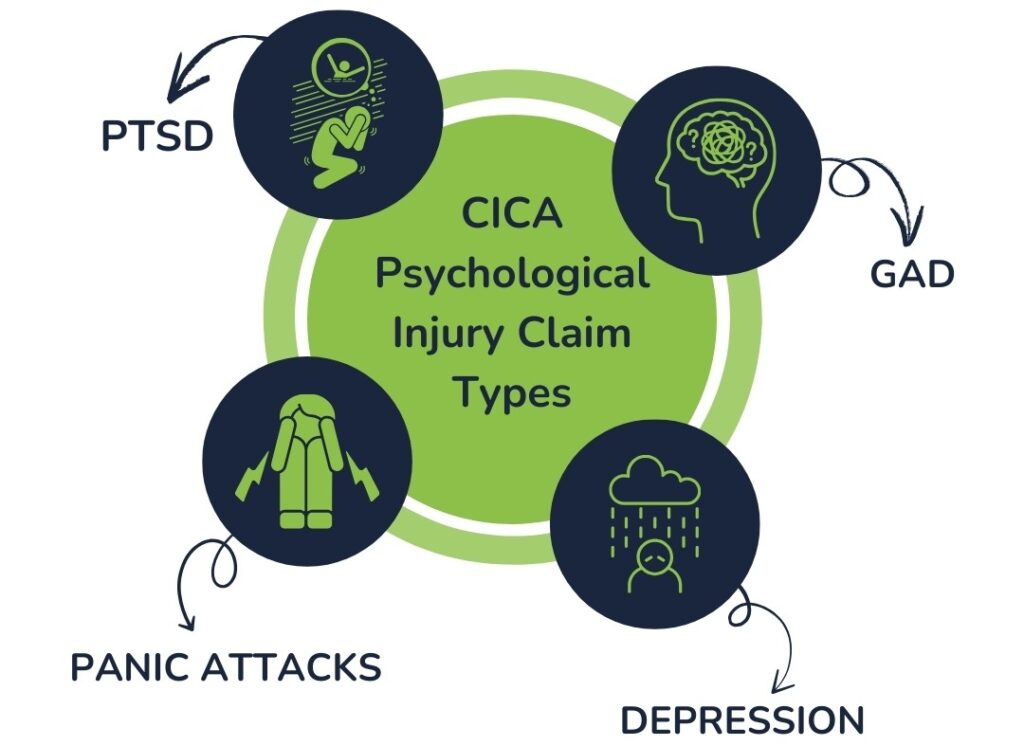
You may be entitled to compensation if you developed:

  • Post-Traumatic Stress Disorder (PTSD)
  • Complex PTSD (C-PTSD)
  • Depression linked to the crime
  • Generalised anxiety or panic disorder
  • Adjustment disorder
  • Personality change or long-term behavioural change due to trauma
  • Psychological harm following sexual assault, domestic abuse

To qualify, your condition must be directly linked to a crime of violence that has been reported to the police, and you must be formally diagnosed by a psychologist or psychiatrist.

How CICA Assesses Psychological Trauma Claims

CICA uses strict criteria when it considers a psychological injury. In most cases, it will expect:

  • A formal diagnosis from a consultant psychiatrist or clinical psychologist
  • Clear evidence that your condition is caused by the incident you reported
  • Medical records confirming the duration, severity and impact of your symptoms

A short GP note is rarely enough on its own. The strongest claims usually include a full psychiatric report and ongoing treatment records.

Mental Health Criteria - What CICA Looks For

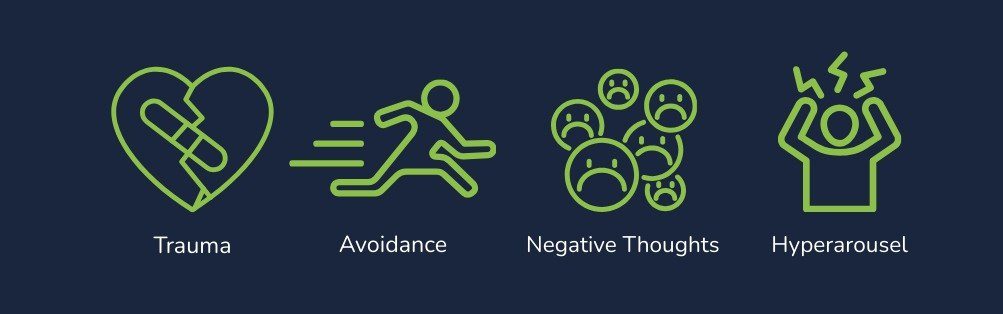
To award compensation for Mental Health, CICA looks for symptoms that match recognised diagnostic standards (for example DSM-5 criteria), such as:

1. Re-experiencing the trauma

  • Flashbacks
  • Nightmares
  • Intrusive memories

2. Avoidance

  • Avoiding places, people or reminders of the incident
  • Emotional numbing
  • Withdrawing from friends and family

3. Negative Thoughts and Mood

  • Persistent guilt, shame or fear
  • Feeling detached or “numb”
  • Difficulty feeling positive emotions

4. Hyperarousel

  • Being on constant alert
  • Sleep problems
  • Irritability or anger outbursts
  • Being easily startled

You do not need to tick every box, but your medical evidence should show a recognised psychiatric injury, not just ordinary upset or distress.

CICA Compensation Levels for Psychological Injuries

CICA uses a fixed tariff system. The amount you receive depends on how severe and long-lasting your psychological injury is.

While every case is different, psychological injuries often fall into categories along these lines:

  • Moderately severe psychological injury– symptoms lasting a number of years with a significant impact, but with some recovery over time.
  • Severe mental injury – long-term or permanent symptoms that seriously affect work, relationships and independence.
  • Psychological trauma linked to sexual assault or abuse – awards can be higher where there is prolonged abuse, childhood abuse or particularly serious psychiatric harm.

You can only be compensated for the single highest-value psychological injury – CICA does not add multiple mental injuries together.

For some clients, additional compensation may be available for loss of earnings or special expenses.

See our main guide on Criminal Injuries Compensation for more detail.

Common Crimes That Lead to PTSD and Psychological Injury

We regularly see psychological injuries after:

  • Domestic violence and coercive control
  • Sexual assault, rape and serious sexual offences
  • Historic childhood abuse (including institutional or familial abuse)
  • Physical assault and violent robbery
  • Witnessing extreme violence or homicide

If the incident was reported to the police and you’ve suffered a psychological injury as a result, you may have grounds to claim. 

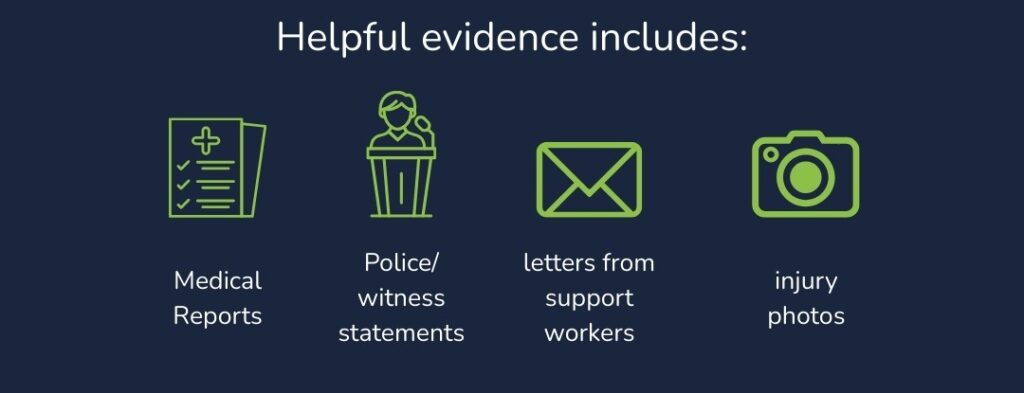
What Evidence Do You Need for a CICA Mental Health Claim?

CICA understands that victims may not have extensive evidence. Still, strong documentation helps your case.

1. Formal Psychological Diagnosis

CICA gives greatest weight to:

  • Consultant psychiatrist reports
  • Clinical psychologist assessments
  • Structured trauma assessments and therapy reports

These should confirm:

  • Your diagnosis (e.g. PTSD, C-PTSD, depression, anxiety)
  • How it links to the criminal incident
  • The severity and likely prognosis

2. Medical Records

Helpful documents include:

  • GP consultations mentioning trauma or mental health
  • Hospital records
  • Medication history (e.g. antidepressants, sleeping tablets)
  • Referral letters to mental health services
  • Notes from counselling or therapy sessions

3. Police Evidence

CICA will want to see that:

  • The crime was reported promptly (or you have a good reason for any delay)
  • You cooperated with the investigation as far as you reasonably could

Your crime reference number and police statements are key documents.

4. Evidence of Daily Impact

To demonstrate how your psychological injury affects your life, you can use:

  • Workplace absence records
  • Occupational health reports
  • Statements from family, friends or support workers
  • Social services involvement
  • Evidence of withdrawing from social activities, education or work

How CICA Decides Between "Severe" and "Moderately Severe" Mental Injury

CICA looks at much more than just your diagnosis label. It may consider:

  • How long your symptoms have lasted
  • Whether you are able to work or study
  • The extent of your social withdrawal
  • Whether you need ongoing therapy or medication
  • Whether there is a realistic chance of recovery

The more serious and long-lasting the impact, the higher the bracket your award is likely to fall into.

Why CICA PTSD Claims Are Often Rejected - And How We Help

Sadly, many psychological injury claims are refused or under-valued.
Common reasons include:

  • No formal psychiatric diagnosis
  • Only GP-level notes with limited detail
  • Insufficient evidence linking the condition to the crime
  • Inconsistencies between medical records and police statements
  • Applications made after the 2-year time limit without a clear exceptional reason

At NJS Law, we regularly review refused CICA cases and identify where:

  • Further medical evidence is needed
  • A clearer link to the crime should be drawn
  • An extension of the time limit can be argued (see: CICA Claim Time Limits)

We then prepare a structured, evidence-based challenge on your behalf.

Can You Claim for PTSD Without Any Physical Injury?

Yes. CICA can award compensation for psychological injury alone.

This is particularly common in:

  • Domestic abuse and coercive control cases
  • Sexual assault and rape
  • Historic childhood abuse

You do not need broken bones or visible wounds for your trauma to be real – and for it to qualify for compensation.

Do You Need a Solicitor for a CICA Psychological Injury Claim?

You are allowed to apply directly, but many clients find the process stressful – especially while managing mental health symptoms.

Working with a specialist CICA team like NJS Law can help you to:

  • Understand how CICA will view your psychological injury
  • Obtain the right psychiatric evidence
  • Present your case in a clear, structured way
  • Seek a fair award that reflects the true impact of your trauma
  • Challenge any refusal or low offer through review and appeal

If you’d like to discuss your situation in confidence, contact us today.

👉 Speak to our CICA team

FAQ – Psychological Injury & PTSD CICA Claims

Do I need a formal PTSD diagnosis to make a CICA claim?

You will usually need a diagnosis from a psychiatrist or clinical psychologist. CICA rarely accepts claims based only on short, informal notes.

Can I claim if my PTSD developed months after the incident?

Yes. Delayed-onset PTSD is recognised. Your medical evidence should explain how the symptoms emerged over time.

Can I claim for psychological injury from childhood abuse many years later?

In some cases, yes. CICA can extend the usual time limit where there are exceptional circumstances and ongoing impact.

What if I have not started therapy yet?

You may still be able to claim, but CICA may request updated evidence. We often advise clients to seek an assessment so their condition is properly documented.

CONTACT US

Get in touch using the form below or via the following methods:
Ask NJS

For fast, friendly affordable legal advice. Contact a member of our team today.

FAQ

For any questions we may be able to answer, discover our FAQ section.

Categories
Criminal Injuries

CICA for Victims of Domestic Abuse: What You Can Claim

December 2025

Domestic abuse remains one of the most underreported crimes in the UK. Many victims feel trapped, frightened or unsure of their rights — but you may still be eligible for financial compensation through the Criminal Injuries Compensation Authority (CICA).

CICA provides compensation for victims of violent crime, including domestic violence, sexual abuse, and coercive or controlling behaviour.

If you’ve suffered physical, emotional, or sexual abuse — even if it happened years ago — you may be entitled to compensation.

You may also find our guide helpful: How to Make a CICA Claim.

Does CICA Cover Domestic Abuse?

Yes – CICA recognises domestic abuse as a crime of violence, including:

  • Physical assault
  • Sexual assault, marital rape or rape within a relationship
  • Psychological trauma resulting from abuse

You can claim whether the abuse was:

  • Multiple incidents reported together
  • A repeated pattern of violence
  • A long-term abusive relationship
  • Historical abuse only recently disclosed

For more details on your rights, see Domestic Abuse Compensation Claims.

What You Can Claim Through CICA for Domestic Abuse

CICA provides compensation across several award categories depending on your injuries and losses.

1. Physical Injuries

Examples include:

  • Cuts, bruising, fractures
  • Broken bones
  • Head injuries
  • Burns or scalds
  • Organ damage
  • Loss of teeth
  • Scarring or disfigurement

CICA uses a tariff-based system, awarding higher compensation for more serious injuries.

2. Psychological Injuries & PTSD

Many victims develop long-term psychological trauma, such as:

  • PTSD or C-PTSD
  • Depression & anxiety
  • Panic attacks
  • Sleep disturbances
  • Hypervigilance
  • Emotional numbing
  • Suicidal thoughts

CICA does award compensation for psychological injury alone, provided you have a formal diagnosis from a psychologist or psychiatrist.

Learn more: PTSD & Trauma Compensation Claims.

3. Loss of Earnings

If abuse has affected your ability to work, you may claim compensation for:

  • Short-term time off
  • Long-term inability to work
  • Mental health conditions preventing employment

You usually need proof of stable employment for at least 3 years pre-incident.

4. Special Expenses

These cover essential costs directly resulting from the abuse, including:

  • Medical aids or mobility equipment
  • Property damage caused during incidents
  • Home adaptations
  • Therapy or counselling not available on the NHS

These must be necessary, reasonable and linked to the crime.

5. Sexual Assault & Rape Compensation

Domestic abuse often involves sexual violence, including:

  • Sexual assault
  • Repeated assaults
  • Marital rape
  • Pregnancy resulting from rape
  • STIs
  • Severe psychological trauma

Victims of partner or spousal rape absolutely qualify for compensation.

More details: Sexual Assault CICA Claims.

Can You Claim CICA for Coercive Control?

No, unless there is physical and sexual abuse attached to it.

CICA recognises forms such as:

  • Isolation from friends or family
  • Financial control
  • Monitoring of devices or messages
  • Restricting movement
  • Manipulation and intimidation
  • Repeated threats

CICA Time Limits for Domestic Abuse Claims

Normally, you must apply within 2 years.

However, CICA allows extensions in domestic abuse cases where:

  • You were too afraid to report the offender
  • Trauma prevented you from acting sooner
  • You were manipulated or controlled
  • You feared retaliation
  • You were a minor at the time of the abuse
  • You have recently disclosed historic abuse

The time limit is flexible if you can demonstrate “exceptional circumstances.”

What Evidence Do You Need for a Domestic Abuse CICA Claim?

CICA understands that victims may not have extensive evidence. Still, strong documentation helps your case.

✓ Police Evidence

  • Crime reference number
  • Statements
  • Records of reports or domestic incidents

✓ Medical Evidence

  • GP records
  • Hospital treatment
  • Mental health assessments
  • Therapy or counselling notes

✓ Psychological Diagnosis

A report from a psychiatrist or clinical psychologist is ideal.

✓ Supporting Documents

  • Social services involvement
  • IDVA/ISVA or refuge support letters
  • Photos of injuries
  • Employer absence notes
  • Statement from family/friends

How CICA Judges Domestic Abuse Claims

CICA considers:

  • The seriousness of the abuse
  • Duration and pattern of the behaviour
  • Long-term physical or psychological harm
  • Whether you reported the abuse (and reasons for delay if you didn’t)
  • Medical and police evidence
  • Credibility and consistency of statements.

It recognises that victims often conceal abuse due to fear or coercion.

Historic Domestic Abuse Claims

Many victims come forward years – even decades – later.

You may still be eligible if:

  • You can explain why you did not report earlier
  • Evidence still exists for CICA to assess the case
  • You have a current psychological diagnosis connected to the abuse

We see many successful historic claims every year.

Why Domestic Abuse CICA Claims Are Often Rejected - And How to Avoid it

Common reasons include:

❌ Lack of police report
❌ Claim made after 2 years without explanation
❌ No psychiatric diagnosis
❌ Inconsistent statements
❌ Insufficient medical evidence

With the right preparation — or an appeal — many rejected claims can be overturned.

Do You Need a Solicitor for a Domestic Abuse CICA Claim?

You can apply on your own, but domestic abuse claims are emotionally difficult and often complex.

A specialist solicitor can help you:

  • Gather evidence
  • Prepare a strong psychological injury case
  • Argue for time-limit extensions
  • Maximise your compensation
  • Appeal wrongful refusals

Our trauma-informed team handles these cases sensitively and confidentially.

Frequently Asked Questions

Can I Claim if the Abuser was my Partner?

Yes. CICA covers all forms of domestic abuse, including partner or ex-partner violence.

What if the Offender was Never Charged or Convicted?

You can still claim – CICA only requires that the crime was reported.

What if I Reported the Abuse Late?

You may still be eligible if you have an exceptional reason, such as coercion or fear.

Can I Claim for Psychological Injury Alone?

Yes – provided you have a formal diagnosis.

Conclusion - You Deserve Support and May be Entitled to Compensation

Domestic abuse leaves lasting physical and emotional scars.

CICA compensation can support your recovery, cover losses, and acknowledge the harm you’ve suffered.

CONTACT US

Get in touch using the form below or via the following methods:

Ask NJS

For fast, friendly affordable legal advice. Contact a member of our team today.

FAQ

For any questions we may be able to answer, discover our FAQ section.

Categories
Criminal Injuries

CICA Claim Time Limits Explained – Exceptions, Extensions & Evidence

December 2025

Victims of violent crime often worry they may be “out of time” to apply for compensation. However, the Criminal Injuries Compensation Authority (CICA) time limit rules are more flexible than most people realise.

If you’re asking:

  • How long do I have to make a CICA claim?
  • Can I apply after 2 years?

This guide covers everything you need to know.

What is the Time Limit for a CICA Claim?

The standard CICA claim time limit is:

  • 2 years from the date of the incident
  • As soon as reasonably possible

This applies to most claims, including:

  • Assault
  • Sexual assault
  • Domestic abuse
  • Violent crime
  • Robbery

However, this two-year rule has several important exceptions.

CICA Time Limit Exceptions - When You Can Claim After 2 Years

The CICA may extend the deadline if “exceptional circumstances” prevented you from applying earlier.

1. Psychological Trauma

Mental health conditions such as PTSD, depression or anxiety can delay reporting or making a claim.

2. Historic Child Abuse

CICA frequently accepts late claims involving:

  • Child sexual abuse
  • Physical abuse
  • Grooming or exploitation
  • Institutional abuse

3. Intimidation or Coercive Control

Victims in abusive relationships may be unable to safely report the crime.

4. Illness or Disability

Medical or cognitive impairments can justify a delayed claim.

5. Valid Reasons for Late Police Reporting

CICA requires prompt reporting unless you can show:

  • Fear of the offender
  • Mental health difficulties
  • Being a minor at the time
  • Trauma-related avoidance

You may still qualify if the delay was beyond your control.

How to Get a CICA Time Limit Extension

To secure an extension, you must demonstrate:

✔ A compelling reason for the delay
✔ That enough evidence still exists for CICA to assess your claim

Evidence Supporting a Time Extension

Strong documents include:

  • Medical or psychological reports
  • Police statements
  • GP records
  • Social service files
  • Letters from domestic abuse services, counsellors or support workers

What Evidence Do You Need for a CICA Claim?

The strength of your evidence often determines the value and success of your claim.

Police Evidence

  • Crime reference number
  • Police reports or officer notes (if available)

Medical Evidence

  • GP and hopsital records
  • A&E documentation
  • Photgraphs of injuries
  • Mental health assessments
  • Therapy of counselling notes

Evidence of Impact

  • Loss of earnings
  • Employer confirmation of absences
  • Specialist medical reports

Evidence of Impact

  • Psychiatric assesments
  • Support worker letters
  • Domestic abuse reports
  • Police confirmation of late disclosure
  • Social services involvement

How Late Can You Make a CICA Claim?

There is no absolute maximum time limit.

CICA can accept claims many years, or even decades, later, if:

✔ You have a valid reason for delay
✔ Sufficient evidence still exists
✔ You can show ongoing impact today

Historic abuse survivors routinely succeed with claims 10–40 years after the incident.

How Late Can You Make a CICA Claim?

Common reasons include:
No explanation for a late claim
❌ Crime not reported promptly
Missing medical evidence
Inconsistencies in statements
❌ Withdrawing or changing statements
Ongoing contact with the offender without explanation

These issues can often be resolved with professional support.

Should You Use a Solicitor for Your CICA Claim?

While you can apply yourself, a specialist CICA solicitor can:

  • Strengthen your claim with supporting evidence
  • Argue for a successful time extension
  • Obtain police and medical records
  • Maximise your compensation
  • Appeal refusals or unfair awards

Claimants with professional representation often achieve significantly higher compensation.

Frequently Asked Questions About CICA Time Limits

Can I make a CICA claim after 2 years?

Yes – if exceptional circumstances caused the delay.

What counts as exceptional circumstances?

Psychological trauma, childhood abuse, illness, coercion, or valid reasons for late police reporting.

Do historic abuse cases qualify?

Yes. Many are successful even decades later.

Do I need evidence for a late claim?

Absolutely – you must show why you couldn’t apply sooner.

Is there a maximum time limit?

No fixed limit, but older cases require stronger evidence.

Get Help With Your CICA Claim Today

If you’re unsure whether you’re still within time, don’t assume you’re ineligible.

A specialist solicitor can advise you, gather evidence and help secure the compensation you deserve.

CONTACT US

Get in touch using the form below or via the following methods:

Ask NJS

For fast, friendly affordable legal advice. Contact a member of our team today.

FAQ

For any questions we may be able to answer, discover our FAQ section.

Categories
Medical Negligence Women’s Health Negligence

Endometriosis Medical Negligence Claims – How You Can Take Action

December 2025

For many women, living with untreated or misdiagnosed endometriosis causes life-altering pain, fatigue, and emotional distress. Yet far too often, patients are dismissed, ignored, or misdiagnosed despite showing clear symptoms. A recent parliamentary report has attributed this pattern to “medical misogyny” – a systemic failure to take women’s health seriously.

If you’ve suffered due to a delayed diagnosis of endometriosis, or if your symptoms were ignored, you may be entitled to make an endometriosis medical negligence claim.

Being dismissed by a GP or gynaecologist despite clear symptoms is unacceptable and may amount to negligence. In some cases, women affected by gynaecology negligence could be owed thousands in compensation.

What is Endometriosis - and Why Does Misdiagnosis Happen?


Endometriosis is a condition in which tissue, similar to the womb lining, grows elsewhere in the body. It often causes severe pain, internal scarring, and fertility problems. Common symptoms include:

• Pelvic and abdominal pain
• Painful or heavy periods
• Fatigue and shortness of breath
• Bleeding in other areas (such as the bladder or bowel)

Despite affecting 1 in 10 women in the UK, endometriosis is frequently misdiagnosed as IBS, dismissed as normal period pain, or overlooked entirely. This often stems from medical misogyny and a general lack of awareness in women’s reproductive health.

The longer endometriosis goes untreated, the more severe the pain and potential complications – including fertility issues and long-term organ damage.

When Does Endometriosis Misdiagnosis Become Medical Negligence?


Medical negligence occurs when a healthcare professional breaches their duty of care, causing avoidable harm.

In endometriosis cases, this might include:

  • Failing to investigate or refer a patient despite persistent symptoms
  • Misdiagnosing the condition as another illness
  • Delaying tests, scans, or treatment
  • Poor follow-up or mismanagement after diagnosis

Not every misdiagnosis is negligent, but when a doctor’s actions fall below the accepted medical standard, you may have grounds for an endometriosis negligence claim.

“They just wanted to give me something quick, so I was out of there and done with. It is appalling that the only option I had to stop my gynaecological pain was the pill.”Vicky Gibbons

How to Prove an Endometriosis Negligence Claim


Under UK law, you generally have three years from the date you became aware of the negligence to start a claim. Here’s how to build a strong case:

  1. Collect your medical records: GP visits, referrals, scans, and test results.
  2. Obtain expert evidence: A medical specialist can confirm if your care fell below the expected standard.
  3.  Prove the harm caused: Show how the delay or misdiagnosis led to worsened pain, fertility loss, emotional distress, or additional surgery.
  4. Establish causation: Demonstrate that proper care would have prevented or reduced your suffering.

Our team at NJS Law can guide you through each stage, from gathering evidence to negotiating a fair settlement.

What Compensation Can You Claim for Endometriosis Negligence?


Compensation varies depending on your circumstances, but may include:

  • General damages: for pain, suffering, and loss of amenity.
  • Special damages: to cover lost earnings, ongoing treatment, and future care.
  • Endometriosis-specific losses: such as fertility treatment costs, emotional distress, or repeat surgeries.

For example, if you were misdiagnosed for years and required major surgery as a result, your compensation would consider both your physical pain and the financial impact of your delayed diagnosis.

Every case is unique, and the amount awarded depends on the individual facts and medical evidence.

Why Choose NJS Law for Endometriosis Negligence Claims


At NJS Law, our specialist medical negligence solicitors have extensive experience in women’s health and gynaecology negligence cases.

We understand both the medical and emotional impact of endometriosis and will handle your case with empathy and expertise.

  • No Win, No Fee: Start your claim risk-free.
  • National Coverage: We handle cases across England and Wales.
  • Trusted Reputation: Highly rated on Trustpilot for client care and success.

Contact our endometriosis negligence solicitors today for a free, confidential consultation. We’ll assess whether you have a claim and guide you through the next steps.

Frequently Asked Questions

Can I sue for endometriosis misdiagnosis?


Yes, if your doctor failed to diagnose or treat endometriosis properly, and that failure caused you harm, you may have grounds for a medical negligence claim.

How long do I have to claim for medical negligence?


In the UK, you generally have three years from the date you became aware of the negligence to start legal action.

What if my treatment was private?


Negligence in private healthcare is treated the same as NHS negligence, you can still make a claim.

What if my endometriosis was misdiagnosed as IBS?


If this misdiagnosis led to worsening symptoms, fertility issues, or financial losses, you should seek legal advice immediately.

Conclusion


If your endometriosis was delayed or misdiagnosed, and you’ve suffered as a result, you may be entitled to make an endometriosis medical negligence claim.

Contact our specialist women’s health solicitors at NJS Law today for a free consultation. We’re here to help you secure the compensation and recognition you deserve. But, don’t delay, as limitation periods apply.

CONTACT US

Get in touch using the form below or via the following methods:

Ask NJS

For fast, friendly affordable legal advice. Contact a member of our team today.

FAQ

For any questions we may be able to answer, discover our FAQ section.