
Categories
Criminal Injuries

Psychological Injuries and PTSD: How CICA Assesses Trauma Claims

At NJS Law, we work with many clients whose most serious injury is not visible.

While bruises and fractures may heal, psychological injuries and PTSD can last for years, affecting work, relationships and day-to-day life.

The Criminal Injuries Compensation Authority (CICA) does recognise mental health injuries – but the rules are technical, and claims are often under-valued or refused without the right evidence.

This guide explains, in clear terms:

  • Whether you can claim CICA for PTSD and psychological trauma
  • How CICA assesses mental injuries
  • What evidence you need to support your claim
  • How to strengthen your case with specialist help

If you’d like tailored advice, you can speak to our team here: CICA Specialists

Can You Claim CICA for Psychological Injury or PTSD?

Yes. You can make a CICA claim for psychological injury even where there is no physical injury.
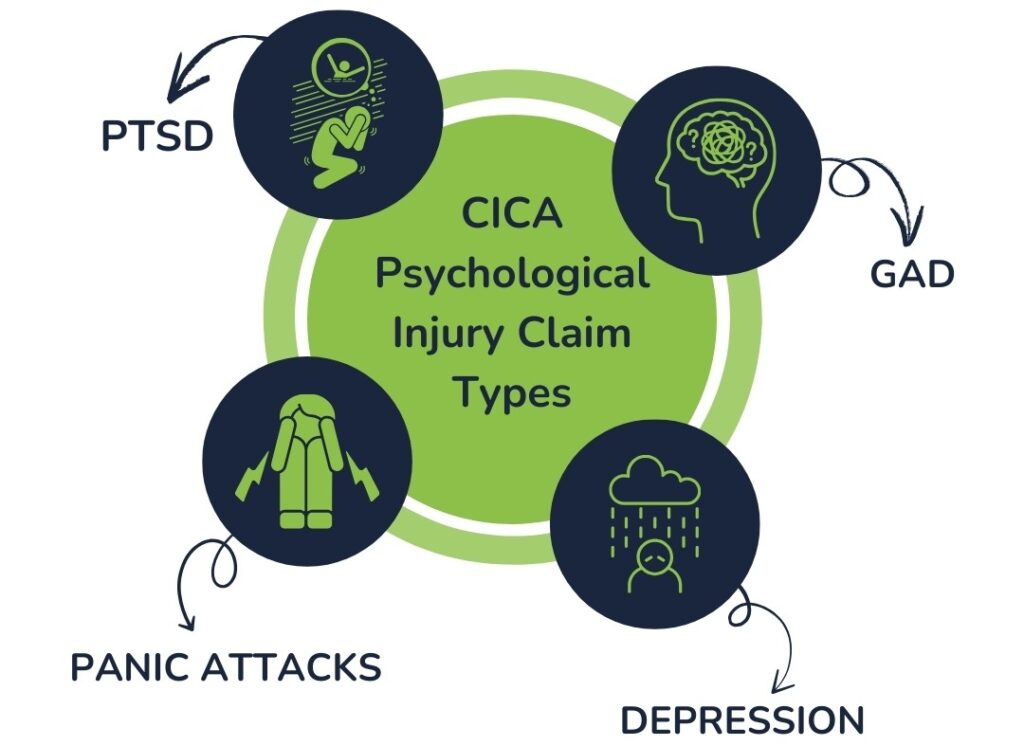
You may be entitled to compensation if you developed:

  • Post-Traumatic Stress Disorder (PTSD)
  • Complex PTSD (C-PTSD)
  • Depression linked to the crime
  • Generalised anxiety or panic disorder
  • Adjustment disorder
  • Personality change or long-term behavioural change due to trauma
  • Psychological harm following sexual assault, domestic abuse

To qualify, your condition must be directly linked to a crime of violence that has been reported to the police, and you must be formally diagnosed by a psychologist or psychiatrist.

How CICA Assesses Psychological Trauma Claims

CICA uses strict criteria when it considers a psychological injury. In most cases, it will expect:

  • A formal diagnosis from a consultant psychiatrist or clinical psychologist
  • Clear evidence that your condition is caused by the incident you reported
  • Medical records confirming the duration, severity and impact of your symptoms

A short GP note is rarely enough on its own. The strongest claims usually include a full psychiatric report and ongoing treatment records.

Mental Health Criteria - What CICA Looks For

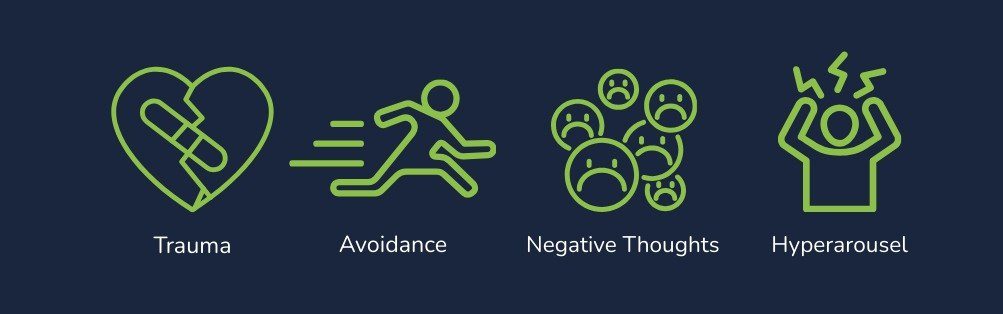
To award compensation for Mental Health, CICA looks for symptoms that match recognised diagnostic standards (for example DSM-5 criteria), such as:

1. Re-experiencing the trauma

  • Flashbacks
  • Nightmares
  • Intrusive memories

2. Avoidance

  • Avoiding places, people or reminders of the incident
  • Emotional numbing
  • Withdrawing from friends and family

3. Negative Thoughts and Mood

  • Persistent guilt, shame or fear
  • Feeling detached or “numb”
  • Difficulty feeling positive emotions

4. Hyperarousel

  • Being on constant alert
  • Sleep problems
  • Irritability or anger outbursts
  • Being easily startled

You do not need to tick every box, but your medical evidence should show a recognised psychiatric injury, not just ordinary upset or distress.
CICA Compensation Levels for Psychological Injuries

CICA uses a fixed tariff system. The amount you receive depends on how severe and long-lasting your psychological injury is.

While every case is different, psychological injuries often fall into categories along these lines:

  • Moderately severe psychological injury– symptoms lasting a number of years with a significant impact, but with some recovery over time.
  • Severe mental injury – long-term or permanent symptoms that seriously affect work, relationships and independence.
  • Psychological trauma linked to sexual assault or abuse – awards can be higher where there is prolonged abuse, childhood abuse or particularly serious psychiatric harm.

You can only be compensated for the single highest-value psychological injury – CICA does not add multiple mental injuries together.

For some clients, additional compensation may be available for loss of earnings or special expenses.

See our main guide on Criminal Injuries Compensation for more detail.

Common Crimes That Lead to PTSD and Psychological Injury

We regularly see psychological injuries after:

  • Domestic violence and coercive control
  • Sexual assault, rape and serious sexual offences
  • Historic childhood abuse (including institutional or familial abuse)
  • Physical assault and violent robbery
  • Witnessing extreme violence or homicide

If the incident was reported to the police and you’ve suffered a psychological injury as a result, you may have grounds to claim. 

What Evidence Do You Need for a CICA Mental Health Claim?

CICA understands that victims may not have extensive evidence. Still, strong documentation helps your case.

1. Formal Psychological Diagnosis

CICA gives greatest weight to:

  • Consultant psychiatrist reports
  • Clinical psychologist assessments
  • Structured trauma assessments and therapy reports

These should confirm:

  • Your diagnosis (e.g. PTSD, C-PTSD, depression, anxiety)
  • How it links to the criminal incident
  • The severity and likely prognosis

2. Medical Records

Helpful documents include:

  • GP consultations mentioning trauma or mental health
  • Hospital records
  • Medication history (e.g. antidepressants, sleeping tablets)
  • Referral letters to mental health services
  • Notes from counselling or therapy sessions

3. Police Evidence

CICA will want to see that:

  • The crime was reported promptly (or you have a good reason for any delay)
  • You cooperated with the investigation as far as you reasonably could

Your crime reference number and police statements are key documents.

4. Evidence of Daily Impact

To demonstrate how your psychological injury affects your life, you can use:

  • Workplace absence records
  • Occupational health reports
  • Statements from family, friends or support workers
  • Social services involvement
  • Evidence of withdrawing from social activities, education or work

How CICA Decides Between "Severe" and "Moderately Severe" Mental Injury

CICA looks at much more than just your diagnosis label. It may consider:

  • How long your symptoms have lasted
  • Whether you are able to work or study
  • The extent of your social withdrawal
  • Whether you need ongoing therapy or medication
  • Whether there is a realistic chance of recovery

The more serious and long-lasting the impact, the higher the bracket your award is likely to fall into.

Why CICA PTSD Claims Are Often Rejected - And How We Help

Sadly, many psychological injury claims are refused or under-valued.
Common reasons include:

  • No formal psychiatric diagnosis
  • Only GP-level notes with limited detail
  • Insufficient evidence linking the condition to the crime
  • Inconsistencies between medical records and police statements
  • Applications made after the 2-year time limit without a clear exceptional reason

At NJS Law, we regularly review refused CICA cases and identify where:

  • Further medical evidence is needed
  • A clearer link to the crime should be drawn
  • An extension of the time limit can be argued (see: CICA Claim Time Limits)

We then prepare a structured, evidence-based challenge on your behalf.

Can You Claim for PTSD Without Any Physical Injury?

Yes. CICA can award compensation for psychological injury alone.

This is particularly common in:

  • Domestic abuse and coercive control cases
  • Sexual assault and rape
  • Historic childhood abuse

You do not need broken bones or visible wounds for your trauma to be real – and for it to qualify for compensation.

Do You Need a Solicitor for a CICA Psychological Injury Claim?

You are allowed to apply directly, but many clients find the process stressful – especially while managing mental health symptoms.

Working with a specialist CICA team like NJS Law can help you to:

  • Understand how CICA will view your psychological injury
  • Obtain the right psychiatric evidence
  • Present your case in a clear, structured way
  • Seek a fair award that reflects the true impact of your trauma
  • Challenge any refusal or low offer through review and appeal

If you’d like to discuss your situation in confidence, contact us today.

👉 Speak to our CICA team

FAQ – Psychological Injury & PTSD CICA Claims

Do I need a formal PTSD diagnosis to make a CICA claim?

You will usually need a diagnosis from a psychiatrist or clinical psychologist. CICA rarely accepts claims based only on short, informal notes.

Can I claim if my PTSD developed months after the incident?

Yes. Delayed-onset PTSD is recognised. Your medical evidence should explain how the symptoms emerged over time.

Can I claim for psychological injury from childhood abuse many years later?

In some cases, yes. CICA can extend the usual time limit where there are exceptional circumstances and ongoing impact.

What if I have not started therapy yet?

You may still be able to claim, but CICA may request updated evidence. We often advise clients to seek an assessment so their condition is properly documented.

CONTACT US

Get in touch using the form below or via the following methods:

Ask NJS

For fast, friendly affordable legal advice. Contact a member of our team today.

FAQ

For any questions we may be able to answer, discover our FAQ section.

Categories
Criminal Injuries

CICA for Victims of Domestic Abuse: What You Can Claim

Domestic abuse remains one of the most underreported crimes in the UK. Many victims feel trapped, frightened or unsure of their rights — but you may still be eligible for financial compensation through the Criminal Injuries Compensation Authority (CICA).

CICA provides compensation for victims of violent crime, including domestic violence, sexual abuse, and coercive or controlling behaviour.

If you’ve suffered physical, emotional, or sexual abuse — even if it happened years ago — you may be entitled to compensation.

You may also find our guide helpful: How to Make a CICA Claim.

Does CICA Cover Domestic Abuse?

Yes – CICA recognises domestic abuse as a crime of violence, including:

  • Physical assault
  • Sexual assault, marital rape or rape within a relationship
  • Psychological trauma resulting from abuse

You can claim whether the abuse was:

  • Multiple incidents reported together
  • A repeated pattern of violence
  • A long-term abusive relationship
  • Historical abuse only recently disclosed

For more details on your rights, see Domestic Abuse Compensation Claims.

What You Can Claim Through CICA for Domestic Abuse

CICA provides compensation across several award categories depending on your injuries and losses.

1. Physical Injuries

Examples include:

  • Cuts, bruising, fractures
  • Broken bones
  • Head injuries
  • Burns or scalds
  • Organ damage
  • Loss of teeth
  • Scarring or disfigurement

CICA uses a tariff-based system, awarding higher compensation for more serious injuries.

2. Psychological Injuries & PTSD

Many victims develop long-term psychological trauma, such as:

  • PTSD or C-PTSD
  • Depression & anxiety
  • Panic attacks
  • Sleep disturbances
  • Hypervigilance
  • Emotional numbing
  • Suicidal thoughts

CICA does award compensation for psychological injury alone, provided you have a formal diagnosis from a psychologist or psychiatrist.

Learn more: PTSD & Trauma Compensation Claims.

3. Loss of Earnings

If abuse has affected your ability to work, you may claim compensation for:

  • Short-term time off
  • Long-term inability to work
  • Mental health conditions preventing employment

You usually need proof of stable employment for at least 3 years pre-incident.

4. Special Expenses

These cover essential costs directly resulting from the abuse, including:

  • Medical aids or mobility equipment
  • Property damage caused during incidents
  • Home adaptations
  • Therapy or counselling not available on the NHS

These must be necessary, reasonable and linked to the crime.

5. Sexual Assault & Rape Compensation

Domestic abuse often involves sexual violence, including:

  • Sexual assault
  • Repeated assaults
  • Marital rape
  • Pregnancy resulting from rape
  • STIs
  • Severe psychological trauma

Victims of partner or spousal rape absolutely qualify for compensation.

More details: Sexual Assault CICA Claims.

Can You Claim CICA for Coercive Control?

No, unless there is physical and sexual abuse attached to it.

CICA recognises forms such as:

  • Isolation from friends or family
  • Financial control
  • Monitoring of devices or messages
  • Restricting movement
  • Manipulation and intimidation
  • Repeated threats

CICA Time Limits for Domestic Abuse Claims

Normally, you must apply within 2 years.

However, CICA allows extensions in domestic abuse cases where:

  • You were too afraid to report the offender
  • Trauma prevented you from acting sooner
  • You were manipulated or controlled
  • You feared retaliation
  • You were a minor at the time of the abuse
  • You have recently disclosed historic abuse

The time limit is flexible if you can demonstrate “exceptional circumstances.”

What Evidence Do You Need for a Domestic Abuse CICA Claim?

CICA understands that victims may not have extensive evidence. Still, strong documentation helps your case.

✓ Police Evidence

  • Crime reference number
  • Statements
  • Records of reports or domestic incidents

✓ Medical Evidence

  • GP records
  • Hospital treatment
  • Mental health assessments
  • Therapy or counselling notes

✓ Psychological Diagnosis

A report from a psychiatrist or clinical psychologist is ideal.

✓ Supporting Documents

  • Social services involvement
  • IDVA/ISVA or refuge support letters
  • Photos of injuries
  • Employer absence notes
  • Statement from family/friends

How CICA Judges Domestic Abuse Claims

CICA considers:

  • The seriousness of the abuse
  • Duration and pattern of the behaviour
  • Long-term physical or psychological harm
  • Whether you reported the abuse (and reasons for delay if you didn’t)
  • Medical and police evidence
  • Credibility and consistency of statements.

It recognises that victims often conceal abuse due to fear or coercion.

Historic Domestic Abuse Claims

Many victims come forward years – even decades – later.

You may still be eligible if:

  • You can explain why you did not report earlier
  • Evidence still exists for CICA to assess the case
  • You have a current psychological diagnosis connected to the abuse

We see many successful historic claims every year.

Why Domestic Abuse CICA Claims Are Often Rejected - And How to Avoid it

Common reasons include:

❌ Lack of police report
❌ Claim made after 2 years without explanation
❌ No psychiatric diagnosis
❌ Inconsistent statements
❌ Insufficient medical evidence

With the right preparation — or an appeal — many rejected claims can be overturned.

Do You Need a Solicitor for a Domestic Abuse CICA Claim?

You can apply on your own, but domestic abuse claims are emotionally difficult and often complex.

A specialist solicitor can help you:

  • Gather evidence
  • Prepare a strong psychological injury case
  • Argue for time-limit extensions
  • Maximise your compensation
  • Appeal wrongful refusals

Our trauma-informed team handles these cases sensitively and confidentially.

Frequently Asked Questions

Can I Claim if the Abuser was my Partner?

Yes. CICA covers all forms of domestic abuse, including partner or ex-partner violence.

What if the Offender was Never Charged or Convicted?

You can still claim – CICA only requires that the crime was reported.

What if I Reported the Abuse Late?

You may still be eligible if you have an exceptional reason, such as coercion or fear.

Can I Claim for Psychological Injury Alone?

Yes – provided you have a formal diagnosis.

Conclusion - You Deserve Support and May be Entitled to Compensation

Domestic abuse leaves lasting physical and emotional scars.

CICA compensation can support your recovery, cover losses, and acknowledge the harm you’ve suffered.

CONTACT US

Get in touch using the form below or via the following methods:

Ask NJS

For fast, friendly affordable legal advice. Contact a member of our team today.

FAQ

For any questions we may be able to answer, discover our FAQ section.

Categories
Criminal Injuries

CICA Claim Time Limits Explained – Exceptions, Extensions & Evidence

Victims of violent crime often worry they may be “out of time” to apply for compensation. However, the Criminal Injuries Compensation Authority (CICA) time limit rules are more flexible than most people realise.

If you’re asking:

  • How long do I have to make a CICA claim?
  • Can I apply after 2 years?

This guide covers everything you need to know.

What is the Time Limit for a CICA Claim?

The standard CICA claim time limit is:

  • 2 years from the date of the incident
  • As soon as reasonably possible

This applies to most claims, including:

  • Assault
  • Sexual assault
  • Domestic abuse
  • Violent crime
  • Robbery

However, this two-year rule has several important exceptions.

CICA Time Limit Exceptions - When You Can Claim After 2 Years

The CICA may extend the deadline if “exceptional circumstances” prevented you from applying earlier.

1. Psychological Trauma

Mental health conditions such as PTSD, depression or anxiety can delay reporting or making a claim.

2. Historic Child Abuse

CICA frequently accepts late claims involving:

  • Child sexual abuse
  • Physical abuse
  • Grooming or exploitation
  • Institutional abuse

3. Intimidation or Coercive Control

Victims in abusive relationships may be unable to safely report the crime.

4. Illness or Disability

Medical or cognitive impairments can justify a delayed claim.

5. Valid Reasons for Late Police Reporting

CICA requires prompt reporting unless you can show:

  • Fear of the offender
  • Mental health difficulties
  • Being a minor at the time
  • Trauma-related avoidance

You may still qualify if the delay was beyond your control.

How to Get a CICA Time Limit Extension

To secure an extension, you must demonstrate:

✔ A compelling reason for the delay
✔ That enough evidence still exists for CICA to assess your claim

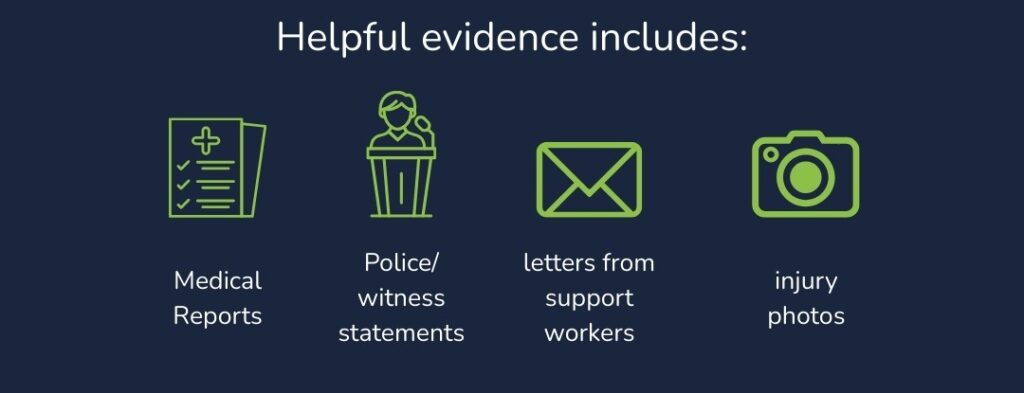
Evidence Supporting a Time Extension

Strong documents include:

  • Medical or psychological reports
  • Police statements
  • GP records
  • Social service files
  • Letters from domestic abuse services, counsellors or support workers

What Evidence Do You Need for a CICA Claim?

The strength of your evidence often determines the value and success of your claim.

Police Evidence

  • Crime reference number
  • Police reports or officer notes (if available)

Medical Evidence

  • GP and hopsital records
  • A&E documentation
  • Photgraphs of injuries
  • Mental health assessments
  • Therapy of counselling notes

Evidence of Impact

  • Loss of earnings
  • Employer confirmation of absences
  • Specialist medical reports

Evidence of Impact

  • Psychiatric assesments
  • Support worker letters
  • Domestic abuse reports
  • Police confirmation of late disclosure
  • Social services involvement

How Late Can You Make a CICA Claim?

There is no absolute maximum time limit.

CICA can accept claims many years, or even decades, later, if:

✔ You have a valid reason for delay
✔ Sufficient evidence still exists
✔ You can show ongoing impact today

Historic abuse survivors routinely succeed with claims 10–40 years after the incident.

How Late Can You Make a CICA Claim?

Common reasons include:
No explanation for a late claim
❌ Crime not reported promptly
Missing medical evidence
Inconsistencies in statements
❌ Withdrawing or changing statements
Ongoing contact with the offender without explanation

These issues can often be resolved with professional support.

Should You Use a Solicitor for Your CICA Claim?

While you can apply yourself, a specialist CICA solicitor can:

  • Strengthen your claim with supporting evidence
  • Argue for a successful time extension
  • Obtain police and medical records
  • Maximise your compensation
  • Appeal refusals or unfair awards

Claimants with professional representation often achieve significantly higher compensation.

Frequently Asked Questions About CICA Time Limits

Can I make a CICA claim after 2 years?

Yes – if exceptional circumstances caused the delay.

What counts as exceptional circumstances?

Psychological trauma, childhood abuse, illness, coercion, or valid reasons for late police reporting.

Do historic abuse cases qualify?

Yes. Many are successful even decades later.

Do I need evidence for a late claim?

Absolutely – you must show why you couldn’t apply sooner.

Is there a maximum time limit?

No fixed limit, but older cases require stronger evidence.

Get Help With Your CICA Claim Today

If you’re unsure whether you’re still within time, don’t assume you’re ineligible.

A specialist solicitor can advise you, gather evidence and help secure the compensation you deserve.

CONTACT US

Get in touch using the form below or via the following methods:
Ask NJS

For fast, friendly affordable legal advice. Contact a member of our team today.

FAQ

For any questions we may be able to answer, discover our FAQ section.

Categories
Medical Negligence Women’s Health Negligence

Endometriosis Medical Negligence Claims – How You Can Take Action

For many women, living with untreated or misdiagnosed endometriosis causes life-altering pain, fatigue, and emotional distress. Yet far too often, patients are dismissed, ignored, or misdiagnosed despite showing clear symptoms. A recent parliamentary report has attributed this pattern to “medical misogyny” – a systemic failure to take women’s health seriously.

If you’ve suffered due to a delayed diagnosis of endometriosis, or if your symptoms were ignored, you may be entitled to make an endometriosis medical negligence claim.

Being dismissed by a GP or gynaecologist despite clear symptoms is unacceptable and may amount to negligence. In some cases, women affected by gynaecology negligence could be owed thousands in compensation.

What is Endometriosis - and Why Does Misdiagnosis Happen?


Endometriosis is a condition in which tissue, similar to the womb lining, grows elsewhere in the body. It often causes severe pain, internal scarring, and fertility problems. Common symptoms include:

• Pelvic and abdominal pain
• Painful or heavy periods
• Fatigue and shortness of breath
• Bleeding in other areas (such as the bladder or bowel)

Despite affecting 1 in 10 women in the UK, endometriosis is frequently misdiagnosed as IBS, dismissed as normal period pain, or overlooked entirely. This often stems from medical misogyny and a general lack of awareness in women’s reproductive health.

The longer endometriosis goes untreated, the more severe the pain and potential complications – including fertility issues and long-term organ damage.

When Does Endometriosis Misdiagnosis Become Medical Negligence?


Medical negligence occurs when a healthcare professional breaches their duty of care, causing avoidable harm.

In endometriosis cases, this might include:

  • Failing to investigate or refer a patient despite persistent symptoms
  • Misdiagnosing the condition as another illness
  • Delaying tests, scans, or treatment
  • Poor follow-up or mismanagement after diagnosis

Not every misdiagnosis is negligent, but when a doctor’s actions fall below the accepted medical standard, you may have grounds for an endometriosis negligence claim.

“They just wanted to give me something quick, so I was out of there and done with. It is appalling that the only option I had to stop my gynaecological pain was the pill.”Vicky Gibbons

How to Prove an Endometriosis Negligence Claim


Under UK law, you generally have three years from the date you became aware of the negligence to start a claim. Here’s how to build a strong case:

  1. Collect your medical records: GP visits, referrals, scans, and test results.
  2. Obtain expert evidence: A medical specialist can confirm if your care fell below the expected standard.
  3.  Prove the harm caused: Show how the delay or misdiagnosis led to worsened pain, fertility loss, emotional distress, or additional surgery.
  4. Establish causation: Demonstrate that proper care would have prevented or reduced your suffering.

Our team at NJS Law can guide you through each stage, from gathering evidence to negotiating a fair settlement.

What Compensation Can You Claim for Endometriosis Negligence?


Compensation varies depending on your circumstances, but may include:

  • General damages: for pain, suffering, and loss of amenity.
  • Special damages: to cover lost earnings, ongoing treatment, and future care.
  • Endometriosis-specific losses: such as fertility treatment costs, emotional distress, or repeat surgeries.

For example, if you were misdiagnosed for years and required major surgery as a result, your compensation would consider both your physical pain and the financial impact of your delayed diagnosis.

Every case is unique, and the amount awarded depends on the individual facts and medical evidence.

Why Choose NJS Law for Endometriosis Negligence Claims


At NJS Law, our specialist medical negligence solicitors have extensive experience in women’s health and gynaecology negligence cases.

We understand both the medical and emotional impact of endometriosis and will handle your case with empathy and expertise.

  • No Win, No Fee: Start your claim risk-free.
  • National Coverage: We handle cases across England and Wales.
  • Trusted Reputation: Highly rated on Trustpilot for client care and success.

Contact our endometriosis negligence solicitors today for a free, confidential consultation. We’ll assess whether you have a claim and guide you through the next steps.

Frequently Asked Questions

Can I sue for endometriosis misdiagnosis?


Yes, if your doctor failed to diagnose or treat endometriosis properly, and that failure caused you harm, you may have grounds for a medical negligence claim.

How long do I have to claim for medical negligence?


In the UK, you generally have three years from the date you became aware of the negligence to start legal action.

What if my treatment was private?


Negligence in private healthcare is treated the same as NHS negligence, you can still make a claim.

What if my endometriosis was misdiagnosed as IBS?


If this misdiagnosis led to worsening symptoms, fertility issues, or financial losses, you should seek legal advice immediately.

Conclusion


If your endometriosis was delayed or misdiagnosed, and you’ve suffered as a result, you may be entitled to make an endometriosis medical negligence claim.

Contact our specialist women’s health solicitors at NJS Law today for a free consultation. We’re here to help you secure the compensation and recognition you deserve. But, don’t delay, as limitation periods apply.

CONTACT US

Get in touch using the form below or via the following methods:
Ask NJS

For fast, friendly affordable legal advice. Contact a member of our team today.

FAQ

For any questions we may be able to answer, discover our FAQ section.

Categories
Accident at Work Serious Injury

£3.7 Million Settlement After Forklift Accident at Work – A Life Rebuilt with NJS Law

Forklift accident at work – serious injury compensation claim supported by NJS Law

£3.7 Million Settlement After Forklift Accident at Work – A Life Rebuilt with NJS Law

When a simple workday turned into a life-changing accident, one man’s world was changed forever. After years of pain, rehabilitation, and emotional struggle, NJS Law helped him secure a £3.7 million settlement – allowing him to rebuild his life with dignity and independence.

This is his real story of resilience and recovery.

The Day That Changed Everything


“I came into work early that day, just for breakfast. Management asked if I could start early because someone had phoned in sick. I did my forklift checks and started work as usual.”

While helping at the loading bay, the day took a devastating turn.

“As soon as I started up my truck, I only drove a few yards before I felt a massive bang. It felt like I’d been hit with a crowbar. I thought a wagon had hit me, but it turned out I’d gone over a pothole hidden under murky water.”

That invisible pothole caused severe spinal injuries, leaving him unable to move and in shock. He was rushed to hospital, where doctors confirmed the devastating extent of his injuries.

The Long Journey to Recovery


Following the accident, he spent months in hospitals and rehabilitation centres, including the Spinal Hospital in Salford and Sandpipers Rehabilitation Centre in Southport.

“I couldn’t move at first – only talk. It was terrifying. But I kept reminding myself there would be light at the end of the tunnel.”

Over the next four years, with strength and determination, he began to adapt to a new way of life, supported every step of the way by the NJS Law team.


How NJS Law Helped Secure Justice


Our serious injury solicitors and accident at work specialists worked tirelessly to ensure every aspect of his recovery was supported.

“Nichola, my solicitor, took on two professional barristers who got my claim going. Without NJS Law, I wouldn’t have gotten this far. They helped me far beyond things I wouldn’t have known about.”

Through expert collaboration, NJS Law secured multiple interim payments to help cover housing, mobility, private treatment, and ongoing rehabilitation while the case was progressing.

“NJS Law went beyond everything to get me through the last four years. They made sure I was comfortable, had physio, a psychologist, and even a case manager to sort everything out.”

The case concluded with a £3.7 million settlement – recognising the devastating impact the injury had on his life and future.


A Fresh Start and New Independence


Thanks to his compensation, he’s been able to rebuild his independence.

“With the interim payments, I managed to rent and furnish a four-bedroom bungalow. I bought an SUV that’s easier for me to get in and out of. I can walk a little and drive again. Life is a massive game-changer, but I’m getting on with it.”

While no amount can undo the pain, the settlement provides stability and hope for the years ahead.

“It won’t bring back the life I once had, but it eases the pain. You just need to stay strong and do a little bit every day – then you can do a lot more.”

 His Message to Others

 
“Stay strong and talk to people. Don’t give up. There is life after your accident. If I can do it, you can too. The right legal team makes all the difference.”

His words remind anyone facing a workplace injury that justice, and a brighter future, are possible with the right support.

About NJS Law


At NJS Law, we specialise in serious injury and accident at work claims, including:

  • Forklift and warehouse accidents
  • Spinal and head injury claims
  • Construction site accidents
  • Employer negligence cases

Our mission is to secure maximum compensation and expert rehabilitation for every client, ensuring they can rebuild their lives with security and dignity.


Speak to Our NJS Law Accident at Work Expert Solicitors.


If you or someone you know has been injured in a workplace accident, don’t wait to seek help.

Our accident at work solicitors team offers free, confidential legal advice and operates on a No Win, No Fee basis.

We’re here to help you rebuild your life.

CONTACT US

Get in touch using the form below or via the following methods:

Ask NJS

For fast, friendly affordable legal advice. Contact a member of our team today.

FAQ

For any questions we may be able to answer, discover our FAQ section.

Categories
GP Negligence Medical Negligence

Jess’s Rule: What It Means for Medical Negligence and GP Misdiagnosis Claims

Doctor wearing medical gloves preparing for examination — representing GP duty of care and Jess’s Rule in preventing medical negligence.

Jess's Rule: What it Means for Medical Negligence and GP Misdiagnosis Claims

In December 2020, Jessica Brady, aged just 27, tragically passed away from cancer after months of missed opportunities for diagnosis.

Over a period of five months, Jess had 20 consultations with her GP practice. Despite her persistent and worsening symptoms, her concerns were repeatedly dismissed – she was even told she was “too young” to have cancer. By the time she was finally admitted to hospital, Jess had stage 4 adenocarcinoma, and she passed away shortly after.

Following her death, Jess’s family began campaigning for a change in how GPs approach repeated patient consultations, leading to the introduction of what is now known as Jess’s Rule.

What is Jess's Rule?


Jess’s Rule is a new primary care initiative designed to prevent GP misdiagnosis and delayed diagnosis by encouraging doctors to “reflect, review, and rethink” when a patient presents repeatedly with the same symptoms.

The rule emphasises that if a patient visits their GP three or more times with the same concern, and symptoms persist or worsen, clinicians must reassess their approach and consider further investigation or referral.


The Three Key Steps of Jess’s Rule


  • Reflect: GPs should reflect on what the patient has shared in previous consultations. If all appointments have been remote, an in-person physical examination should be arranged. Any new or worsening symptoms must be documented carefully.

  • Review: If uncertainty remains or red flags appear, the case should be reviewed by another clinician or specialist. A second or third opinion can be crucial to avoid oversight.
  • Rethink: Doctors should be willing to reconsider the initial diagnosis and, where necessary, refer the patient for specialist tests or hospital investigations.

According to the Department of Health, many GP practices already follow good diagnostic practices, but Jess’s Rule aims to make this approach standard across the NHS.

Why Jess's Rule Matters for Patients


Jess’s Rule represents a major step forward in patient safety and accountability in primary care. By formalising this three-step process, it seeks to prevent tragedies caused by avoidable medical errors.

Crucially, this rule ensures that patients are not dismissed after repeated visits, especially when symptoms persist or worsen. It also highlights the importance of clear documentation, timely referrals, and continuity of care.

Jess's Rule and Medical Negligence Claims


For patients who have suffered due to GP negligence, misdiagnosis, or delayed diagnosis, Jess’s Rule could strengthen the legal grounds for a medical negligence claim.

If a GP fails to follow these steps, for example, by not reviewing repeated consultations, ignoring red flag symptoms, or refusing to refer for further testing, this could be considered a breach of duty of care.

Such failures can result in avoidable harm, and under UK law, patients have the right to seek compensation for the suffering and losses caused by negligent medical treatment.


How NJS Law Can Help with Your Medical Negligence Claim


At NJS Law, we fully support initiatives like Jess’s Rule because patient care should always come first. However, when medical professionals fall short and negligence occurs, our team is here to help you seek justice.

We are one of the UK’s leading medical negligence law firms, with a proven track record of securing compensation for clients who have experienced:

•  GP misdiagnosis or delayed diagnosis
•  Failure to refer for tests or specialist care
•  Incorrect or missed cancer diagnoses
•  Negligent treatment leading to further harm or loss

Our solicitors offer free, no-obligation consultations and work on a No Win, No Fee basis, meaning you won’t pay any fees unless your claim is successful.

If You’ve Experienced GP Negligence, Take Action Today

If you or a loved one have suffered because your GP failed to diagnose your condition or ignored your symptoms, it’s important to seek legal advice as soon as possible.

Contact NJS Law today to discuss your potential medical negligence claim.

Our specialist team will listen to your experience with compassion and guide you through your options clearly and confidently.

CONTACT US

Get in touch using the form below or via the following methods:

Ask NJS

For fast, friendly affordable legal advice. Contact a member of our team today.

FAQ

For any questions we may be able to answer, discover our FAQ section.

Categories
Housing Disrepair Housing Disrepair Claims

Awaab’s Law 2025: Tenant Rights & Housing Disrepair Claims for Damp and Mould

Awaab’s Law 2025: What Tenants Need to Know About Their Rights and Damp & Mould Claims

The UK Government has confirmed that Awaab’s Law will officially come into force on 27 October 2025.

The new rules will hold social landlords to strict deadlines when investigating and repairing damp and mould problems, giving tenants the legal protection they’ve long needed.

This legislation follows the tragic death of two-year-old Awaab Ishak, who died in 2020 from prolonged exposure to mould in his family’s flat. His case sparked national outrage and led to fundamental changes in how housing conditions must be handled.

 What Awaab’s Law Means for Tenants


From October 2025, social landlords must act quickly when damp or mould is reported. The new legal requirements are:

•  Investigate within 10 working days of becoming aware of damp or mould.
•  Provide written findings within 3 days of the inspection.
•  Make the home safe within 5 working days if the hazard is serious.
•  Carry out emergency repairs within 24 hours in urgent situations.
•  Offer temporary accommodation if the home cannot be made safe in time.
•  Keep full records of all actions, correspondence, and reasons for any delays.

These rules ensure that tenant safety is prioritised and that no resident is left living in unsafe conditions for extended periods.

 Why Awaab’s Law Matters


For years, many tenants have lived with persistent damp, leaks, or mould while waiting months for repairs. Awaab’s Law changes that by setting clear, enforceable timeframes.

Living with damp and mould isn’t just unpleasant — it can cause serious health problems, including:

•  Breathing and respiratory issues
•  Asthma flare-ups
•  Skin irritation
•  Worsened allergies

Children, older people, and those with health conditions are especially at risk. With Awaab’s Law, tenants finally have stronger legal protection to demand action and accountability.


How NJS Law Can Help You with Your Housing Disrepair Claim


At NJS Law, we specialise in housing disrepair claims, helping tenants across the UK take legal action when landlords fail to provide safe, habitable homes.

If your landlord has ignored your complaints about:

•  Damp or mould
•  Leaks or water damage
•  Faulty heating, plumbing, or electrics
•  Structural disrepair

…you could already have grounds to make a Housing Disrepair Claim.

Our expert solicitors can help you:

•  Get your repairs carried out quickly
•  Claim compensation for distress, health impacts, or damaged belongings
•  Secure temporary accommodation if your home is unsafe
•  Handle everything on a No Win, No Fee basis – meaning there’s no financial risk to you

You don’t have to wait until October 2025 to act. Even under current housing laws, your landlord has a legal duty to keep your property in good repair. If they’ve failed to do so, NJS Law can help you enforce your rights now.

📞 Take Action Today

Every tenant deserves to live in a safe, healthy, and dignified home.

If you’re experiencing damp, mould, or other housing disrepair issues, our solicitors are here to help.

Contact NJS Law today – fill in the form below or call us on 0800 6525 656

Let our team help you secure the repairs, compensation, and peace of mind you deserve.

👉 See our full guide on Housing Disrepair claims →

About NJS Law

NJS Law is a UK-based firm specialising in housing disrepair and tenant-rights claims. We help residents across England and Wales obtain justice when landlords fail to maintain safe living conditions.

CONTACT US

Get in touch using the form below or via the following methods:

Ask NJS

For fast, friendly affordable legal advice. Contact a member of our team today.

FAQ

For any questions we may be able to answer, discover our FAQ section.

Categories
Personal Injury Road Traffic Accident

£18,000 Awarded to Client Injured in a No-Fault Road Traffic Accident

A single reckless decision on the road can have life-changing consequences. In this case, our client was driving responsibly and lawfully through a green traffic light when another driver suddenly cut across their path. The manoeuvre caused a forceful collision—leaving our client with painful physical injuries and significant emotional distress.

As a result of swift legal action and clear evidence, NJS Law secured £18,000 in compensation for our client after this non-fault road traffic accident claim.

What Happened in This Road Traffic Accident?

Our client was proceeding through a junction on a green light, with no reason to anticipate danger. At the same moment, a driver travelling from the opposite direction attempted a hazardous manoeuvre and failed to give way, cutting directly into our client’s route.

The outcome was unavoidable: a serious crash that caused immediate injury and longer-term disruption to everyday life.

Injuries Sustained

Sadly, road traffic accidents often cause not only visible physical injuries but also longer-lasting pain and trauma. Our client’s injuries included:

  • Broken arm, requiring medical treatment and recovery time

  • Whiplash, leading to neck pain, stiffness, and restricted movement

  • Emotional trauma and distress, affecting confidence and wellbeing after the collision

These injuries impacted day-to-day activities, comfort, and overall quality of life—factors that are essential when valuing road traffic accident compensation.

If you’ve been injured in a non fault road traffic accident, you may be entitled to compensation.

Start your road traffic accident claim today:

  • Free initial consultation

  • No win, no fee options available

  • Clear advice on your next steps

Why This Road Traffic Accident Claim Succeeded

Every successful RTA compensation claim depends on proving the key elements: fault, injury, and impact. This case succeeded because the evidence strongly supported our client’s position from the start.

1) Clear Liability (Fault Was Proven)

Liability was straightforward because:

  • The other driver made a dangerous manoeuvre and failed to proceed safely

  • Our client was driving lawfully and responsibly

  • The collision occurred through no fault of our client’s own

Establishing liability early is crucial in non-fault road traffic accident claims, as it reduces delays and helps move the case forward efficiently.

2) Serious Physical and Psychological Impact

This was not a minor injury claim. The combination of:

  • a fracture,

  • soft tissue injury (whiplash),

  • and emotional distress
    meant the overall impact was significant and required proper valuation to reflect pain, recovery time, and disruption.

3) Timely Action and Strong Evidence

Our client contacted NJS Law promptly, allowing our team to:

  • secure evidence early,

  • document injury severity,

  • and build a clear legal case to support settlement negotiations.

How to Choose the Right Road Traffic Accident Solicitor

If you’ve been injured in a car accident that wasn’t your fault, choosing the right solicitor can make a major difference to the outcome of your claim. Look for a firm that:

  • Has a strong track record handling road traffic accident claims

  • Offers a No Win, No Fee agreement (where available)

  • Communicates clearly and keeps you updated

  • Focuses on securing the maximum compensation you deserve

  • Provides genuine support throughout your recovery and claim

Why Choose NJS Law for Your RTA Claim?

NJS Law has supported clients with personal injury claims for over two decades, helping people recover the compensation they need after serious accidents.

  • ✅ 4.9/5.0 on Trustpilot rating from hundreds of clients

    ✅ No win, no fee

    ✅ Over 20 years’ experience fighting for injury victims

    ✅ Specialist solicitors for road traffic accident compensation claims

    ✅ Supportive, dedicated legal teams focused on your recovery and results

If you were injured in a non-fault road traffic accident, our team will guide you through the process and fight to achieve the best possible result.

CONTACT US

Get in touch using the form below or via the following methods:

Ask NJS

For fast, friendly affordable legal advice. Contact a member of our team today.

FAQ

For any questions we may be able to answer, discover our FAQ section.

Categories
Personal Injury Public Liability

£8,000 Awarded After Client Falls Into Concealed Hazard on Public Property

injury for housing disrepair

A simple walk back to a car should never end in surgery. But for our client, a hidden hazard on public property caused a serious wrist injury and weeks of pain, treatment and disruption.

While walking across public land, our client stepped onto what looked like a safe patch of ground. It wasn’t. A hole had been concealed by a layer of leaves, creating a dangerous and preventable trip hazard. They fell suddenly, instinctively putting a hand out to break the fall — and fractured their wrist.

As a result of this public liability accident claim, our client recovered £8,000 compensation.

What Happened? (Accident Circumstances)

Our client was returning to their vehicle when they encountered an unmarked hole that was not visible because it was covered by leaves. With no warning signs or barriers, the hazard blended into the surrounding ground.

The fall caused immediate pain and shock. Beyond the physical injury, our client described feeling stressed and overwhelmed, knowing right away that the incident was avoidable.

The Injury: Broken Wrist Requiring Surgery

The impact led to a broken wrist, which required medical intervention including:

  • Surgery

  • Rehabilitation

  • Ongoing symptoms affecting day-to-day activities

Wrist injuries can significantly reduce independence — from driving and working to cooking, dressing, and lifting. In this case, the injury created lasting limitations and discomfort that affected everyday life.

If you’ve been injured in a slip, trip or fall on public property, you may be entitled to compensation — especially where the hazard was hidden, unmarked, or poorly maintained.

Start your public liability claim today:

  • Free initial consultation

  • No win, no fee options available

  • Clear advice on your next steps

Why This Public Liability Claim Was Successful

Public liability claims often depend on proving that the responsible party failed to keep visitors reasonably safe. This case succeeded because the evidence supported three key factors:

1) A Neglected, Dangerous Hazard

The hole created a clear risk to pedestrians and should have been repaired, filled, covered, or clearly marked. Allowing it to remain concealed breached the duty to protect members of the public from foreseeable harm.

2) A Serious Injury With Real Impact

This was not a minor knock or bruise. A fractured wrist requiring surgery is a significant injury, typically involving prolonged recovery and restricted movement.

3) Evidence of Fault (Negligence)

The claim succeeded because it could be shown that the responsible party knew or should have known about the hazard and failed to take reasonable steps to fix it or warn people.

Who Can Be Responsible for Injuries on Public Property?

Depending on where the accident happens, liability may rest with:

  • The local authority/council

  • A private landowner

  • A property management company

  • An organisation responsible for maintenance of the area

If you’re unsure who is responsible, a public liability solicitor can investigate ownership and maintenance responsibilities.

How to Claim for a Trip or Fall Caused by a Hidden Hazard

If you were injured due to a concealed hole, uneven surface, or poorly maintained walkway, these steps can strengthen your claim:

  • Take photos/videos of the hazard (and the surrounding area)

  • Report it to the relevant organisation (council/landowner)

  • Collect witness details

  • Keep medical records and receipts for expenses

  • Record how the injury affects work, mobility and daily tasks

Public liability claims are time-sensitive. The sooner you get advice, the easier it can be to secure evidence such as photos, reports, CCTV, and witness details.

You may be able to claim if:

  • The hazard was concealed (e.g., leaves, poor lighting, bad weather)

  • There were no warning signs or barriers

  • The area should have been inspected or repaired

Why Choose NJS Law for Public Liability Claims?

At NJS Law, we help injured people pursue fair compensation after accidents caused by unsafe premises or public spaces.

✅ 4.9/5.0 on Trustpilot rating from hundreds of clients

✅ No win, no fee

✅ Over 20 years’ experience fighting for injury victims

✅ Public liability and personal injury expertise

✅ Supportive, dedicated legal teams focused on your recovery and results

FAQs: Public Property Injury & Public Liability Claims

Can I claim if I fell because of a hidden hazard?

Yes. If a hazard was concealed (for example, by leaves or poor lighting) and there were no reasonable warnings, you may have a strong claim.

How much compensation could I receive for a broken wrist?

Compensation varies depending on severity, treatment, recovery time and impact on work and daily life. In this case, our client recovered £8,000 for a serious wrist injury.

What if I was partly responsible?

You may still be able to claim. If responsibility is shared, compensation can be reduced under contributory negligence, but it does not automatically prevent a claim.

CONTACT US

Get in touch using the form below or via the following methods:

Ask NJS

For fast, friendly affordable legal advice. Contact a member of our team today.

FAQ

For any questions we may be able to answer, discover our FAQ section.

If you’ve been injured in a slip, trip or fall on public property, you may be entitled to compensation — especially where the hazard was hidden, unmarked, or poorly maintained.

Start your public liability claim today:

  • Free initial consultation

  • No win, no fee options available

  • Clear advice on your next steps