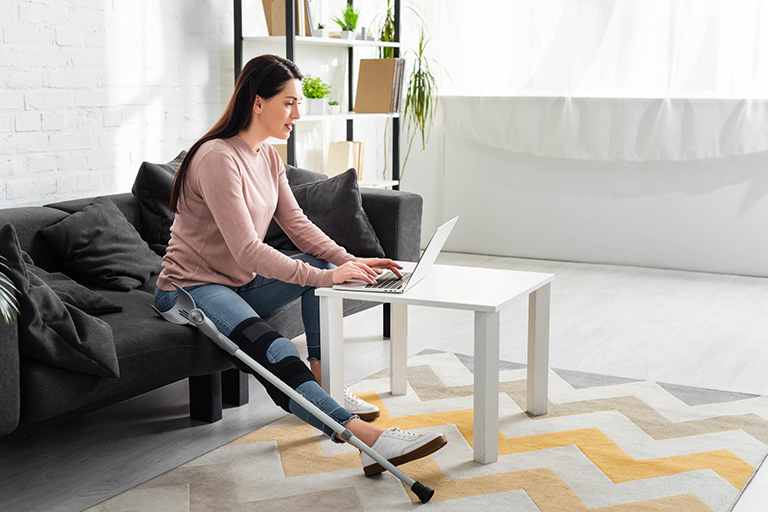

Falls from height are the leading cause of fatal workplace injury in the United Kingdom. According to the Health and Safety Executive (HSE), falls from height account for the largest single category of fatal workplace accidents year after year. Many thousands more workers suffer life-changing injuries that are never fatal but permanently alter their quality of life.
The Work at Height Regulations 2005 place strict duties on employers to prevent falls before they happen. When an employer fails in those duties — through unsafe scaffolding, defective ladders, absent guardrails, or failure to provide a safety harness — and you are injured, you are entitled to claim compensation.
NJS Law handles falls from height claims across England and Wales on a No Win, No Fee basis. . This page is part of our Accident at Work Claims service.
There are no upfront costs, no hidden fees, and no financial risk to you. If we do not win your case, you pay nothing.
Trustpilot
Combined Legal Experience
Single Settlement Secured
Regulated - No. 8006550
Personal Injury Panel accreditation
Fall from height are the most common workplace accident — and most are preventable.
If your employer failed to maintain a safe environment, NJS Law will help you claim.
Discover today if you’re eligible to make a claim.
Complete the form below, email or call our slip and trip claims solicitors for free, no-obligation advice.
A fall from height claim is a legal claim for compensation against your employer — or another responsible party such as a principal contractor or site owner — when a failure to comply with work at height safety law causes you to fall and suffer injury.
Under the Work at Height Regulations 2005, “work at height” means any place — including at or below ground level — where a person could be injured if they fell from it. A fall from a stepladder, a loading bay edge, a raised platform, or a mezzanine floor is as much a “fall from height” in legal terms as a fall from a roof or scaffold.
Common scenarios include:
The claim is made against your employer’s Employers’ Liability insurance, held under the Employers’ Liability (Compulsory Insurance) Act 1969. You are never claiming directly from your employer’s pocket.
The overarching duty on all employers to ensure, so far as is reasonably practicable, the health, safety, and welfare of all employees — including protection from falls when working at any height.
The primary legislation governing work at height. Employers must: avoid work at height where reasonably practicable; where it cannot be avoided, prevent falls using collective protective measures (scaffolding, guardrails, nets); where collective measures are insufficient, arrest falls (harnesses, airbags). Equipment used for work at height must be suitable, stable, properly maintained, and inspected. The Regulations impose specific requirements for ladders, scaffolds, MEWPs, and fragile surfaces.
Applies to all equipment used for work at height — ladders, stepladders, access towers, and MEWPs. Equipment must be suitable for its purpose, properly maintained, and only used by trained workers. A defective ladder or scaffold that causes a fall is a breach of both PUWER and the Work at Height Regulations.
Where the claimant is a visitor to premises (rather than an employee), the occupier owes a common duty of care to ensure the premises are reasonably safe. This is relevant for contractors, visitors, and self-employed workers who are not the direct employee of the occupier.
You may be able to make a fall from height claim if you are:
On construction sites, multiple parties may share liability — your direct employer, the principal contractor, the site owner, and the scaffold contractor may all owe you a duty of care. NJS Law identifies all available defendants to maximise your recovery.
You may still be entitled to claim even if you were partly responsible — for example, if you were using a ladder incorrectly. Contributory negligence reduces your compensation proportionally but does not end the right to claim. See our guide:Can I Claim If the Accident Was Partly My Fault?
Solicitors use the Judicial College Guidelines, 18th edition (April 2026) to estimate the value of your injury. Common injuries from falls from height include:
Injury Type | Severity | Approximate Range |
Wrist / forearm fracture | Minor to moderate | £3,530 – £29,260 |
Leg fracture | Moderate to serious | £27,760 – £130,930+ |
Ankle fracture | Moderate to severe | £13,740 – £69,700 |
Back injury (fracture or disc damage) | Moderate to severe | £12,510 – £169,400+ |
Spinal cord injury — partial paralysis | Serious to severe | £65,740 – £205,580+ |
Spinal cord injury — complete paralysis (paraplegia) | Very severe | £205,580 – £379,100+ |
Spinal cord injury — tetraplegia | Most severe | £324,600 – £493,000+ |
Head / brain injury | Minor to severe | £2,690 – £379,100+ |
Pelvis / hip fracture | Moderate to severe | £11,820 – £130,930+ |
Psychological injury / PTSD | Moderate to severe | £9,980 – £100,670+ |
In addition to your injury award, you can recover all financial losses including lost earnings (past and future), medical treatment, rehabilitation, care costs (professional and family), home and vehicle adaptations, and travel to medical appointments. In the most serious cases — spinal cord injuries and traumatic brain injuries — future care and loss of earnings form the largest part of the award and can run to several million pounds. See: General Damages vs Special Damages and Average Compensation Payouts.
NJS Law has recovered over £6 million for injured workers in 2024–25 alone.
Falls from height frequently cause serious injuries. Go to A&E immediately. Ensure the medical notes record that the injury was caused by a fall from height at work — this contemporaneous record is critical evidence.
Report the fall to your employer as soon as you are able and ensure it is entered in the workplace accident book. Ask for a copy. Falls involving specified injuries (fractures, hospitalisations) must be reported by your employer to the HSE under RIDDOR 2013 — your solicitor can check whether this was done.
If possible, photograph the location of the fall and the equipment involved — the ladder, scaffold boards, MEWP, or edge from which you fell. Capture any missing guardrails, defective rungs, absent edge protection, or inadequate scaffolding. Take photographs before anything is repaired or removed.
Request CCTV footage immediately — most employers overwrite within 30 days. Collect names and contact details of any colleagues who witnessed the fall or are aware of previous complaints about the access equipment.
Speak to one of our specialist employer liability solicitors for a free, no-obligation assessment. In fall from height cases we will identify all potential defendants — your employer, the principal contractor, the scaffold contractor, and the equipment owner — to ensure maximum recovery.
We gather all available evidence — including scaffold inspection certificates, LOLER examination records, risk assessments, method statements, training records, and the RIDDOR report — and issue a formal Letter of Claim to the relevant insurer(s).
You will be referred to an independent medical expert — and in serious cases a consultant spinal surgeon, neurologist, or orthopaedic surgeon — to assess your injuries and long-term prognosis. This report is central to valuing your claim.
We present a full Schedule of Loss and negotiate the best possible settlement. Around 95% of claims settle without going to court. In serious cases we also apply for interim payments to help with immediate financial needs during the claim.
Under the Limitation Act 1980, there are strict time limits for bringing a personal injury claim. Act within these limits — missing the deadline is the most common reason valid claims cannot be pursued.
Claim Type | Time Limit | Notes |
Standard workplace accident | 3 years from date of accident | The most common scenario |
Industrial disease or occupational illness | 3 years from date of diagnosis (or “date of knowledge”) | Applies where symptoms developed gradually over time |
Child injured at work (or as a visitor) | 3 years from their 18th birthday | A parent or guardian can bring a claim at any time before the child turns 18 |
Person lacking mental capacity | Time limit suspended during period of incapacity | A litigation friend manages the claim |
Fatal workplace accident | 3 years from date of death | Dependants may claim under the Fatal Accidents Act 1976 |
For a full explanation of all time limit exceptions and what to do if you are approaching your deadline, see our guide: Personal Injury Claim Time Limits in England and Wales.
For guidance on how long the claim process itself takes once you have started: How Long Does a Personal Injury Claim Take?
Case highlight
Our client arrived for work early one morning when his forklift truck struck a pothole hidden under murky water at the loading bay. The impact caused severe spinal injuries, leaving him unable to move. What followed was four years of rehabilitation, specialist hospitals, and legal complexity — with NJS Law by his side throughout.
“Nichola, my solicitor, took on two professional barristers who got my claim going. Without NJS Law, I wouldn’t have gotten this far. They helped me far beyond things I wouldn’t have known about.”
— NJS Law client, £3.7 million settlement
Settlement
£3,700,000
Injury type
Severe spinal injury
Cause
Hidden pothole — employer negligence
Duration
4-year case
Interim payments
Yes — housing, mobility, therapy
Outcome
Full independence restored
Our client suffered serious leg injuries when faulty workplace equipment malfunctioned without warning, causing a heavy load to fall directly onto both legs.
The injuries included broken bones, severe ligament damage, an extended hospital stay, ongoing pain, and long-term mobility issues.
NJS Law successfully showed that the accident was caused by defective or poorly maintained equipment, and that the employer had failed to keep the workplace equipment safe and fit for purpose.
Our client suffered a broken leg after tripping over a wooden pallet that had been left in a cluttered and poorly maintained workspace while they were operating an electric pump truck.
As they tried to manoeuvre safely around colleagues, they fell backwards over the pallet, which had been left leaning against a pipe.
The pump truck then moved forward and trapped their leg.
NJS Law proved that the accident was caused by unsafe workplace conditions, poor housekeeping, and a failure to remove obvious hazards.
Our client was sent overseas for a work project and was repeatedly required to lift and carry heavy items without suitable lifting equipment, assistance, or adequate manual handling training.
The client suffered a serious back injury, required a four-day hospital stay, experienced long-term pain and mobility difficulties, and needed time off work to recover.
Although the accident happened abroad,
NJS Law successfully established that the UK-based employer had breached its duty of care.
Our client suffered a serious arm injury while trying to clear a printer jam at work.
The printer had been positioned tightly against a wall, making it difficult to access safely.
When the client tried to move it into a safer position, they felt sudden pain and heard three sharp snaps in their arm.
The injury caused muscle and soft-tissue damage, required medical treatment and rehabilitation, led to time off work, and resulted in ongoing pain, weakness, and reduced mobility.
NJS Law proved that the employer had failed to provide a safe workplace setup, proper risk assessments, and safe procedures for dealing with equipment faults.
All accident at work claims at NJS Law are handled under a Conditional Fee Agreement (CFA) — what most people call No Win, No Fee. Here is exactly what that means for you:
You can read a full plain-English explanation of how No Win, No Fee agreements work at No Win No Fee Claims Page.
Our dedicated solicitors specialise in slip and trip claims and have decades of combined experience securing fair compensation. We understand how stressful an accident can be and provide clear, supportive guidance throughout the process.
Contact us today for a free consultation and move forward with confidence under our No Win No Fee promise. Taking early legal advice can strengthen your claim and protect your rights.
680,000 workers were injured in the workplace in 2024–25. You may be entitled to compensation.
Being injured at work can feel overwhelming, especially if you’re unsure of your rights or worried about your job. Our expert solicitors provide clear, honest advice and manage every aspect of your claim, so you can focus on recovery while we fight for justice.
Our specialist EL/PL team brings decades of expertise across workplace injury, employer liability, and serious injury claims.
Authorised by the Solicitors Regulation Authority (no. 8006550).
Rated Excellent from 764 Trustpilot reviews and 4.7★ from 796 Google reviews. Top 10 UK Personal Injury Lawyers on Trustpilot.
£3.7M forklift settlement · £135,000 Manchester worker · £33,000 overseas injury · £18,000 arm injury. Real outcomes for real clients.
Making an accident at work claim can feel overwhelming. Below we’ve answered the most common questions our clients ask. These cover eligibility, time limits, compensation, and what happens if your case goes to court.
Under the Work at Height Regulations 2005, “work at height” means any place where, if precautions were not taken, a person could fall a distance liable to cause personal injury. This includes working on roofs, scaffolding, ladders, and MEWPs — but also working at or below ground level where a fall into an excavation or pit is possible. There is no minimum height threshold.
Yes, in most circumstances. Under PUWER 1998, your employer is responsible for ensuring all equipment used at work — including equipment you bring yourself — is suitable, properly maintained, and appropriate for the task. If your employer directed you to use a ladder for a task where a safer access platform should have been provided, they may be liable regardless of who owned the ladder.
Both your employer and the scaffolding contractor may be liable. Your employer has a duty to ensure that any scaffold erected for use by their workers is safe and compliant — they cannot simply delegate this responsibility to the scaffold contractor. The scaffold contractor may also be directly liable for defective erection or inadequate inspection. NJS Law will identify all available defendants.
Yes. There is no minimum height for a valid claim — what matters is whether your employer failed in their legal duty and whether that failure caused your injury. Falls from even modest heights can cause serious fractures, spinal injuries, and head injuries. The severity of your injury determines the value of your claim.
Yes. There is no minimum height for a valid claim — what matters is whether your employer failed in their legal duty and whether that failure caused your injury. Falls from even modest heights can cause serious fractures, spinal injuries, and head injuries. The severity of your injury determines the value of your claim.
This is a common defence. However, if your employer directed you to work there, if working at height was part of your role, or if the area was accessible without adequate signage or physical barriers preventing access, your employer may still be liable. Your solicitor will obtain all relevant risk assessments, method statements, and witness evidence to establish what you were instructed to do.
Under RIDDOR 2013, employers must report to the HSE: any work-related accident that causes a worker to be away from work for more than seven days; any specified injury (including fractures, amputations, crush injuries); and any dangerous occurrence. Most significant falls from height will trigger a RIDDOR reporting obligation. If your employer failed to report when they were required to, this itself may be evidence of poor safety compliance — though it does not prevent you from claiming.
Yes. Under CDM 2015, the principal contractor has a duty to ensure the safety of all workers on site — including subcontractors. Your direct employer may also be liable. NJS Law frequently handles construction fall from height claims involving multiple defendants.
If a family member has been killed in a fall at work, dependants can bring a claim under the Fatal Accidents Act 1976 for loss of financial dependency (income and services provided by the deceased), as well as a bereavement award (currently £15,120 for qualifying relatives). The estate can also claim for the deceased’s pain, suffering, and financial losses between the accident and death under the Law Reform (Miscellaneous Provisions) Act 1934. NJS Law handles fatal accident claims with care and sensitivity.
Yes — in serious cases where liability has been admitted. Your solicitor can apply to the court for an interim payment, a sum paid on account of your final compensation to help with immediate financial needs such as lost wages, medical costs, or care. This is particularly valuable in spinal injury or serious fracture cases. For more details: Interim Payments in Personal Injury Claims
Our solicitors have written a library of plain-English guides to help you understand your rights. Read the articles most relevant to your situation:

Injured at work? Learn the key steps to take straight away to protect your health, evidence, and legal rights.

Find out how workplace injury compensation is calculated and what factors can affect the value of your claim.

Learn how No Win No Fee accident at work claims work and how you can start a claim without upfront legal fees.
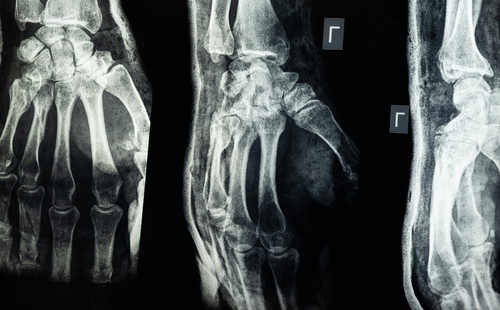
A simple guide to the personal injury claims process, from starting your claim to reaching a settlement.

Understand your rights if you are worried about your job after making a workplace injury claim.

Learn what RIDDOR is, which workplace accidents must be reported, and how it may support your claim.

Find out your rights after a construction site accident and how to claim compensation for your injuries.

Learn how PUWER 1998 protects workers injured by unsafe machinery, tools, or workplace equipment.

Understand when you may be able to claim compensation after a fall from height at work.

Find out what affects the length of a personal injury claim and what to expect during the process.

Learn how PUWER 1998 protects workers injured by unsafe machinery, tools, or workplace equipment.

Learn how personal injury payouts are assessed and why compensation varies from case to case.
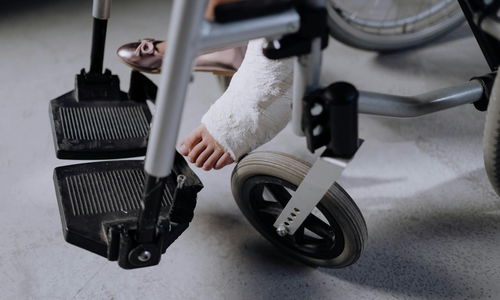
Understand the key time limits for making a personal injury claim in England and Wales.

Find out how partial fault can affect your personal injury claim and compensation amount.

Learn the difference between compensation for pain and suffering and compensation for financial losses.
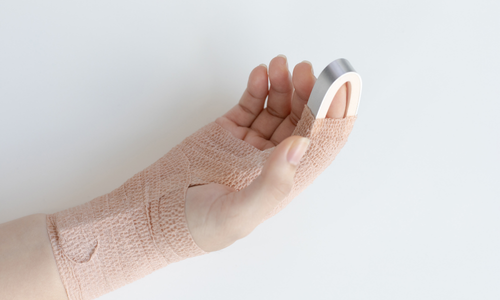
Find out when interim payments may be available before your personal injury claim fully settles.
For fast, friendly affordable legal advice. Contact a member of our team today.