COMPENSATION FOR
Falls from scaffolding, ladders, roofs, and mezzanine floors cause some of the most catastrophic workplace injuries in the UK. If your employer failed to comply with the Work at Heigh Regulations 2005, you are entitled to claim – and NJS Law will fight to win you every penny.
Take 2 minutes – No obligation – Strictly confidential
Discover today if you’re eligible to make a claim.
Complete the form below, email or call our accident at work solicitors for free, no-obligation advice.
NON-FATAL FALL INJURIES ANNUALLY
FATAL FALLS FROM HEIGHT PER YEAR (HSE)
OF ALL FATAL WORKPLACE ACCIDENTS
Falls from height are the single largest cause of workplace fatalities in Great Britain, consistently accounting for around 40% of all deaths at work according to the Health an Safety Executive (HSE). They are also a leading cause of serious non-fatal injuries – including spinal cord damage, traumatic brain injuries, multiple fractures, and life-changing disability.
If you or a loved one has suffered a fall from height at work, it is very likely that your employer failed in a legal duty. The Work at Height Regulations 2005 place strict, specific obligations on every employer and contractor who directs or manages work above ground level. Breaches of these regulations form the legal basis for the majority of fall from height compensation claims handled by NJS Law.
Our specialist solicitors have extensive experience with the full range of fall from height scenarios – from a worker falling from an unsecure ladder on a domestic construction site to a catastrophic fall from scaffolding on a major commercial development. If you have been injured due to unsafe working conditions, our team can advise you on making a personal injury claim. We operate on a strict No Win No Fee basis, so you face no financial risk whatsoever in pursuing your claim.
Call us on 0800 6525 656 or complete the free assessment form above to find out exactly where you stand.
NJS Law handles compensation claims arising from every type of fall from height in the workplace. Click on your type of fall to understand your specific claim.
AVG FALL HEIGHT: 5-15 METRES
Scaffolding falls are among the most serious workplace accidents, frequently resulting in fatal or catastrophic injuries. Employer failures typically include improperly erected scaffolding, missing guard rails or toe boards, unsecured boards, overloaded platforms, or failing to ensure workers are wearing fall arrest harnesses.
TRANSPORT & LOGISTICS SECTOR
Falls from lorries, trailers, and loading docks are a frequent cause of serious injury in the logistics and transport industry. The height may be relatively modest but the consequence of landing on a concrete yard - often without warning - can be catastrophic. Safe loading procedures and vehicle access equipment must be provided.
CONSTRUCTION & INDUSTRIAL SITES
Falling through an unprotected floor opening, an uncovered excavation, or a fragile surface can result in an unexpected fall of significant depth. These accidents are almost always entirely preventable with appropriate covers, barriers, and warning signs. Failure to protect openings is a serious breach of the Work at Height Regulations.
Don’t wait — the 3-year time limit can run out faster than you think. Get your free assessment today.
To win your fall from height claim. Our accident at work solicitors at NJS Law must demonstrate that your employer breached their legal duty of care. These are the most common breaches we encounter.
Before any work at height begins, employers must carry out a documented risk assessments identifying the hazards, evaluating the risks, and determining the control measures to be put in place. Failure to conduct or adequately record a risk assessment is both a criminal offence and a clear basis for civil liability.
Guard rails, mid-rails, and toe boards must be provided at any working platform or roof edge above two metres where workers could fall. The minimum guard rail height is 950mm. Many employers cut corners by omitting edge protection entirely or by using non-compliant temporary barriers that give workers false confidence.
All work in height equipment – from ladders and scaffold boards to harnesses and anchor points – must be regularly inspected and any defective item taken out of service immediately. NJS Law frequently encounters cases where worn harnesses, cracked ladder rungs, and decayed scaffold boards were in use despite being clearly unfit.
Workers must be competent before undertaking any work at height. Competence requires appropriate training, experience, and – for higher risk activities – formal qualifications such as PASMA (for mobile tower scaffolds) or IPAF (for MEWPs). Sending an untrained worker up a scaffolding tower is a clear breach of the employer’s duty.
When collective protection (guard rails, nets, airbags) cannot eliminate the fall risk, employers must provide suitable personal fall protection equipment – harnesses, lanyards, and certified anchor points. PPE must be appropriate for the work being done, correctly fitted, and workers must be trained in its use.
Ladders are frequently misused as a convenient shorthand for any work at height, even when the task duration, nature, or height clearly warrants a scaffold, MEWP, or podium steps instead. The Work at Height Regulations require employers to choose the safest practicable means of access – the convenience of a ladder is not sufficient justification for use.
Even where correct procedures are documented, employers must actively monitor compliance. A site manager who observes unsafe work at height and does nothing is just as liable as one who never put the procedures in place. NJS Law examines site management records and witness accounts to establish what supervisors knew and failed to act upon.
In the construction and maintenance industries, workers are frequently placed under commercial pressure to complete tasks faster than is safe. If your employer or contractor encouraged you to skip safety measures to meet a deadline – verbally or through the culture of the site – that pressure can itself constitute evidence of negligence.
Falls from height cause a wide spectrum of injuries – from broken wrists to catastrophic spinal damage. The compensation you receive reflects both your physical injuries and your total financial losses.
Compensation is calculated using the Judicial College Guidelines. The figures below are indicative ranges for general damages (pain and suffering) only, and do not include special damages such as lost earnings or medical costs, which are claimed separately and in addition.
| Injury Type | Severity | Indicative Range |
|---|---|---|
| Back Injury (Manual Handling) | Minor soft tissue | £2,300 – £11,730 |
| Back Injury | Moderate — some permanent effect | £11,730 – £36,390 |
| Back Injury | Severe — significant disability | £36,390 – £151,070 |
| Knee Injury | Minor to moderate | £14,840 – £26,190 |
| Shoulder Injury | Moderate — limited movement | £12,770 – £19,200 |
| Hand / Finger Injury | Serious crush / amputation | £14,450 – £96,160 |
| Leg Fracture (Fall from Height) | Simple to severe | £9,110 – £127,530 |
| Head / Brain Injury | Minor to very severe | £2,210 – £379,100 |
| Industrial Deafness | Partial to total hearing loss | £11,380 – £45,540 |
These are general damages only. Special damages (lost wages, medical bills, travel costs, care costs) are claimed separately and can significantly increase total compensation. Contact NJS Law for a personalised assessment.
These are claimed in addition to your injury damages and can significantly increase the total compensation you receive.
For a clearer understanding of how compensation is assessed, see our guide→ Accident at Work Claims: How Much Compensation Could You Get?
Don’t wait — the 3-year time limit can run out faster than you think. Get your free assessment today.
The strength of a fall from height claim depends on evidence. NJS Law acts quickly to secure and preserve every piece before it is lost or destroyed.
Accident Book & Reports
Every workplace accident must be recorded in the accident book. We obtain this record alongside any RIDDOR reports submitted to the HSE, which are required for falls resulting in specified injuries or more than seven days’ incapacity.
Site Photographs & CCTV
We act quickly to secure CCTV footage and site photographs taken immediately after the incident, before they are deleted or overwritten. Photographs of the equipment, the working platform, and the fall location are critical evidence.
Scaffolding Inspection Records
Scaffolding must be formally inspected before first use and after any event likely to affect its safety. We obtain all scaffold inspection records (Scafftag, TG20 compliance documents) to identify any failures in the inspection regime.
Risk Assessments & Method Statements
Employers must produce documented risk assessments and method statements (RAMS) for work at height. We obtain and analyse these documents to identify whether the specific hazard that caused your fall was identified – and whether adequate controls were in place.
Training Records
We request all training records relating to you and your colleagues. If your employer cannot demonstrate that you received appropriate training in work at height safety, this significantly strengthens your claim for compensation.
Witness Statements
We identify and take detailed statements from witnesses as early as possible – before memories fade and before colleagues feel pressure not to cooperate. Witness evidence is often decisive in disputed liability cases.
Medical Records & Expert Evidence
We obtain your complete medical records and, where appropriate, instruct independent medical and rehabilitation experts to assess the full extent and future impact of your injuries – ensuring no element of your loss is undervalued.
HSE Investigation Records
Serious falls from height are investigated by the HSE. We obtain any HSE investigation reports. Improvement Notices, or Prohibition Notices issued to your employer – these documents can be compelling evidence of breach of duty in your civil claim.
Financial Loss Documentation
We work with you to document every financial loss flowing from your injury – from payslips and P60s to medical invoices, care diaries, and receipts – ensuring your special damages claim is comprehensive and robustly evidenced.
From your first call to final settlement – our streamlined five-stage process keeps your claim moving efficiently while you focus on recovery.





Call or submit the form. A specialist solicitor reviews your case within 24 hours. Free. No obligation
We explain the Conditional Fee Agreement clearly before you sign anything. Transparent success fee agreed upfront.
We gather all evidence, instruct experts, secure CCTV, obtain inspection records, and build your case.
We send a Letter of Claim, disclose evidence, and negotiate hard with your employer’s insurer for a full settlement.
Settlement paid directly to you. Success fee deducted only now. You keep the majority of your compensation.
I am item content. Click edit button to change this text. Lorem ipsum dolor sit amet, consectetur adipiscing elit. Ut elit tellus, luctus nec ullamcorper mattis, pulvinar dapibus leo.
I am item content. Click edit button to change this text. Lorem ipsum dolor sit amet, consectetur adipiscing elit. Ut elit tellus, luctus nec ullamcorper mattis, pulvinar dapibus leo.
I am item content. Click edit button to change this text. Lorem ipsum dolor sit amet, consectetur adipiscing elit. Ut elit tellus, luctus nec ullamcorper mattis, pulvinar dapibus leo.
→ Find more about Why Choose NJS Law
Don’t wait — the 3-year time limit can run out faster than you think. Get your free assessment today.
NJS Law handles all types of accident at work claims across Manchester and the wider North West of England.
Back injuries, hernias, and musculoskeletal damage caused by improper lifting techniques, lack of training, or being asked to lift loads that are too heavy.
Falls, struck-by incidents, electrical accidents, and trench collapses. Construction workers in Manchester face high risks when employers fail to comply with CDM regulations.
Wet floors, uneven surfaces, trailing cables, or poor lighting can cause serious injuries. If your employer failed to maintain safe walkways, you have a strong claim.
Crush injuries, amputations, and lacerations caused by unguarded machinery, defective equipment, or a failure to provide adequate training on safe operation.
Warehouse and logistics accidents involving forklifts, HGVs, and other vehicles. Often caused by poor traffic management systems or inadequate driver training.
Chemical burns, respiratory illness, or skin conditions caused by exposure to dangerous substances without proper PPE, training, or COSHH-compliant risk assessments.
Industrial deafness, vibration white finger (HAVS), mesothelioma, asbestosis, and occupational asthma — conditions that may develop over years of employer negligence.
We make the claims process simple and efficient so you can settle your case faster.
Don’t wait — the 3-year time limit can run out faster than you think. Get your free assessment today.
Being injured at work can feel overwhelming, especially if you’re unsure of your rights or worried about your job. Our expert solicitors provide clear, honest advice and manage every aspect of your claim, so you can focus on recovery while we fight for justice.

Accredited & Experienced
Trusted by Our Clients & The Profession
Stay informed with practical advice and in-depth guides on workplace injury claims. From understanding liability for slips, trips, and falls to learning how compensation is calculated, our resources are designed to give you clarity and confidence.
Browse the latest articles to see what factors affect compensation. These insights can help you understand your rights and what to expect when making a claim.
Our accident at work solicitors combine decades of experience with a client-first approach. We know how difficult this time can be — and we’ll stand by your side throughout your claim.
Contact us today for a free consultation and take the first step toward securing the compensation you deserve.
Learn more about real accident at work claims and how compensation is secured. Our latest case studies and legal insights show how different workplace injuries are handled, the challenges clients face, and the outcomes our solicitors achieve.
From slips, trips, and lifting injuries to serious industrial accidents, these stories highlight the importance of expert legal support in securing fair compensation.
Browse the latest accident at work resources below:

£18,000 Compensation for a Preventable Arm Injury at Work
Under the Health and Safety at Work Act 1974, every employer in the United Kingdom has a general duty of care to ensure, so far as is reasonably practicable, the health, safety, and welfare of all employees. More specific duties are set out in regulations including the Manual Handling Operations Regulations 1992, the Provision and Use of Work Equipment Regulations 1998 (PUWER), the Personal Protective Equipment at Work Regulations 1992, the Work at Height Regulations 2005, and the Control of Substances Hazardous to Health Regulations 2002 (COSHH).
When an employer breaches these duties — through inadequate training, lack of safety equipment, poor risk assessments, defective machinery, or simple indifference to employee welfare — and an employee suffers injury as a direct result, that employee has a legal right to pursue a compensation claim. You can learn more about your rights after a workplace accident in our guide on legal rights following a workplace accident in the UK.
NJS Law’s accident at work solicitors are experts in identifying employer negligence and building strong cases under both common law and statute. If you have been injured at work, contact us today to discuss your rights in a free, confidential consultation.
For fast, friendly affordable legal advice. Contact a member of our team today.
Leanne studied the Bar Vocational Course at the BPP Law School in Leeds, and graduated with Very Competent, before cross-qualifying as a Solicitor in 2013.
Leanne began her legal career in 2009, specialising in Personal Injury claims, with experience across Road Traffic Accidents, Employer and Public Liability cases, and Medical Negligence matters.
As Head of Personal Injury, Leanne is instrumental in driving the growth and evolution of the Employer and Public Liability team, along with the Medical, Dental, and Cosmetic Negligence departments.
In her personal life Leanne enjoys holidaying and days out with her young family.

Angela is a Senior Personal Injury Solicitor Advocate having qualified in January 2011.
She specialises in employer liability, public liability and occupiers liability claims, with the ultimate aim of providing an efficient service, ensuring her clients receive the maximum amount of compensation they deserve!
She is thrilled to be a part of NJS Law and to be working for a well-respected firm that always puts clients first.
Angela strives to develop a strong relationship with her clients so that she is in a position to advise the best options in relation to their claim. At all times providing exceptional standards of service and regular updates on how her clients claim is progressing. Angela is very easy going and dedicated to her work.
When not working, Angela looks after her pygmy goats, pigs, rescued chickens and ducks.

Andrew started his career in the insurance sector over 25 years ago and has worked in many different areas of the industry, gaining a wealth of knowledge across multiple disciplines including motor claims, personal injury, medical negligence, and public and employer’s liability matters.
He holds a Law Degree, which complements his extensive practical experience and underpins his broad legal expertise.
He is friendly, adaptable, and hard-working, and will always go the extra mile for both clients and colleagues alike.
A dedicated family man, Andrew enjoys spending his spare time watching football and rugby, and can still be persuaded to play the occasional 5-a-side game.

Joanne has worked in law since leaving School.
Joanne is a Senior Litigation Executive with over 30 years’ experience in all aspects of RTA litigation and also has diversified and now also deals with employers liability claims, occupiers liability claims and public liability matters.
In her spare time she enjoys making memories with her family and friends.

Mark completed his studies through the Chartered Institute of Legal Executives and was admitted as a Fellow of CILEX in 2006.
Mark has worked within the personal injury sector for over 30 years, dealing with a varied range of personal injury matters from inception to trial.
Mark deals with Employment and Public Liability personal injury matters.
In his spare time, Mark is an FA Licensed coach working with children at grass roots level. He enjoys listening to music and walking his Labrador.

Curtis has over 10 years’ experience acting for Claimants across a wide range of personal injury matters. He holds a Law degree and is a Fellow of the Chartered Institute of Legal Executives (FCILEX), reflecting his high level of expertise and commitment to the legal profession.
He is knowledgeable, hard-working and a skilled negotiator who consistently fights to achieve the best possible results for his clients, whether that is securing a strong settlement or arranging early rehabilitation and treatment to support clients on their road to recovery.
Curtis has handled a wide variety of claims throughout his career, ranging from head injuries to loss of limbs, and is adept at identifying and meeting each client’s individual needs.
In his free time, Curtis enjoys spending time with his family and has a keen interest in tabletop gaming, including Warhammer, Dungeons and Dragons, and Magic: The Gathering.
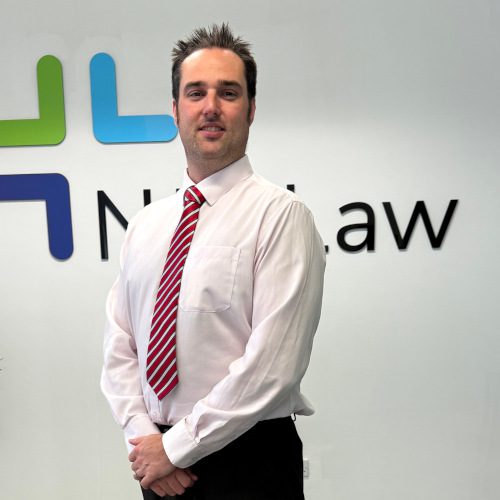
Nicole has worked in the legal sector since leaving school. She began her career as assistant Personal Injury and Medical Negligence assistant.
Nicole has since progressed into her current role as a Litigation Executive here at NJS Law, where she now manages her own caseload of public liability, occupiers’ liability, and employers’ liability claims. Alongside her full-time role, she is also studying towards a law degree part-time, continuing to build on her legal knowledge and expertise.
In her spare time, when she isn’t studying, Nicole loves to go on holiday and spend time with her springer spaniel.

Sian started her career in law over 17 years ago and has worked in various different areas of the industry, including costs and credit hire. Predominantly, her career has flourished within the personal injury sector, dealing with a wide variety of claims such as road traffic accidents, employer’s liability, public liability and occupiers’ liability.
She has successfully completed her Level 6 CILEX qualification and is an MCILEX Advanced Paralegal, demonstrating her strong technical knowledge and commitment to professional development.
She always strives to provide her clients with the best service possible and thrives on achieving the best achievable outcome in relation to their claims. She prides herself on being warm, sympathetic and understanding when dealing with clients, particularly when having conduct of more sensitive matters.
Sian is friendly and hard-working and is not averse to going above and beyond what is required in order to achieve desired results.
She is a devoted family lady and thoroughly enjoys spending days out with her family and coming up with new and fresh adventures for them to embark upon.
Sian also likes to get involved in charitable causes, enjoys reading and, whilst she does not always have the time, enjoys her pastime of horse riding as and when she can.