

An injury on someone else’s property can be shocking, painful and confusing. Whether the accident happened in a supermarket, restaurant, rented accommodation, public building or even at a friend’s home, the steps you take in the minutes, hours and days that follow can significantly affect both your recovery and your legal rights.
Many people are unsure what to do. Some worry about causing trouble. Others assume the accident was simply bad luck. However, UK law places clear responsibilities on those who control property. If reasonable safety standards were not met and you were injured as a result, you may be entitled to compensation.
Acting promptly helps protect:
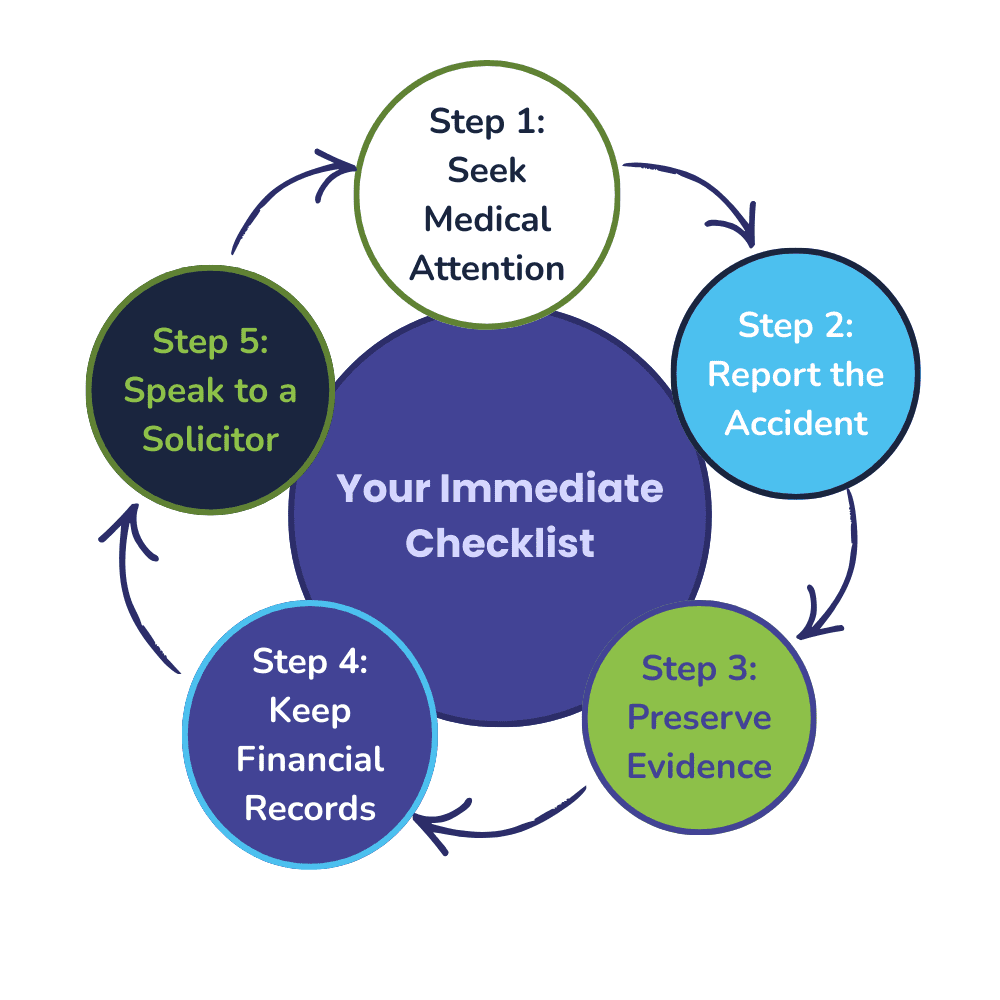
This guide explains exactly what you should do immediately after being injured on someone else’s property and why each step matters.
If you’ve been injured on someone else’s property — whether in a shop, restaurant, public building, rented accommodation or even a friend’s home — knowing what to do immediately can protect:
Many people feel awkward about pursuing a claim, especially if the accident happened at a friend’s house or small business. Others assume it was “just bad luck.”
However, UK law places clear legal duties on those who control property. Under the rules of occupier liability in the UK those responsible for premises must take reasonable steps to keep visitors safe. If those duties are breached and you are injured, you may be entitled to compensation.
Taking the right steps early can make a significant difference to both your recovery and the strength of any potential claim.

Your health must always come first.
Even injuries that seem minor — including soft tissue injuries, head injuries, sprains or back pain — can worsen over time.
You should:
Medical records are crucial evidence. They help prove:
Delaying medical treatment can weaken both your recovery and your legal claim.
You should notify the person or organisation responsible for the property as soon as possible.
This could be:
If the accident happened in a business premises, ask for the incident to be recorded in their accident book. Request a copy or take a photograph.
Ensure the report includes:
If the accident happened at a private property (for example, a friend’s house), follow up with a polite written message confirming what occurred. This creates a record.
Early evidence is often the key to proving occupier liability.
If you are able, you should:
If CCTV may have captured the incident, request that footage be preserved immediately. Many systems automatically overwrite footage within days.
If your injury leads to financial losses, these may be recoverable.
Keep records of:
These are known as special damages and can significantly increase the value of your claim.
Many people hesitate to claim because:
However, most occupier liability claims are handled by insurance — not paid personally by the homeowner or business.
Early legal advice ensures:
When you are injured on someone else’s property, you need more than general advice — you need clear, strategic legal guidance from solicitors who understand occupiers’ liability law, premises safety obligations, and insurer defence tactics.
At NJS Law, we act exclusively in the interests of injured individuals. We understand the physical, financial and emotional pressure that follows a workplace accident. Our role is to remove that pressure and handle the legal process with clarity and confidence. You can read what clients say about our service on our NJS Law reviews.
When you instruct NJS Law, you can expect:
We are experienced in handling claims involving:
Restaurant and hospitality venue accidents
Accidents in rented or managed properties
Injuries caused by unsafe public buildings
Poor maintenance or repair issues
Accidents in private homes
Every case is handled with attention to detail and a focus on achieving the best possible outcome for you.
If you have been injured on someone else’s property, seeking early legal advice can make a significant difference to the strength and value of your claim.
Contact our Occupier Liability Solicitors today for a confidential discussion about your situation. We will explain:
There is no obligation to proceed – just clear professional advice.
Call us today or complete our online enquiry form to speak with a specialist accident at work solicitor.
Your recovery matters. Your rights matter.
Let NJS Law help you secure the compensation you deserve.
→ Learn more About Us
Yes.
Even if you were partly responsible for the accident, you may still be entitled to compensation under the principle of contributory negligence.
For example, if you slipped while distracted by your phone but there was also an unmarked wet floor, a court may find both parties share responsibility.
Your compensation may be reduced to reflect your share of responsibility, but you are not automatically prevented from claiming.
In most cases, you have three years from:
This is the standard time limit for personal injury claims in the UK.
Exceptions apply for:
It is important to seek legal advice early, as court proceedings must be issued within the limitation period.
The absence of warning signs can strengthen your claim — but it is not the only factor.
An occupier must take reasonable steps to make premises safe. In some cases, simply putting up a sign may not be enough if:
Each case depends on the specific facts and whether reasonable care was taken.
Yes.
Many people feel uncomfortable about claiming against a friend or family member. However, most homeowner insurance policies include public liability cover.
In most cases:
If a homeowner failed to repair or warn about a known hazard and you were injured as a result, you may have a valid claim.
Common examples include:
The key issue is whether the occupier knew (or should reasonably have known) about the hazard and failed to address it.
Strong evidence can include:
Early evidence often makes a significant difference to the success of a claim.
Most occupier liability claims settle without going to court.
If liability is admitted and medical evidence is agreed, settlement can often be reached through negotiation.
Court proceedings are usually only necessary if:
Even if court proceedings are issued, most cases still settle before trial.
Compensation depends on:
Minor injuries may result in modest awards, while serious orthopaedic, spinal or head injuries can attract significantly higher compensation.
Every case is assessed individually based on medical evidence and financial losses.
In most cases, claims are handled through insurance.
Businesses and homeowners carry liability insurance specifically for situations like this. A claim is made against the insurer — not the individual personally.
Professional organisations understand that accidents happen and that insurance exists to protect both parties.
Get in touch using the form below or via the following methods: