

If you’ve suffered an accident at work, knowing what to do immediately can protect:
Many people feel unsure, worried about their employer’s reaction, or assume their injury is “just one of those things.” However, UK law places clear responsibilities on employers to protect their staff.
This guide explains the exact steps you should take.
Your health must always come first.
Even if your injury appears minor, certain conditions — including whiplash, soft tissue injuries, concussions and back injuries — can worsen over time.
You should:
Medical records are vital evidence. If you later bring an accident at work claim, your medical notes will help prove:
Failing to seek medical attention early can weaken both your recovery and your claim.
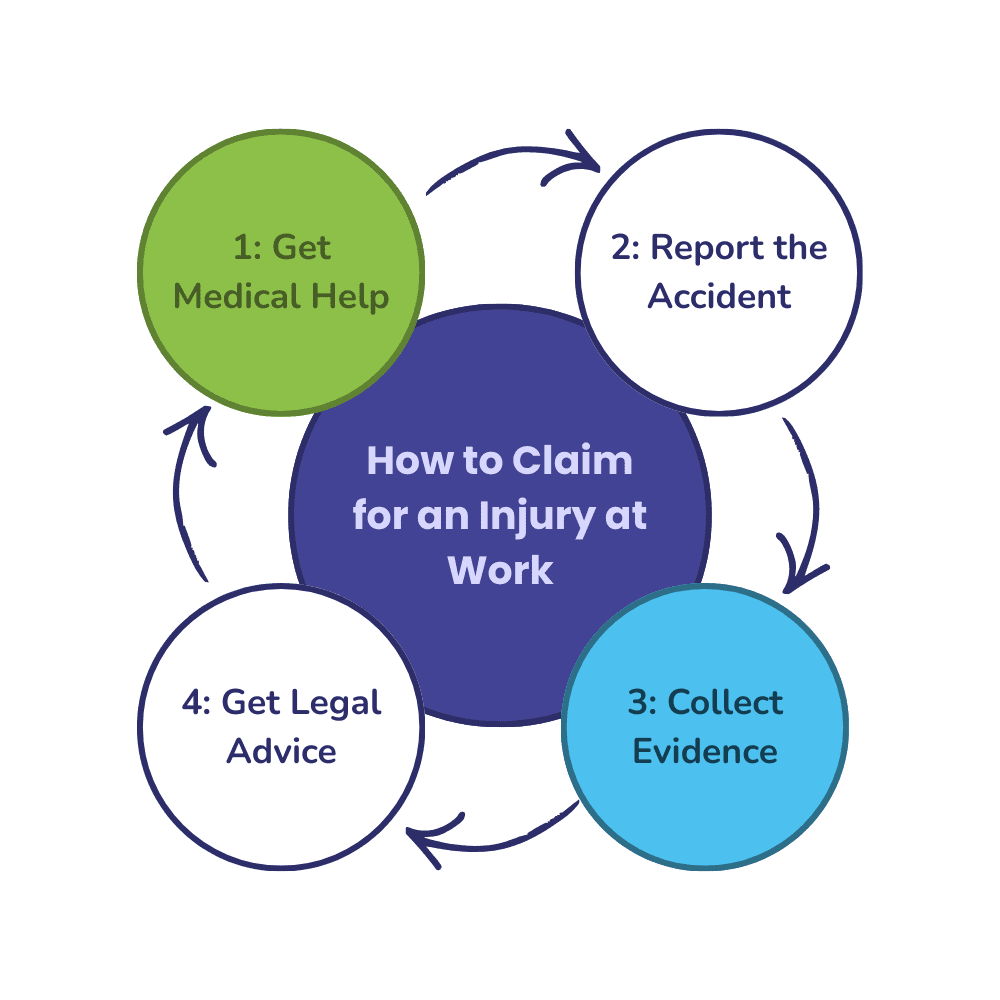
Under UK law, workplace accidents must be properly recorded.
You should report the incident:
Ask for the accident to be entered into the Accident Book. This is a legal requirement for most workplaces.
Ensure the record includes:
Take a photograph of the accident book entry for your records.
If your employer refuses to record the accident, send a follow-up email confirming what happened. This creates a written trail.
Evidence gathered early can make the difference between a straightforward claim and a disputed one.
If you are able, you should:
If CCTV may have captured the incident, request that footage be preserved. Many systems automatically overwrite footage within days.

If your injury leads to financial loss, you may recover these costs as part of your claim. You can read more about potential claim values in our guide on accident at work claims and how much compensation you could get.
Keep records of:
These are known as special damages and can significantly increase the value of your claim.
Many injured workers delay speaking to a solicitor because they:
However, most accident at work claims are handled through the employer’s insurance and do not create direct conflict.
Early legal advice ensures:
When you are injured at work, you need more than general advice — you need clear, strategic legal guidance from solicitors who understand employer liability, workplace regulations and insurer tactics.
At NJS Law, we act exclusively in the interests of injured individuals. We understand the physical, financial and emotional pressure that follows a workplace accident. Our role is to remove that pressure and handle the legal process with clarity and confidence. You can read what clients say about our service on our NJS Law reviews.
When you instruct NJS Law, you can expect:
We are experienced in handling claims involving:
Every case is handled with attention to detail and a focus on achieving the best possible outcome for you.
If you have suffered an accident at work, early advice can make a significant difference to your claim.
Contact our Accident at Work Solicitors today for a confidential discussion about your situation. We will explain:
There is no obligation to proceed – just clear professional advice.
Call us today or complete our online enquiry form to speak with a specialist accident at work solicitor.
Your recovery matters. Your rights matter.
Let NJS Law help you secure the compensation you deserve.
→ Learn more About Us
Yes. Even if you were partly responsible, you may still receive compensation under contributory negligence principles.
Your compensation may be reduced to reflect your share of responsibility, but you are not automatically prevented from claiming. Employers still have a legal duty to provide a safe working environment.
You can still bring a claim.
While accident book entries are helpful evidence, they are not essential. Medical records, witness statements, CCTV footage and photographs can all support your case.
It is advisable to notify your employer in writing as soon as possible if the incident was not formally recorded.
In most cases, you have three years from the date of the accident to start court proceedings. You can read a detailed guide on accident at work time limits and how long you have to claim.
If your injury developed over time (for example, repetitive strain injury), the three year period may begin from the date you became aware that your condition was work-related.
There are exceptions for children and individuals lacking mental capacity.
No. It is unlawful for an employer to dismiss or treat you unfairly for pursuing a legitimate personal injury claim. You can read more about your rights in our guide on being sacked for making an accident at work claim.
If your employer takes adverse action against you because you exercised your legal rights, this may amount to unfair dismissal or victimisation.
Most workplace accident claims are handled by the employer’ liability insurance.
The claim is made against the insurer – not directly against your employer personally. Professional employers understand that insurance exists for this purpose.
Get in touch using the form below or via the following methods: