

One of the most common questions we hear from injured workers is: “How much compensation could I actually receive?”
The truthful answer is that every claim is different. But that doesn’t mean you’re in the dark. UK courts and solicitors use established legal guidelines to calculate compensation, and understanding how those figures work can give you a realistic picture of what your claim may be worth.
This guide explains how compensation is calculated, provides guideline figures for the most common workplace injuries, and explains what can increase or reduce the amount you receive.
→ Ready to find out what your claim is worth? Start your accident at work claim today.
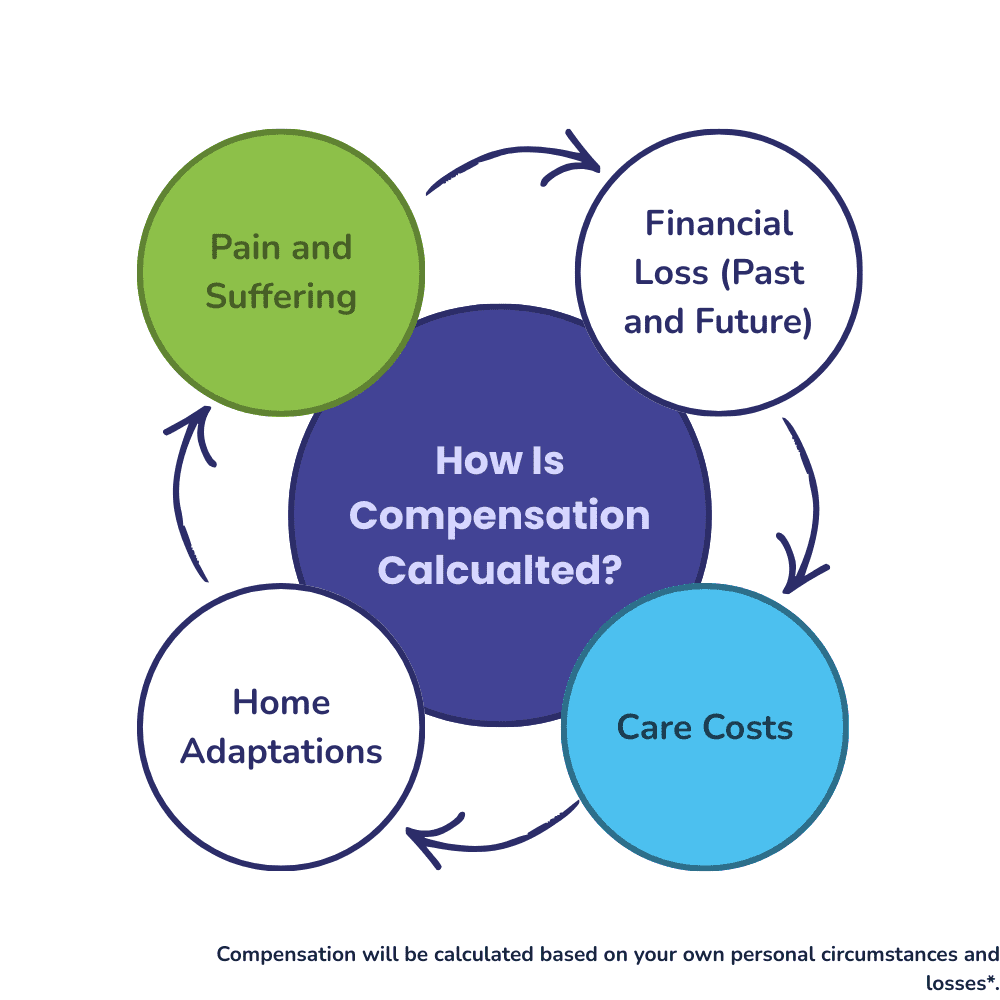
Compensation in a workplace injury claim is divided into two distinct categories: general damages and special damages. Most claims include both.
General damages cover the non-financial impact of your injury — specifically:
These are assessed using medical evidence from an independent expert and valued against the Judicial College Guidelines (17th Edition and subsequent updates) — the authoritative legal reference used by courts across England and Wales to determine fair compensation for each injury type and severity.
Special damages cover every financial loss caused by your injury — past and future — including:
Special damages require supporting evidence such as payslips, receipts, invoices and medical reports. Our solicitors will help you identify and document every loss to ensure nothing is missed.
The figures below are guideline brackets derived from the Judicial College Guidelines, reported court decisions and comparable settled claims. They represent the general damages element only — your total compensation will be higher once special damages (lost earnings, treatment costs etc.) are added.
These are indicative ranges, not guaranteed amounts. The exact figure depends on your specific medical evidence, prognosis and the full financial impact of your injury.
Back injuries are among the most common workplace injuries in the UK, particularly in manual handling, construction and warehousing.
| Severity | Guideline Range |
|---|---|
| Minor — full recovery within months | £2,450 – £7,890 |
| Moderate — recurring or prolonged symptoms | £12,510 – £27,760 |
| Severe — significant long-term disability | £38,780 – £69,730 |
| Very severe — permanent disability, neurological damage | £91,090 – £160,980 |
| Severity | Guideline Range |
|---|---|
| Minor soft tissue / whiplash | £2,450 – £7,890 |
| Moderate — restricted movement, ongoing symptoms | £13,740 – £24,990 |
| Severe — fractures, discs, nerve damage | £45,470 – £139,210 |
| Severity | Guideline Range |
|---|---|
| Minor — full recovery | £4,350 – £11,980 |
| Moderate — frozen shoulder, limited movement | £12,770 – £19,200 |
| Serious — rotator cuff damage, surgery required | £19,200 – £48,030 |
| Severity | Guideline Range |
|---|---|
| Minor fracture or soft tissue injury | £3,890 – £6,730 |
| Moderate — fracture with lasting complications | £6,730 – £19,200 |
| Severe — significant function loss | £29,000 – £61,910 |
| Loss of index finger | £14,380 – £54,830 |
| Loss of thumb | £36,720 – £96,080 |
| Severity | Guideline Range |
|---|---|
| Simple fracture — full recovery | £6,190 – £19,200 |
| Moderate — complications or incomplete recovery | £19,200 – £39,170 |
| Severe — permanent significant disability | £39,170 – £59,860 |
| Loss of one arm | £96,160 – £137,160 |
| Severity | Guideline Range |
|---|---|
| Minor knee injury — full recovery | £14,840 – £26,190 |
| Moderate knee injury — ongoing symptoms | £26,190 – £43,460 |
| Simple leg fracture — good recovery | £9,110 – £27,760 |
| Serious leg injury — multiple fractures | £39,200 – £61,910 |
| Amputation of leg below knee | £102,470 – £137,610 |
| Severity | Guideline Range |
|---|---|
| Moderate — ligament damage, some ongoing issues | £13,740 – £26,590 |
| Severe — significant permanent disability | £31,310 – £61,090 |
| Severity | Guideline Range |
|---|---|
| Moderate — lasting symptoms but not disabling | £13,740 – £24,990 |
| Severe — serious permanent disability | £41,970 – £70,030 |
| Severity | Guideline Range |
|---|---|
| Minor — no permanent symptoms | £2,210 – £12,770 |
| Moderate — some permanent effects | £43,060 – £219,070 |
| Moderately severe — significant disability | £219,070 – £282,010 |
| Very severe — permanent vegetative state or equivalent | £282,010 – £403,990 |
| Severity | Guideline Range |
|---|---|
| Minor — temporary loss of vision | £3,950 – £8,730 |
| Serious — significant permanent vision loss | £49,270 – £95,990 |
| Total blindness in one eye | £49,270 – £95,990 |
| Total blindness both eyes | £268,720 – £321,560 |
Psychological injuries — including anxiety, depression and PTSD following a workplace accident — are fully compensable as either standalone claims or alongside physical injuries.
| Severity | Guideline Range |
|---|---|
| Minor — full recovery within 1–2 years | £1,540 – £5,860 |
| Moderate — significant symptoms, good prognosis | £5,860 – £19,070 |
| Moderately severe — marked problems, limited improvement | £19,070 – £54,830 |
| Severe — permanent significant disability | £54,830 – £115,730 |
For the most serious workplace injuries — including spinal cord damage, brain injury with permanent disability, loss of multiple limbs or permanent vegetative state — compensation can range from £100,000 to over £500,000 for general damages alone. When lifetime care costs, loss of future earnings and specialist equipment are added as special damages, total settlements in catastrophic injury cases regularly exceed £1 million.
Several factors can significantly increase the value of your claim beyond the base injury bracket:
In serious and life-changing injury cases, claims regularly include future care costs projected over a lifetime, and expert actuarial evidence is used to calculate the full financial impact.

Your compensation may be reduced in certain circumstances:
Understanding compensation in the abstract is one thing. Seeing real outcomes is more useful:
Every case is different, but these outcomes reflect what is achievable when a claim is handled correctly from the outset.
Yes. Even if you were partly responsible, you may still receive compensation under contributory negligence principles. Your compensation may be reduced to reflect your share of responsibility, but you are not automatically prevented from claiming. Employers still have a legal duty to provide a safe working environment regardless of employee conduct.
You can still bring a claim. While accident book entries are helpful evidence, they are not essential. Medical records, witness statements, CCTV footage and photographs can all support your case. It is advisable to notify your employer in writing as soon as possible if the incident was not formally recorded.
In most cases, you have three years from the date of the accident to start court proceedings. If your injury developed over time — for example, a repetitive strain injury — the three-year period may begin from the date you first became aware that your condition was work-related. There are exceptions for children and individuals lacking mental capacity. You can read a full guide on accident at work time limits.
No. It is unlawful for an employer to dismiss or treat you unfairly for pursuing a legitimate personal injury claim. If your employer takes adverse action against you for exercising your legal rights, this may amount to unfair dismissal or victimisation. Read more in our guide on being sacked for making an accident at work claim.
Most workplace accident claims are handled by the employer’s liability insurer — not directly by your employer. Professional employers understand that insurance exists for this purpose. The claim process is designed to be separate from the employment relationship.
Straightforward claims with clear liability can settle within a few months. More complex cases — particularly serious injuries or disputed liability — can take longer. Our solicitors keep you updated at every stage and work to secure the best outcome as efficiently as possible.
If you have been injured at work, early legal advice makes a real difference to the outcome of your claim. Our specialist accident at work solicitors can tell you:
There is no obligation to proceed — just clear, professional advice from solicitors who handle workplace injury claims every day.
Call us on 0800 6525 656 or complete our online enquiry form to speak with a specialist today.
Get in touch using the form below or via the following methods: